Oparanya Fresh Corruption Probe Urged After Court Ruling
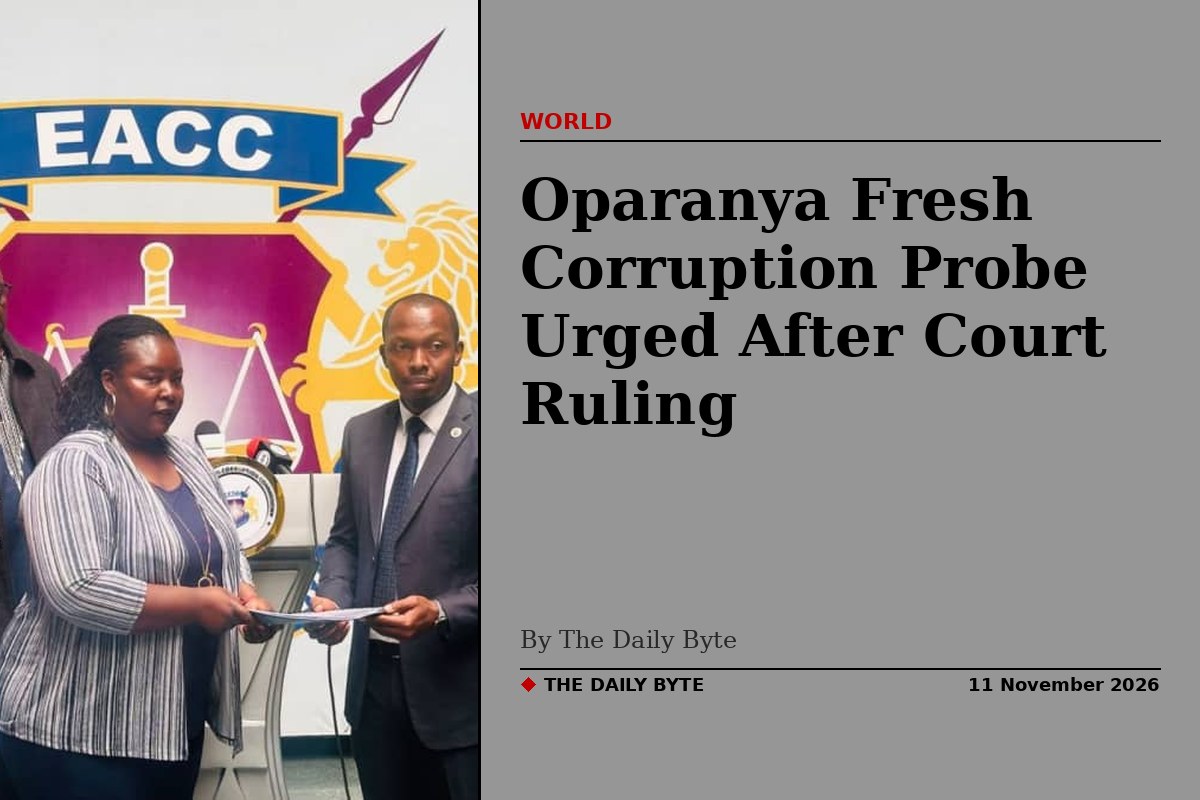
Anti-graft groups in Kenya have asked the Ethics and Anti-Corruption Commission (EACC) to reopen investigations into corruption allegations against Cooperatives Cabinet Secretary Wycliffe Oparanya, after a court nullified the decision to drop the charges against him.
The National Integrity Alliance (NIA) presented petitions to the EACC and to the Office of the Director of Public Prosecutions (ODPP) at the Integrity Centre in Nairobi on Tuesday, 10 November. The alliance brings together Transparency International Kenya, the Institute for Social Accountability and the Kenya Human Rights Commission.
The groups want the commission to explain what steps it will take following a High Court judgment delivered on 2 October 2026, which declared the ODPP's decision to review its earlier decision to charge Oparanya unconstitutional and therefore null and void. The court also issued an order quashing the decision, which had been communicated to the EACC in a letter dated 8 July 2024.
Petitions delivered to EACC and DPP
TI Kenya Executive Director Sheila Masinde handed over the petition to EACC spokesperson Stephen Karuga. She said the court had found that the ODPP acted irregularly by reviewing its earlier decision to charge Oparanya with offences including conflict of interest, money laundering and abuse of office.
The alliance also accused the ODPP of frustrating accountability by filing another notice of appeal against the judgment, and said the appeal should not be used to delay implementation of the court's findings. The groups gave both institutions 14 days from receipt of the petitions to provide written updates on the steps taken or proposed.
"The judgment must translate into action. The investigation must proceed, and where the evidence warrants, prosecution must follow," the alliance said. It cited Article 157(11) of the Constitution, which requires the ODPP to consider the public interest, the administration of justice and the prevention of abuse of legal process when exercising its prosecutorial powers.
How the case unfolded
The corruption allegations against Oparanya stem from his time as governor of Kakamega County, when the EACC investigated claims involving more than KSh1.3 billion in suspected unexplained wealth and alleged payments involving companies that won contracts from the county government.
In December 2023, the DPP approved the EACC's recommendation to charge Oparanya. The prosecution was discontinued in July 2024 after the DPP reversed the earlier decision, shortly after Oparanya was nominated to serve in President William Ruto's Cabinet.
The dispute dates back to 16 September 2025, when the High Court first quashed the ODPP's decision to withdraw the charges. The matter was reopened after Oparanya's lawyers sought a fresh hearing, arguing that he had been unaware of the proceedings. Following that hearing, the court delivered its October 2026 judgment, maintaining its earlier position. The court found that the ODPP had overstepped its constitutional mandate by considering fresh evidence without first referring it to the EACC for further investigation.
What happens next
The alliance wants the ODPP to forward the evidence to the anti-graft agency and issue instructions for further investigations. The commission is then expected to examine the evidence independently and submit its findings to the prosecution for a fresh determination on whether Oparanya should face criminal charges.
The EACC acknowledged receiving the petition and said it would review its contents carefully before deciding its next course of action. Karuga said the commission had discharged its statutory and constitutional obligations in the matter, adding that the criminal justice process was a chain with several independent institutions that complemented each other. No finding of guilt has been made against Oparanya, and the allegations have not been tested in a trial.


