Khamenei Urges Basij to Broaden Reach in Iran
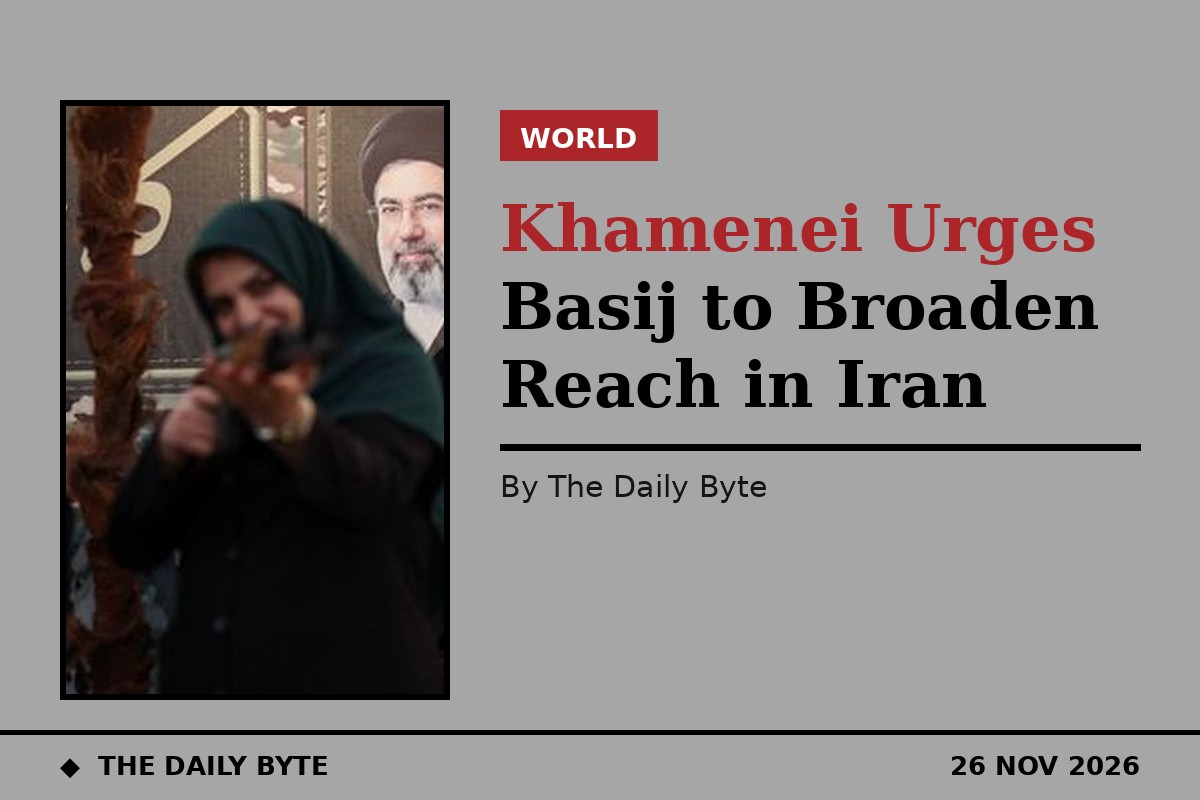
Iran's Supreme Leader Mojtaba Khamenei has called on the Basij, the nationwide volunteer force linked to the Revolutionary Guards, to broaden its social reach and work towards making "every Iranian, a Basiji", in a message issued on Thursday to mark Basij Week.
The message, reported by Iranian state media, urged the organisation to draw on a wider pool of supporters, including people who share its ideology but are not formal members, and to help address the country's problems. Khamenei also called on the force to undergo a fundamental transformation and develop new organisational capabilities, according to a report on the message.
The appeal comes as Iran's leadership leans heavily on loyalist networks during a war launched by the United States and Israel in late February. Since the fighting began, the authorities have relied on the Basij to help organise repeated pro-government rallies across the country, with state media portraying them as evidence of broad popular support for the Islamic Republic.
Khamenei has remained out of public view since succeeding his father, Ali Khamenei, who was killed in the opening strikes of the war. He has communicated through written statements, while Iranian officials have cited security concerns to explain his absence from public view.
The Basij, formally known as the Organisation for the Mobilisation of the Oppressed, was established by the Islamic Republic's founder, Ayatollah Ruhollah Khomeini, in 1979. It became a major source of manpower during the 1980-88 Iran-Iraq war and was incorporated into the Revolutionary Guards in 1981.
Its nationwide presence in universities, government institutions and neighbourhoods supports its role in promoting the Islamic Republic's ideology, enforcing social codes, mobilising supporters for rallies, suppressing protests and participating in disaster relief and state campaigns.
Khamenei's appeal also comes as the Islamic Republic faces mounting economic difficulties and US sanctions, which Washington has sought to use to increase pressure on the government and exploit public discontent.
State media coverage of the wartime pro-government rallies has sometimes highlighted women attending without fully observing mandatory hijab rules, seeking to convey an image of national unity extending beyond the regime's traditionally conservative supporters.
The government has also sought to mobilise its support base through initiatives such as the Janfada, or self-sacrifice, programme, which calls on volunteers to register for training and help defend the country, and a Basij energy campaign announced by its newly appointed head, Hossein Taeb.
Under the campaign, members were trained to encourage households and businesses to reduce electricity and gas consumption as the country faces the prospect of winter energy shortages.
The appeal coincides with a recruitment drive that officials have said aims to provide military training to one million volunteers by late December. In Sistan and Baluchestan, an IRGC commander claimed that more than 250,000 people had registered for the campaign, with approximately half already trained, according to a report on the drive.
The message underlines how far the leadership is relying on its volunteer networks to sustain support at home as the war enters its ninth month, with the economy under strain and no end to the fighting in sight.


