Khan Urges Faster Regent Street Pedestrianisation
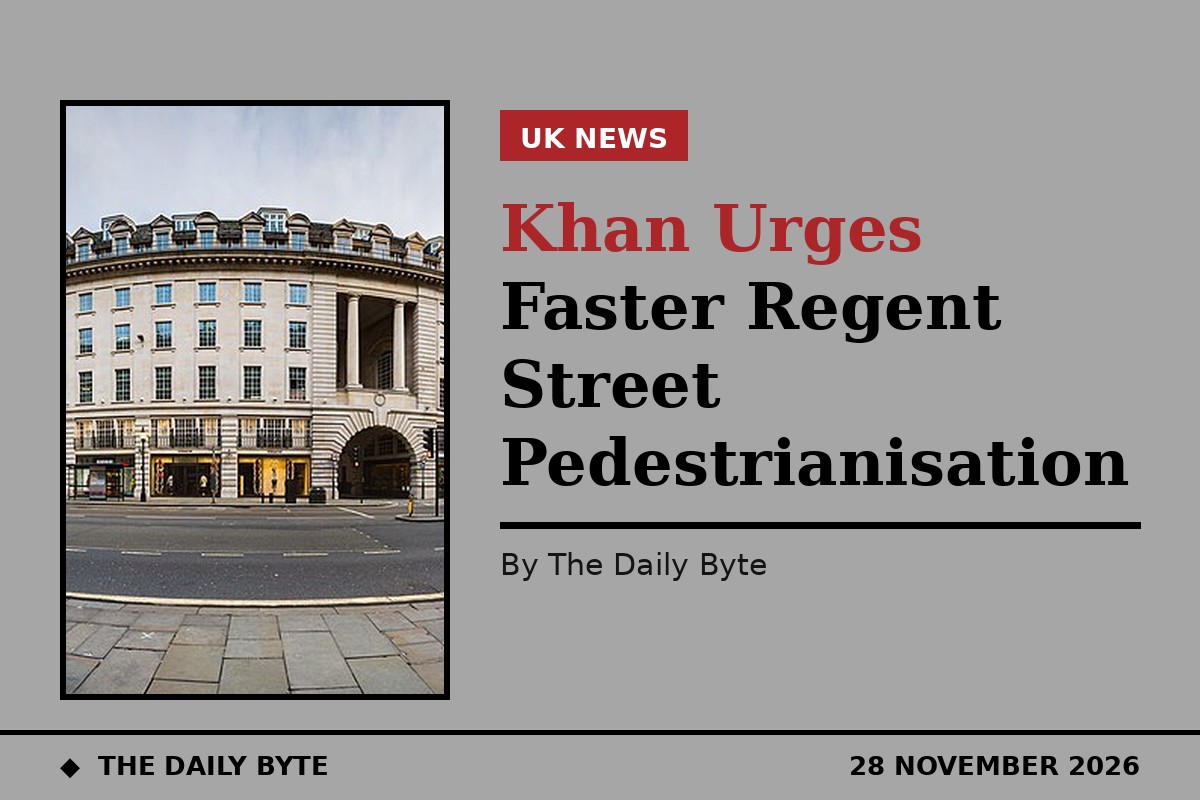
Sadiq Khan has backed plans to pedestrianise parts of Regent Street and Piccadilly Circus, calling for the scheme to be delivered faster amid a fresh dispute between City Hall and Westminster Council.
The Mayor of London is supporting proposals by the Crown Estate to create 35,000 square metres of new public space across Regent Street St James's, Waterloo Place and Piccadilly Circus, arguing that the pedestrianisation of nearby Oxford Street is already boosting footfall and spending.
His intervention follows Westminster Council's decision to delay the next stage of public consultation on the scheme until 2027, a move that has drawn criticism from City Hall and from Labour councillors in the borough.
What the plans would change
The proposals, first unveiled by Westminster Council and the Crown Estate earlier this year, would pedestrianise parts of Regent Street, Haymarket and Piccadilly Circus, while creating wider pavements, more seating, new trees and additional space for pedestrians.
The centrepiece would be a new traffic-free public square at Waterloo Place, with Regent Street St James's made fully pedestrian and the southern side of Piccadilly Circus given over to people rather than traffic. North of Piccadilly Circus, the central island along Regent Street would be removed to make room for wider pavements and cycle lanes.
More than 5,000 people responded to an earlier consultation on the plans, with around 60 per cent backing them. The council and the Crown Estate have described the scheme as a long-term vision for one of London's busiest and most famous shopping districts.
Why the scheme has stalled
Under the original timetable, councillors were expected to make a decision on the project this autumn, with construction potentially beginning in 2029. That timetable has now slipped, with the council saying the next phase of wider public consultation will take place in 2027 and no revised date given for a decision or the start of work.
The council, which changed from Labour to Conservative control in May's local elections, has said more work is needed on the proposals and that it is carrying out focused engagement with businesses, residents and community groups before finalising designs.
City Hall points to Oxford Street
A City Hall source told the Financial Times that the Mayor was frustrated with the council's approach, saying: "This part of London is the powerhouse of the UK's retail sector. Sadiq is fed up with the anti-business and anti-jobs attitude of Westminster council."
The source added: "Sadiq took on the naysayers with Oxford Street and is showing how much of a success these schemes can be, driving footfall and higher spend in shops. We back the Crown Estate's vision and support their plans being delivered at pace."
City Hall's case rests on the first week of Oxford Street's pedestrianisation, which it says produced stronger results than expected. According to figures from the Oxford Street Development Corporation, footfall in the traffic-free section rose by 16 per cent compared with the same period a year earlier, while international visitor numbers increased by 42 per cent. Visits after 6pm were up 19 per cent, and spending at participating stores increased by 28 per cent.
Council rejects the criticism
Westminster Council has rejected suggestions that it is dragging its feet. Deputy leader Tim Barnes responded that claims the authority was anti-growth were "a load of rubbish", insisting the council was trying to develop a wider strategy for central London following the changes associated with Oxford Street's transformation.
Not everyone is convinced by the Regent Street plans. The Soho Society has previously warned that removing traffic from parts of the West End could push congestion onto surrounding streets and create problems for businesses that rely on deliveries.
Campaigners supporting the scheme say Oxford Street has already demonstrated the benefits of giving more space to pedestrians. The Crown Estate and Westminster Council said they continued to work together on a "bold vision" for the area and were carrying out further engagement before finalising designs.
For now, the confirmed next step is further discussion and technical work ahead of the anticipated 2027 consultation, with no date set for when shoppers might see Regent Street itself go traffic-free.


