Kimi Offers Scientists $20,000 in Free AI Credits
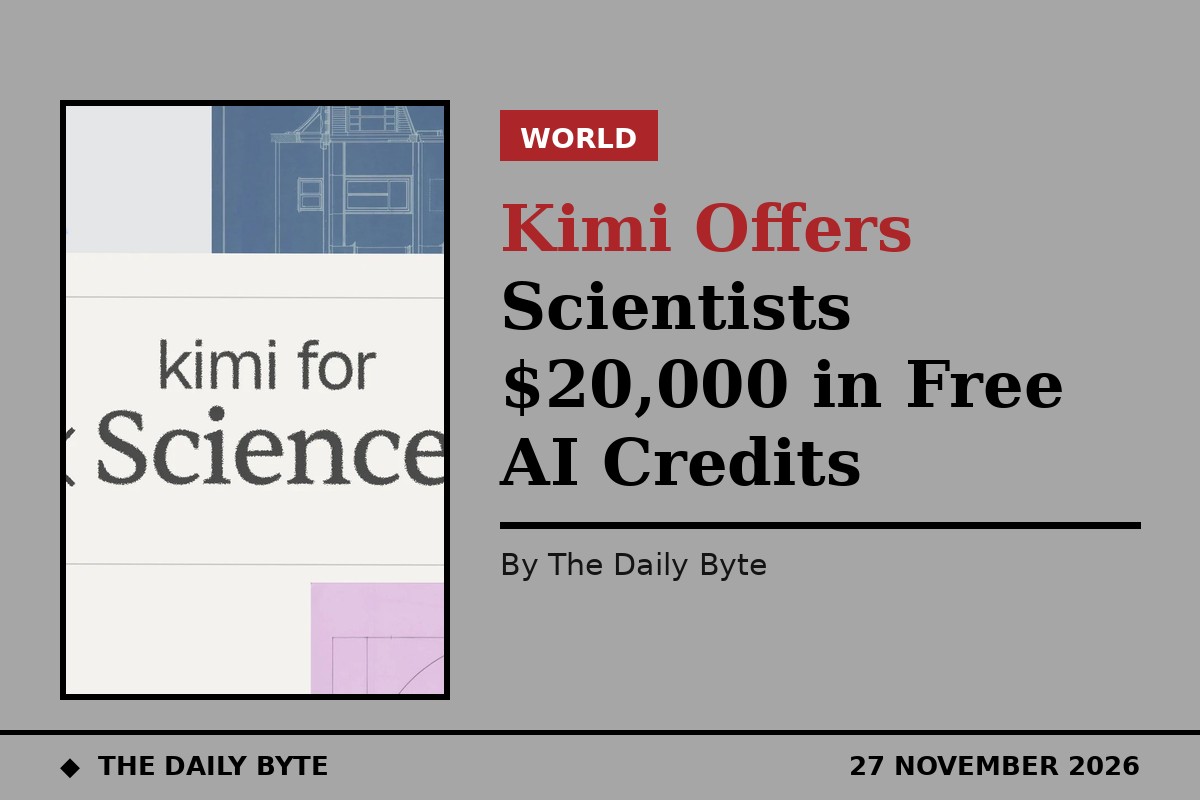
Moonshot AI has opened a new programme offering scientists free access to its Kimi models, with selected research teams receiving up to $20,000 in API credits.
Kimi for Science, announced on 27 November, is open to researchers and research teams working in the natural sciences, engineering and related interdisciplinary fields, anywhere in the world. PhD students, postdoctoral researchers and principal investigators are all eligible to apply.
What selected teams receive
The credits cover use of Kimi's models through the company's application programming interface, rather than cash funding. Moonshot says the maximum award is worth about 7 billion tokens, with the exact amount decided by each project's research needs and the outcome of the application review.
Selected projects also receive technical support from the Kimi team, early access to new models, curated research and community resources, and the chance of longer-term collaboration with Moonshot. The company describes the programme as a way to make its models more accessible to researchers who may be held back by limited computing resources, budgets or technical support.
How to apply
Applications for the first cohort close on 8 December 2026. More cohorts will open later. Applicants can submit more than once, with only the latest submission reviewed, and decisions will be sent to the email address supplied with the application. Questions about the programme can be sent to the dedicated address, ai4science@moonshot.ai.
The application asks for the researcher's background, the project, the data sources involved, the current workflow, how Kimi would be used and how the results would be evaluated. Credits are allocated by research project and can be shared with collaborators.
Moonshot is the Chinese company behind Kimi, one of the country's leading AI assistants, and the programme ties into its public commitment to open-weight models. The company has not published a cohort size, a credit expiry date or a decision date, so researchers should confirm those details before planning a project around the offer.
Why it matters
The launch comes as AI companies compete to put their models into scientific work. Free compute has become a common way for model makers to reach researchers, who in turn provide demanding real-world tests of reasoning, coding and data analysis. For small labs and early-career researchers, a credit allocation worth thousands of dollars can decide whether a project using a frontier model is affordable at all.
Whether the programme changes much will depend on how many teams are selected and how quickly decisions arrive. But for researchers with a defined project and a clear evaluation plan, the first deadline is now less than two weeks away.


