KP Police Chief Denies Role in House Raids
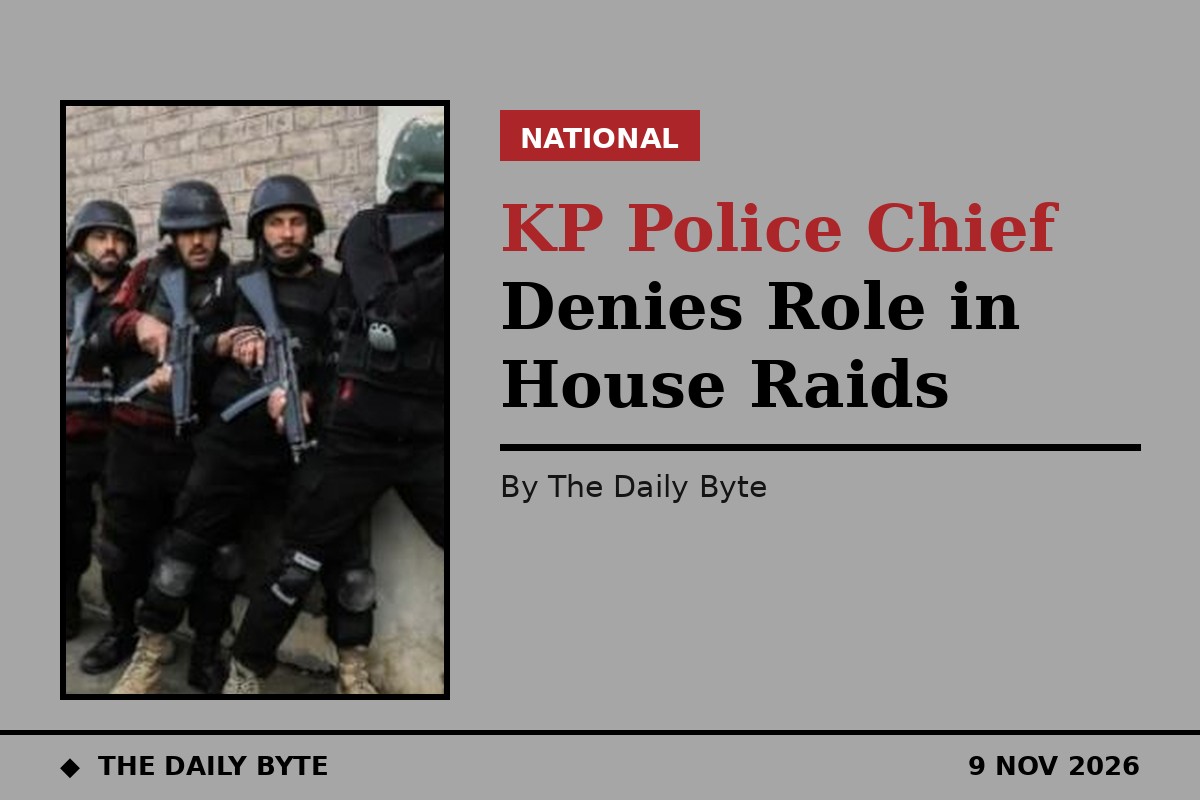
Khyber Pakhtunkhwa's police chief has denied that the police had any role in raids on homes and vandalism in the province, saying the police only carried out detention orders issued by district administrations.
Inspector General of Police Zulfiqar Hameed made the remarks in an interview with journalist Shehzad Iqbal, reported on Sunday, 8 November 2026. He also confirmed that Chief Minister Sohail Afridi and Assembly Speaker Babar Saleem Swati remain under formal detention after the imposition of emergency and governor's rule in the province.
What the police chief said
Mr Hameed said the arrests and detention orders were not issued by the police themselves but by the relevant district administrations. The police's role, he said, was limited to implementing those legal orders, and all the detained people are currently under formal detention.
Responding to allegations that MPAs and ministers were taken out of vehicles and arrested, and that homes were raided and vandalised before and after governor's rule, the inspector general said the police had no involvement in these actions. He said every arrest made by the police was recorded and carried out through a fully legal process.
Where complaints were received, he said, the police had registered first information reports in at least three cases and begun investigations. Investigations into who carried out the actions are still under way, he added.
Security withdrawals
Mr Hameed was also asked about letters from former information minister Shafi Jan and Speaker Babar Saleem about the withdrawal of security. He said decisions to provide or withdraw security are made by the District Intelligence Coordination Committee and authorised provincial-level committees.
Under the rules, he said, when a person no longer holds office, security is withdrawn according to their officially approved entitlement. The police took all related steps strictly in accordance with the law and regulations, he said.
The speaker's protection
When asked that the assembly speaker enjoys legal protection, and that rules require members of the assembly or the speaker to be informed, or permission to be obtained, before their arrest, the police chief replied that the laws under which the police implemented the orders remained in place. The relevant authorities or other institutions involved in enforcing the law could provide a better explanation on the matter, he said.
The allegations behind the denial
The denial comes after a series of allegations about raids on political figures' homes. Eight members of the Pakistan Bar Council condemned what they called an illegal and arbitrary raid on 7 November on the offices and residence of Senator Kamran Murtaza, a former president of the Supreme Court Bar Association, along with harassment of his family and vandalism by so-called unknown persons.
The council members also said notices had been issued to Mr Murtaza by the Federal Board of Revenue and the Federal Investigation Agency, and that his bank accounts had been frozen. They described the measures as an attempt to punish him for his membership of the Jamiat Ulema-e-Islam, led by Maulana Fazlur Rehman, and for speaking out against the government.
Mr Murtaza had already filed a privilege motion with the Senate Privileges Committee after about 40 people allegedly surrounded and stormed his private residence in Quetta on 4 November, kicking the main gate and climbing the walls to take photographs inside, before attacking his ancestral home nearby. In the motion he asked: when women and children are harassed at my home, what would happen to an ordinary poor citizen?
None of the allegations about who carried out the raids has been established. The police chief's account and the opposition's complaints now stand against each other, and the investigations he mentioned are the route by which the question may be answered.