Lahore smog hits 535 as Punjab air turns hazardous
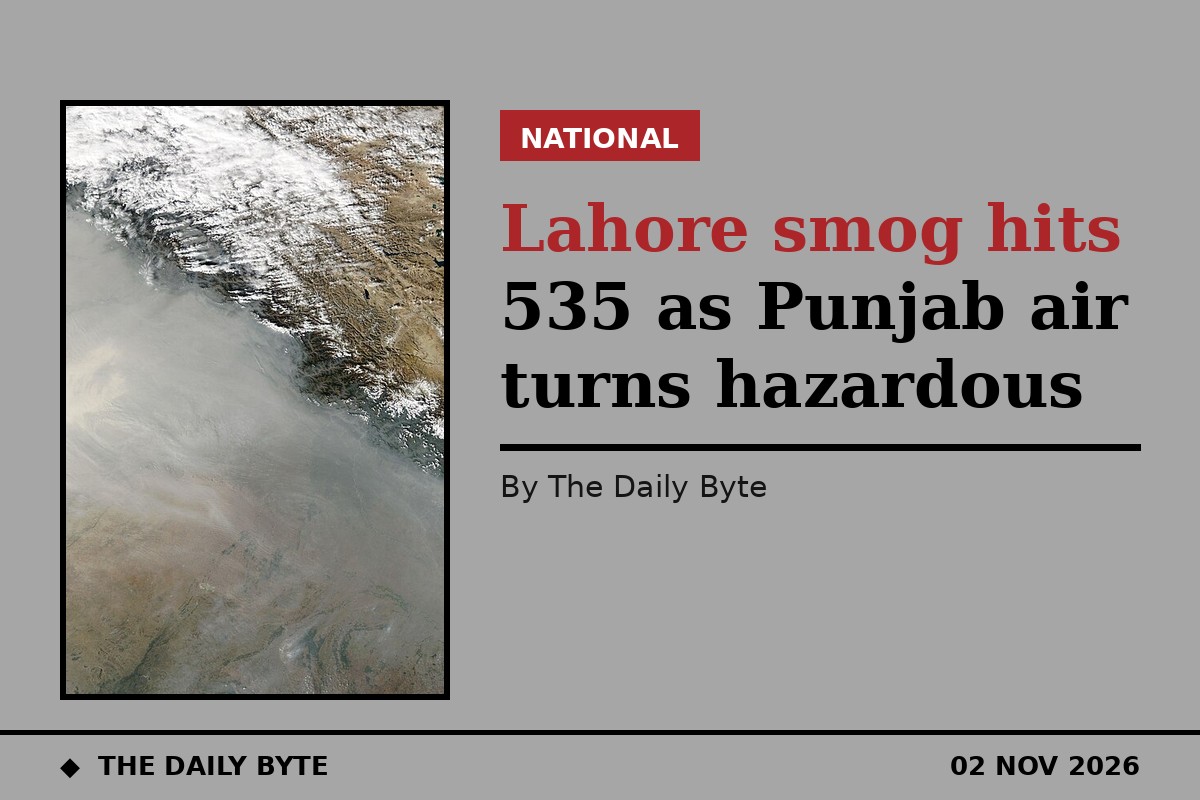
Lahore's air turned hazardous again on Monday morning, 2 November 2026, with the city's air quality index reaching 535 at 8am and fine particulate matter (PM2.5) measured at 343 micrograms per cubic metre, according to monitoring data reported by local media. The reading placed Lahore in the hazardous band of the US air quality scale and marked one of the sharpest pollution spikes of the 2026 smog season.
The pollution spread well beyond Lahore. Gujranwala recorded 606 in the same morning snapshot, later rising to 675, while Faisalabad and Multan each recorded 310 and Sialkot 260. IQAir's early-morning snapshot ranked Lahore the world's most polluted major city, followed by Cairo at 226, though both readings and ranking changed during the day. Figures cited here are morning snapshots, not all-day averages.
What is driving the smog
Agricultural fires are a major contributor. An analysis by the monitoring platform HamariHawa, based on NASA satellite observations, identified 13,241 fire spots across Pakistani Punjab between 1 and 29 October, linked to the burning of crop residue after harvest. A new national air pollution report, titled 'Unveiling Pakistan's Air Pollution', identifies transport as the largest contributor to PM2.5 emissions in Lahore, followed by industry at 28 per cent and brick kilns at 17 per cent.
The Punjab government cited an improved October average of 180.5, against 204.6 in 2025 and 213 in 2024, according to Senior Minister Marriyum Aurangzeb. The Pakistan Air Quality Initiative challenged the claim of a cleanest October in five years, and its 1 November forecast projected PM2.5 rising to 149 micrograms per cubic metre by Wednesday 4 November. The government plans to close brick kilns across Punjab from 15 November to 15 December.
Sources: IQAir monitoring data and Dawn reporting via 247News; HamariHawa/NASA fire analysis; Pakistan Air Quality Initiative forecast.