Lansing Parks Overnight Camping Plan Faces Mayor Opposition
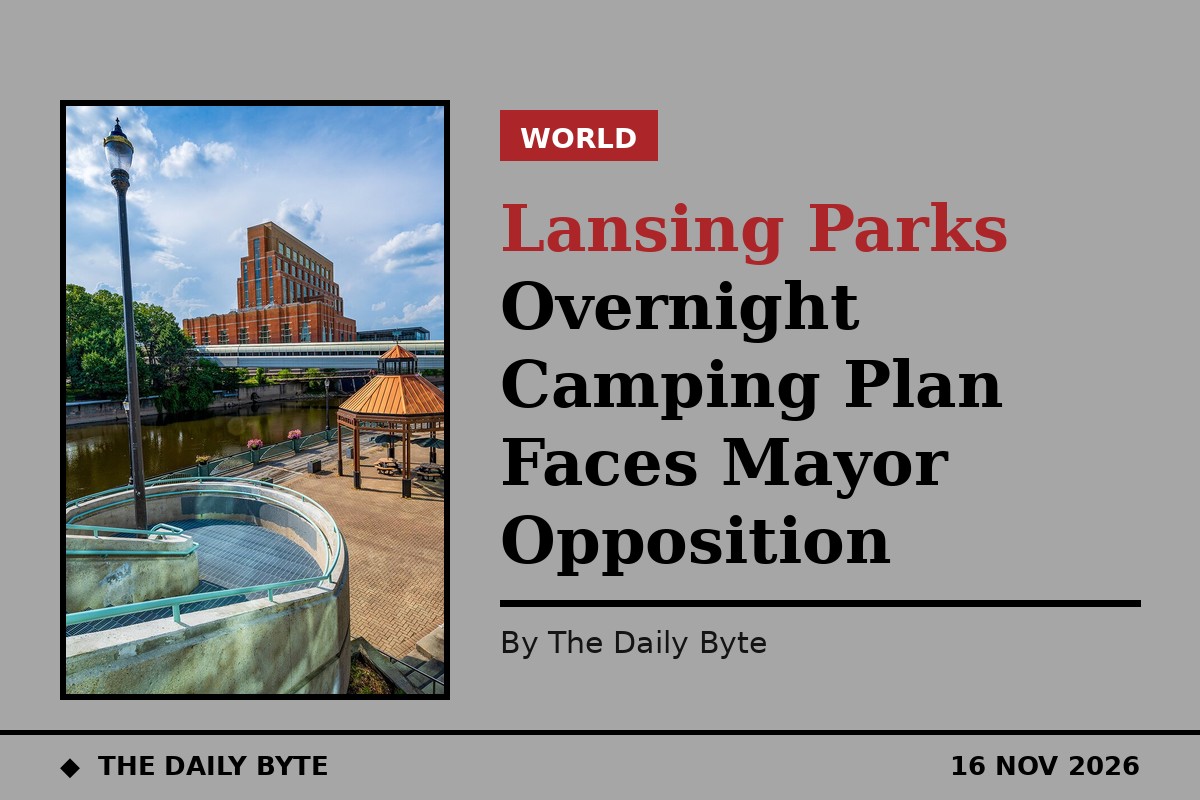
Lansing City Council in Michigan will consider an emergency ordinance on Monday, 16 November 2026, that would allow overnight camping in 10 city parks for 60 days. The meeting is scheduled for 7 p.m. at City Hall, 124 W. Michigan Avenue, and the proposal has already divided the council and the mayor.
The ordinance would suspend the part of the city code that requires parks to close between dusk and dawn. It would run until 15 January 2027, and the dusk-to-dawn closure would remain in force in every other city park.
What the proposal would do
The 10 parks named in the proposal are Grand River Park, Greencroft Park, Hunters Ridge Park, Jones Lake Park, Kendon Park, Kimberly Park, Larch Park, Lewton Park, Pleasant View Park and Willoughby Park.
The measure was introduced by Second Ward Councilwoman Deyanira Nevarez Martinez. Council President Peter Spadafore said the ordinance states that housing insecurity in Lansing has increased substantially over the past several years, while low-barrier shelter options for unhoused people have failed to keep pace, creating a significant and emergent risk to their health, safety and welfare.
Nevarez Martinez said the parks were chosen after conversations with advocates for homeless people, city officials and the business community. She said the list excluded parks with playgrounds near schools, parks in flood zones and parks near the Lansing River Trail. She said she was considering removing Lewton Park from the list because, although children are not using the space, it is a current construction site.
She argued that the 60-day period could be used to move beyond debating where unhoused people should be allowed to exist and to start making real progress towards ensuring they have somewhere safe and stable to live.
Why the council is acting now
The discussion comes days after the city enforced a no-trespassing order for a homeless camp beside the Lansing River Trail near 300 E. Oakland Avenue on Thursday, 12 November. Between 15 and 20 people were forced to leave the small camp in a wooded area, according to the Lansing State Journal.
Advocates said a string of killings along the river trail over the past year, and the arrival of cold weather, make it a dangerous time for people living on the streets. They also said the city has cleared dozens of camps in the last year. A separate report by WILX said advocates had asked for a moratorium on camp clearances of at least two months while shelter arrangements were worked out.
The city’s plan for a pod community in south Lansing has been delayed several times. City officials have also discussed opening a temporary shelter, but details are still in flux. Scott Bean, a spokesperson for Mayor Andy Schor, said the city is in the process of opening a low-barrier overnight centre in the coming weeks.
Mayor Schor opposes the plan
Mayor Schor opposes the proposal. In a statement on Sunday, 15 November, his spokesperson said the mayor has great concerns about opening up 10 city parks to allow overnight habitation with little notice or consideration for neighbouring homes, businesses and schools, and for those who would choose to stay there.
The mayor’s office said occupying outdoor spaces with no toilets, clean water, trash service, electricity, heat or sanitation is unhealthy and unsafe. It also said the city has not budgeted for, or made appropriate preparations for, this type of activity in the 10 parks.
Bean said that, as of last week, there were several beds open at the other available shelters, as well as space at drop-in centres in Lansing. Advocates have argued that some people living on the streets are either not allowed in local shelters or are unwilling to comply with shelter requirements.
Residents near the parks raise concerns
At-large Councilman Jeremy Garza said residents who live near the parks have not been contacted in advance, because an emergency ordinance does not follow the same timeline as a typical ordinance. He said those residents will not have the usual opportunity for neighbourhood discussions before the council is asked to vote on Monday evening.
Garza said he understands that homelessness is a serious issue in Lansing, but he believes the council should also consider the impact on neighbourhoods, families and children, and on the people who live next to the parks. He said residents who live beside these green spaces deserve a chance to have their voices heard before a decision is made.
Residents can speak during public comment at the meeting in person or virtually, or email the whole council. The outcome of the parks vote will be the first test of whether the council backs an interim, outdoor option while longer-term shelter plans are still being prepared. Lansing State Journal and WILX


