More leaseholders shielded from unsafe-building bills
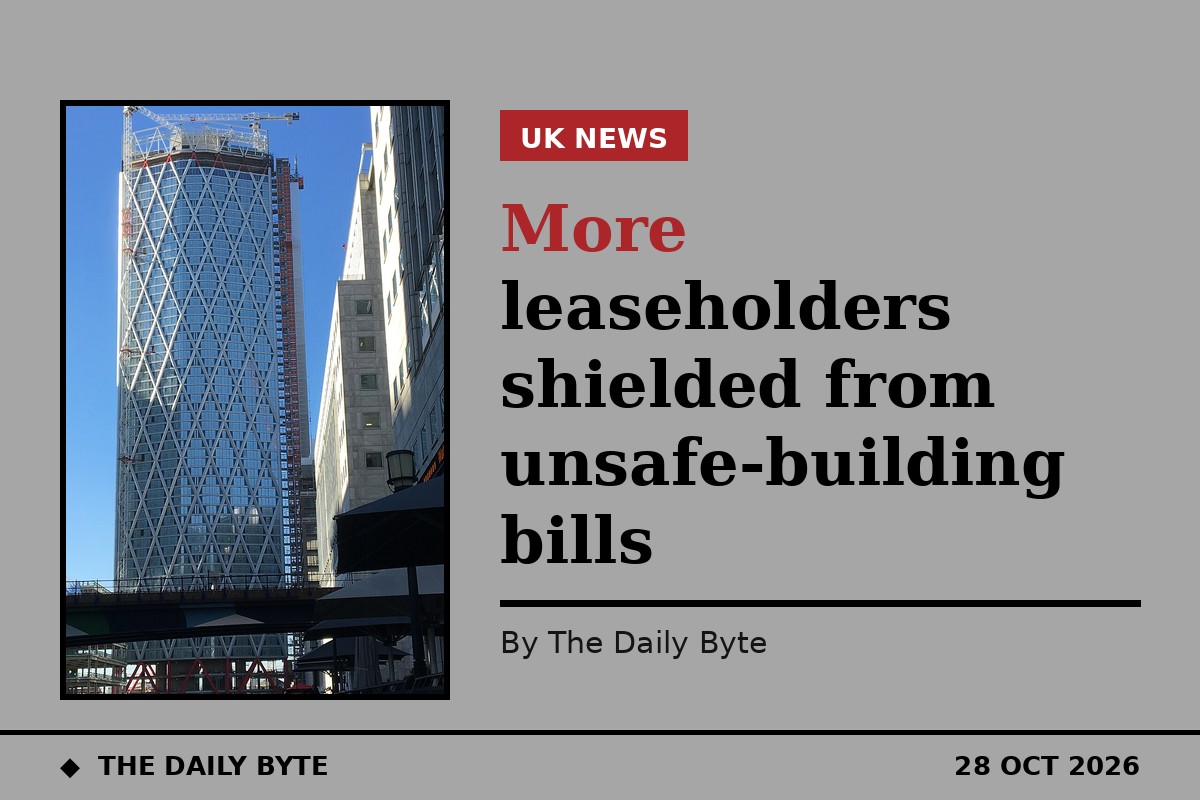
More leaseholders could be protected from large bills for fixing serious building and fire-safety defects under proposals announced on 27 October 2026. Housing Secretary Angela Rayner set out the package during the second reading of the Remediation of Unsafe Cladding Bill. The government says existing rules protect many leaseholders, but some still fall through gaps and risk paying for problems they did not cause.
Who would gain protection
One gap affects people who buy a flat as their only home but miss out on protection because the previous owner did not qualify. The proposals aim to close that gap. Residents of collectively owned and enfranchised buildings would also gain support, because having no separate freeholder can leave them outside the current framework, and new grant funding is planned for eligible buildings with high-risk, high-cost internal fire-safety defects. Protection would also widen for leaseholders with several properties affected by non-cladding defects they did not cause, with the limit rising from three to six properties.
What still has to happen
Building Safety Minister Baroness Blake said the changes would protect homeowners from unfair costs and make manufacturers contribute towards putting things right. Manufacturers connected to historic unsafe cladding and insulation would be made to contribute more, with powers to recover contributions at scale for the first time. Those responsible for fixing unsafe buildings would face tougher consequences, including criminal penalties and fines of up to £500,000.
These are proposals within a Bill that must still pass through Parliament. Funding levels, eligibility rules and how contributions would be calculated have yet to be published, so no leaseholder should assume a particular bill is covered until the law is settled. Until then, the announcement is a statement of intent, not a guarantee that any individual repair bill will be paid.
Sources: GOV.UK and Mortgage Solutions.