Lebanon: 300,000 Still Displaced Despite Ceasefire
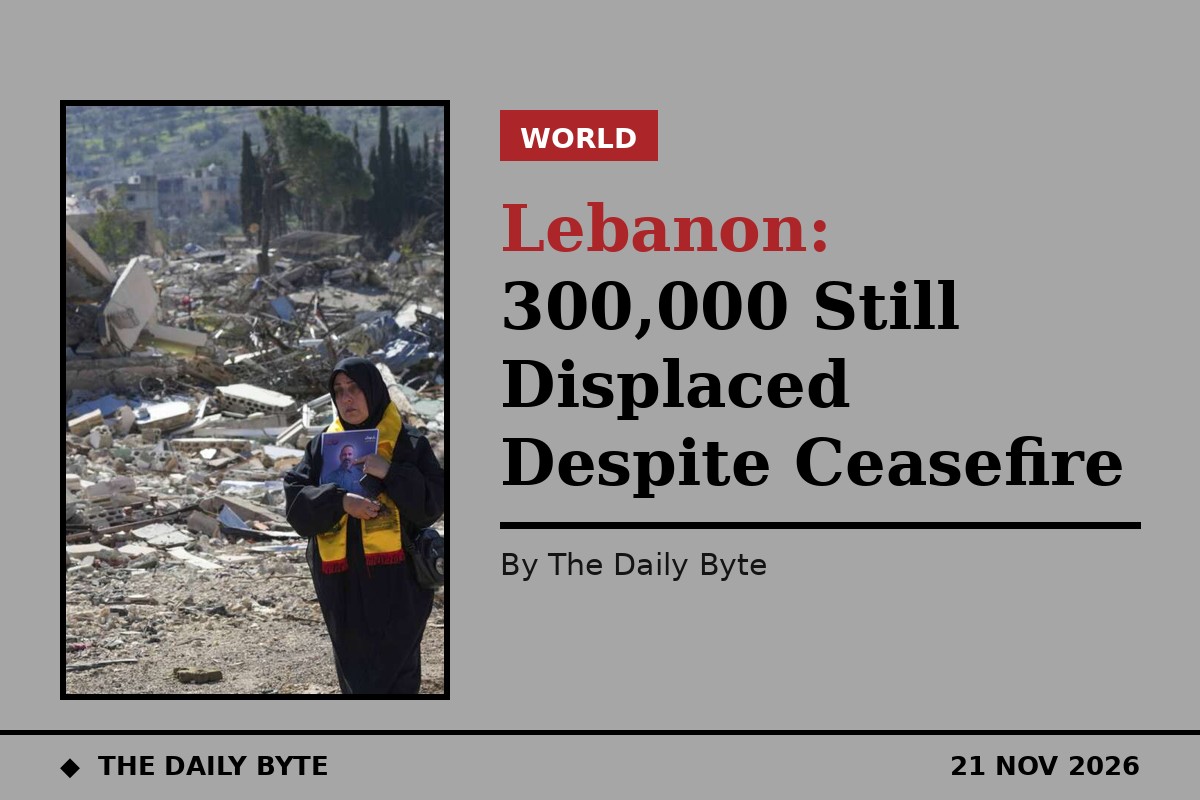
Around 300,000 people remain displaced in Lebanon almost five months after a ceasefire agreement brought a sharp fall in fighting, the United Nations has said, as families who have returned home find villages in ruins and basic services destroyed.
The latest UN figures put the number of people still displaced outside their areas of origin at around 304,500. The number who have returned home has risen by 13 per cent since September, to nearly one million, but the pace of return has not closed the gap for hundreds of thousands of families with nowhere to go back to.
A humanitarian report from UNICEF, covering the situation to the end of September, put the displaced total at almost 330,000 people, including more than 115,000 children. It said 261 children had been killed and 1,058 injured since March, and that 4,386 people had been killed and 12,413 injured by 26 September. Lebanon's health ministry put the toll since 2 March at 4,389 killed and 12,428 injured, with 8,956 killed and 30,664 injured since October 2023.
More than 11,000 displaced people were still living in 136 collective shelter sites at the start of November, according to Lebanese disaster management data, while around 6,500 families are unable to return to 12 villages inside an Israeli-declared military zone along the border.
Villages in ruins
Kandice Ardiel, spokesperson for the UN peacekeeping force UNIFIL, told UN News from Naqoura in southern Lebanon that returnees were coming back to a really difficult situation. "We're seeing kids going back to school. We're seeing farmers trying to harvest their crops, particularly olive crops. But they're coming back to a really difficult situation," she said. "A lot of the essential infrastructure, including electricity networks, water systems, and roads, has been destroyed and will need to be rebuilt."
Naqoura, home to UNIFIL's headquarters and once a thriving village of homes, shops, restaurants and businesses, has been almost entirely reduced to rubble, she said. Israeli forces continue to be observed committing daily violations across southern Lebanon, including building military positions and roads, demolitions, airstrikes and artillery fire, and on Tuesday a UNIFIL patrol near Wadi Jilu was fired upon. Peacekeepers returned fire and reported no injuries.
Peacekeepers prepare to leave
UNIFIL's mandate ends on 31 December 2026 after the Security Council voted in August 2025 not to renew it, and preparations for the force's withdrawal are expected to begin in January 2027. The council is considering options for what comes next, but nothing has been decided, leaving the displaced and the communities of the south facing an uncertain future.
The 2026 Lebanon Response Plan addendum aims to reach 732,125 people with $385.88 million in humanitarian aid, as agencies warn that the scale of destruction means return will be slow even for those who want to go home.


