Lebanon Debel school visit sparks IDF inquiry
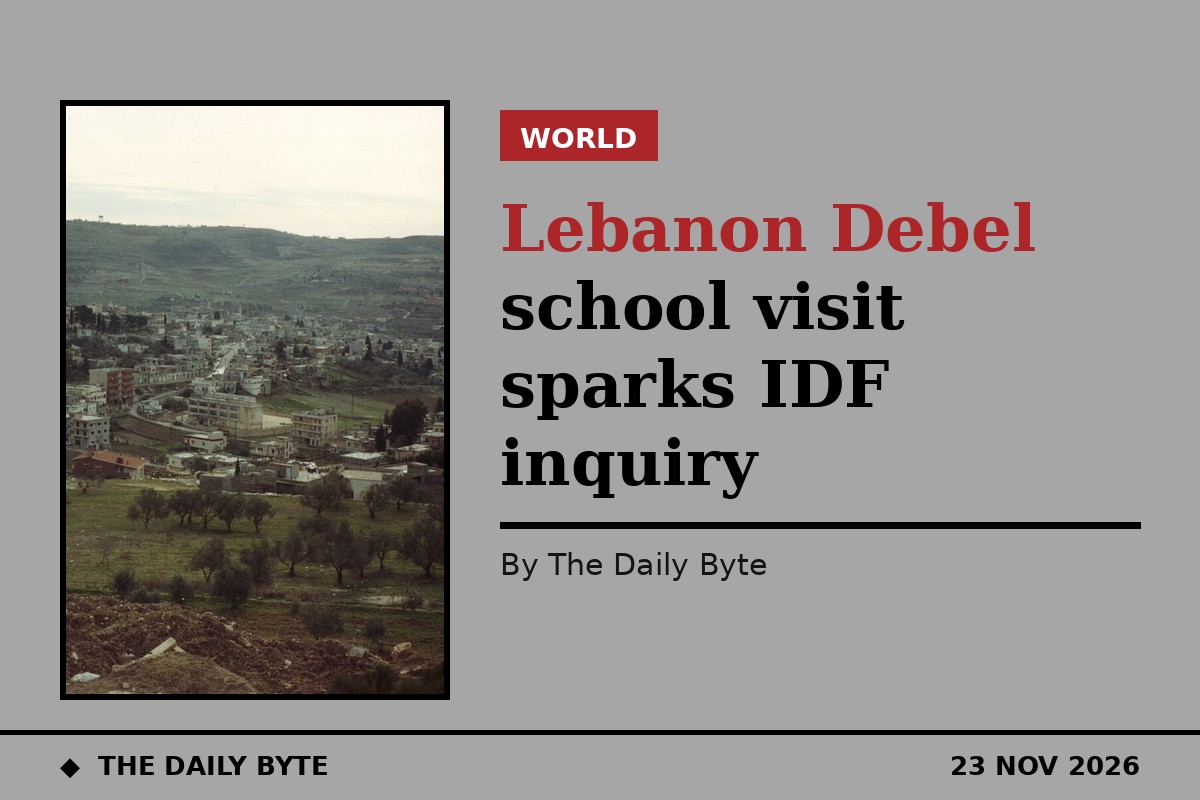
The Israeli military has opened an inquiry into a video filmed by its Arabic-language spokeswoman at a school in southern Lebanon, after the footage drew condemnation from Lebanon's most senior officials. Ynet reported on Monday that the army will examine whether Lieutenant Colonel Ella Waweya's video from the middle school in Debel had received the necessary approvals before it was published.
The video was posted on Sunday to mark Lebanon's Independence Day. It showed Waweya, who serves as the Israel Defense Forces' spokesperson for Arabic-language media, meeting pupils at the school in Debel, a predominantly Christian village in southern Lebanon where Israeli forces maintain a military presence. The footage spread quickly across Lebanese social media and set off a wave of anger in the country.
What the video showed
In the footage, Waweya spoke with children inside the school and reflected on her visit in a message published alongside it. "During my recent visit to southern Lebanon, I saw the beauty of the country, but the most beautiful thing was the hope in the children's eyes and their simple dreams of a safe future," she wrote.
She opened her Independence Day message with a tribute to the Lebanese singer Fairuz and the country's cultural heritage, before extending her wishes to Lebanon on its national holiday. "I wish Lebanon independence in every sense of the word: freedom, dignity, peace, and the power to decide on war and peace resting solely in the hands of the Lebanese state," she wrote, adding: "Lebanon deserves to be a homeland of dreams, not a battlefield."
Beirut's response
Lebanon's prime minister, Nawaf Salam, accused the Israeli military of exploiting children for propaganda. He described the army's entry into the state school as an invasion, saying that pulling pupils into a military and propaganda display harmed the sanctity of schools and the rights of children. He added that no occupying force had the right to use Lebanese children to improve the image of its occupation.
The education minister, Rima Karami, also condemned the visit. Her office said the school visit had taken place more than a month earlier and that the ministry had not known about it. A school "is not a place for military displays or propaganda" but a place of learning, life and hope, the ministry said, adding that children's right to study, to be safe and to live with dignity must not be harmed under any circumstances.
Hezbollah lawmaker Ihab Hamadeh condemned the visit as a violation of rights and an act of hostility towards the pupils, and demanded an investigation into how the officer entered the school. Another lawmaker, Hassan Murad, described it as a blatant assault on Lebanese sovereignty.
When the visit took place
Accounts differ on the timing. The municipality of Debel said the visit happened roughly a month before the footage appeared, with no coordination with the school's management, and pushed back on the footage with the line that a smile is not support for the occupation. Israel's Kan broadcaster put the visit at about 20 days earlier. One Israeli report, by contrast, said Waweya visited the school on Sunday morning.
Debel's local authority said the school had not been consulted about the visit. In an official statement, village representatives said residents had been living for many months under exceptional and difficult conditions, with an Israeli military presence imposed on their village, restrictions on freedom of movement, and daily fears for their safety and that of their children.
The village has also faced accusations of collaborating with Israel since the video appeared, claims for which no evidence has been presented and which residents have rejected.
Why the case matters
The inquiry reported on Monday is the first reaction from the Israeli military to appear in the reporting on the visit. Ynet did not say which part of the military is carrying out the check, how long it is expected to take, or what steps could follow. The report carries no comment from Waweya herself, and the military has not responded to the Lebanese criticism.
The episode has renewed attention on the Israeli military presence in southern Lebanon, where Israeli forces hold territory beyond the border. The Jerusalem Post reported that Salam used the episode to renew his call for an international presence in southern Lebanon after the mandate of the United Nations peacekeeping force, UNIFIL, expires at the end of 2026.
For now, the central questions remain unanswered: who approved the visit, when exactly it happened, and whether the school or the education ministry was told in advance. The inquiry may settle the first of those questions; the others depend on accounts that, so far, do not agree.


