Linux Foundation launches AI agent identity standard
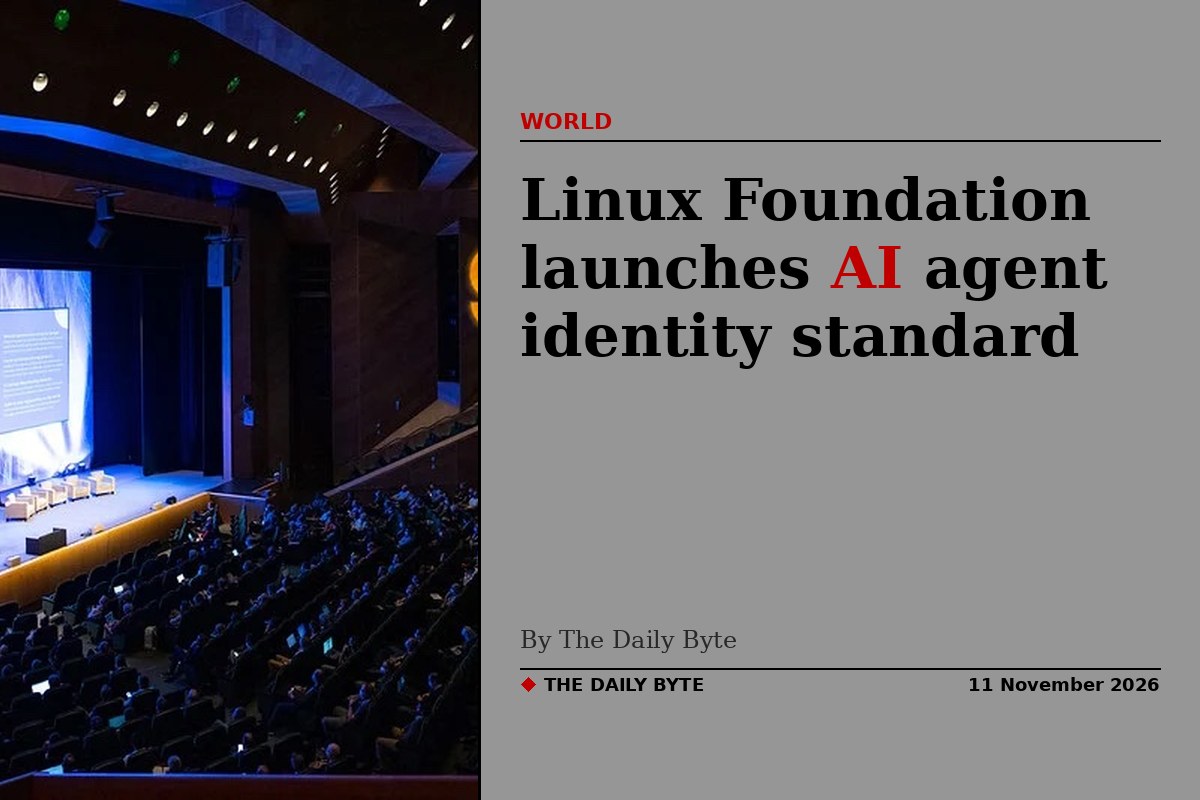
The Linux Foundation has launched Agent Name Service (ANS), an open standard designed to give artificial intelligence agents a verifiable identity, so that systems can check who an agent represents before trusting it to act. The project was announced on 10 November 2026 at KubeCon + CloudNativeCon North America.
ANS builds on the Domain Name System (DNS), the infrastructure that already routes web traffic, rather than creating a new proprietary registry. The specification sets out how agents are named and registered, how their identities are published through DNS records, and how those identities can be verified by other systems. It also covers monitoring identity records for unauthorised changes and agent-to-agent authentication.
Seven documents, eleven backers
The complete specification consists of seven documents covering domain-anchored naming, registration and versioning, DNS publication, public log auditing, integrity monitoring and authentication. Eleven organisations have contributed to or adopted the standard since the foundation announced its intent to launch it in June, including Cisco, Cloudflare, DigiCert, GoDaddy, Infoblox, Salesforce, OWASP and Radix.
Linux Foundation chief executive Jim Zemlin said: "Autonomous AI agents are transacting and operating across global systems, but they can't succeed without verifiable identity." He added that neutral governance would let the whole industry adopt, implement and improve the standard together.
Early use in agent directories
Early adoption is already under way. The AGNTCY Agent Directory Service, another Linux Foundation project, supports verification of ANS identities, while ANS Finder implements the Agentic Resource Discovery specification and passes its registry conformance tests. Reference software, including a command-line tool for registration, discovery and certificate management, is available through the project's open repositories.
There are limits to what the launch delivers today. The published specifications remain drafts under active development, and ANS establishes identity rather than permissions: each application must still decide what an authenticated agent is allowed to do. Even so, the launch gives developers a shared, vendor-neutral framework for building agent systems that can work across platforms, at a time when autonomous agents are increasingly handling payments, bookings and business tasks on behalf of users.


