Lithuania rejects Kaliningrad drone attack claim
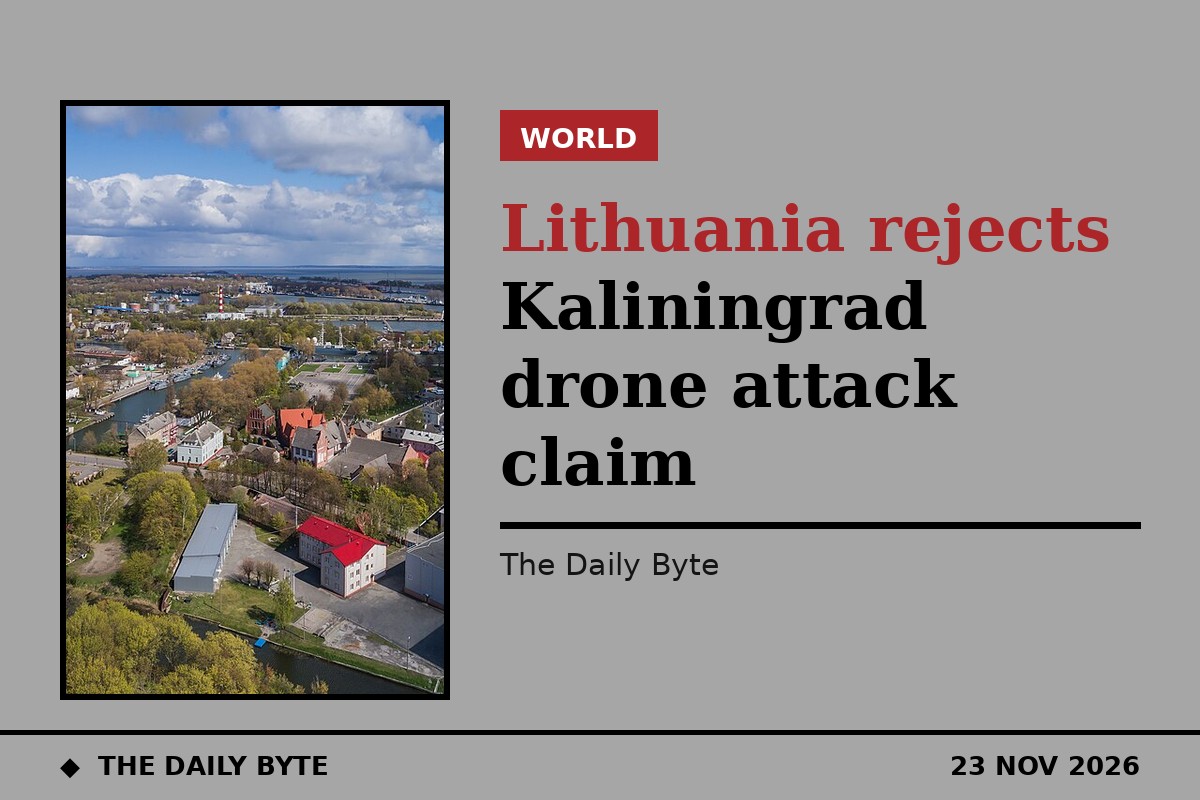
Lithuania has categorically rejected claims that its airspace was used in a drone incident in Russia's Kaliningrad region, after air raid sirens sounded across the Russian exclave on the evening of Saturday 21 November 2026. Vilnius says its military detected no drones and that no object crossed its border.
Foreign Minister Kestutis Budrys wrote on X that Lithuania "categorically rejects false claims" about the country's involvement, adding: "The Republic of Lithuania has never authorized the use of its airspace for attacks against targets in the Russian Federation, including in the present case." The denial was reported by the Associated Press on Sunday 22 November, via the Reflector.
What happened on Saturday evening
Kaliningrad governor Alexei Bezprozvannykh said a "suspicious object coming from the direction of Lithuania" triggered an alert in the Neman district, near the Lithuanian border, about 170 kilometres northeast of Baltiysk, the main base of Russia's Baltic Fleet. He later said specialists had examined the situation and determined there was no threat. According to local media, air raid sirens were heard in Kaliningrad for the first time since Russia's full-scale invasion of Ukraine began in February 2022.
Posts on Russian Telegram channels by users saying they were Baltiysk residents described air defences working over the port during the night, and the city's Khrabrovo airport restricted flights. The Associated Press said it could not immediately verify the authenticity of images circulating online. Kaliningrad authorities on Sunday denounced as fake one photo said to show smoke rising over Baltiysk, telling Russian state media that it had nothing to do with the region. As of Sunday morning, Russian authorities reported no casualties or damage in Kaliningrad.
Conflicting accounts, little hard evidence
The Institute for the Study of War, in its assessment of 22 November, said Russian air defence systems activated in Baltiysk but that the reason remained unclear and many details unconfirmed, according to its campaign assessment. Geolocated footage published on 21 November showed Russian air defences firing into the sky near the port, but the institute said it was unclear what they were firing at, and that there was no visual evidence of a drone sighting, an interception, drone debris or damage from an impact. Russia's defence ministry nightly report for the night of 21-22 November did not mention any air defence activity or drone threats near Kaliningrad.
Lithuania's National Crisis Management Centre said its air force had detected no drones over Lithuanian territory and that the night of 21-22 November was one of the quieter ones in that respect. Its head, Vilmantas Vitkauskas, said there was no evidence to confirm explosions in Kaliningrad and that no objects had crossed the border from Lithuania.
Wider Baltic tensions
The alert came hours after drones set fire to the Russian cargo ship Sparta II in the Gulf of Finland on 21 November. The vessel, bound for Kaliningrad, drifted into Finnish waters and its 16 crew members were evacuated. The episode added to a tense weekend in the Baltic, where Russian drone and missile activity has repeatedly tested NATO's eastern flank. Lithuania's denial underlines how quickly unverified claims about cross-border drone flights can escalate into a diplomatic dispute between a NATO member and Moscow.
Frequently asked questions
What happened in Kaliningrad on 21 November? Air raid sirens sounded across the region in the evening, and an alert was triggered in the Neman district near the Lithuanian border. Air defences were reported active over Baltiysk, but no damage or casualties were reported.
Did drones fly through Lithuanian airspace? Lithuania says no. Its air force detected no drones, and its foreign minister said the country has never authorised its airspace to be used for attacks on Russian targets.
Was anyone hurt? Russian authorities reported no casualties or damage in Kaliningrad as of Sunday morning.
Was Ukraine involved? No authority has confirmed who, if anyone, was behind the incident, and the Institute for the Study of War said it had not collected enough evidence to assess whether Ukrainian forces conducted a drone attack.
Sources: Associated Press via the Reflector; Institute for the Study of War.


