Five Areas Get Final Say on Council Shake-Up Plans
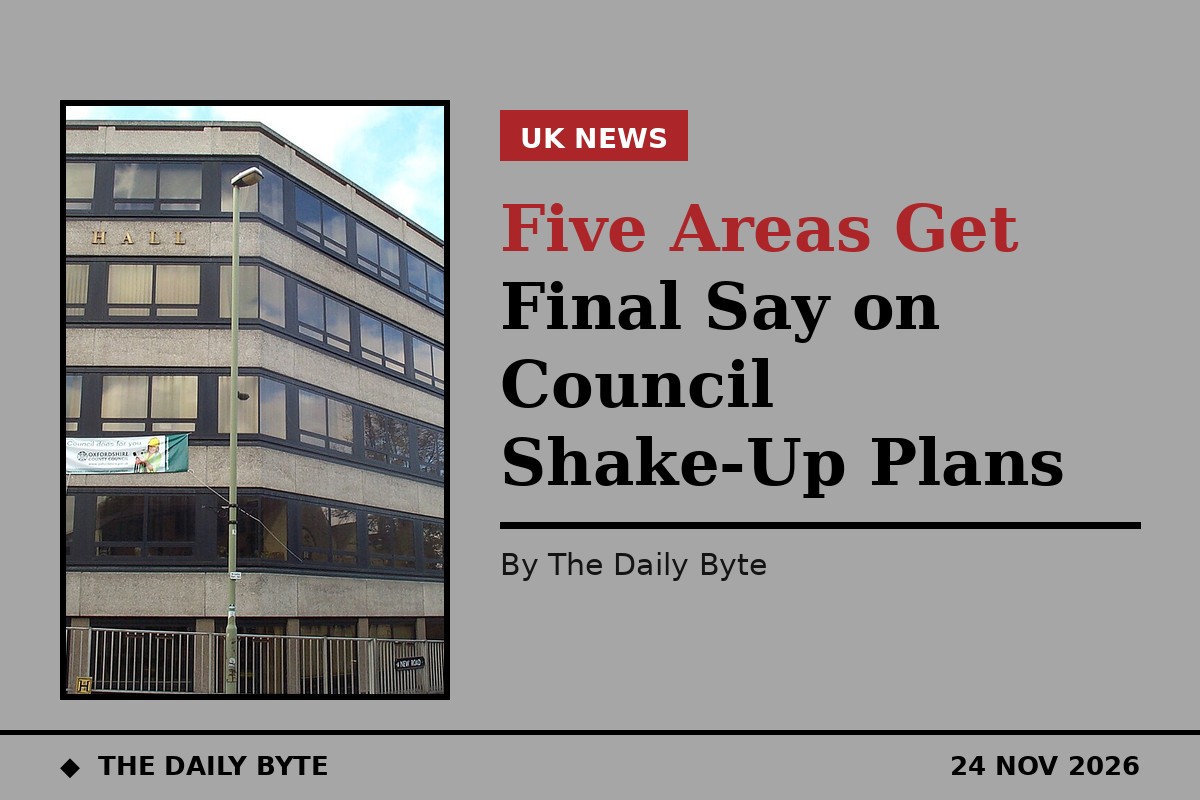
Councils and residents in five areas of England have until 14 December to have their say on provisional plans to scrap their county and district councils and replace them with unitary authorities, after the government opened a representation period on 23 November.
The five areas are East Sussex and Brighton and Hove, Gloucestershire, Oxfordshire, Warwickshire and Worcestershire. Each received a "minded to" decision from ministers on 29 October, setting out the government's provisional view that local government reorganisation should go ahead there. No final decision has been taken in any of the five areas.
The Minister for Local Government, Devolution and Regional Growth has written to council leaders in each area inviting them to submit further representations and evidence on the provisional conclusions and the reasoning set out in the "minded to" letters. Other interested parties, including residents, are also able to make representations. The government said there was no need to resubmit evidence or repeat points already made, because the exercise follows the earlier statutory consultation and does not reopen or replace it.
A methodology note has been published alongside the letters, explaining how efficiencies and financial sustainability were assessed under criterion two of the reorganisation proposals. The representations received will be considered alongside previous consultation responses and all other relevant information before ministers decide which proposal, if any, to implement, with or without modification. Any implementation would still need Parliamentary approval.
The plans on the table vary from area to area. The government's October proposals would create a single unitary council in Gloucestershire, two unitary councils in each of East Sussex and Brighton and Hove, Warwickshire and Worcestershire, and three unitary councils in Oxfordshire, including the adjoining area of West Berkshire. In East Sussex, the proposal includes a boundary change requested by Brighton and Hove City Council, with the parish of Falmer excluded.
For people living in the five areas, the change would be significant. At present, services are split between two tiers: county councils run services such as social care, education and highways, while district and borough councils handle planning, housing and waste collection. A unitary council would bring those responsibilities together under one authority, which the government argues would be simpler and cheaper to run.
The timetable stretches well beyond the December deadline. Local elections in the affected areas will go ahead in May 2027 on the existing council boundaries, providing certainty for voters and councillors in the short term. Elections to shadow councils are then planned for May 2028, and the new unitary councils are expected to go live in April 2029, subject to final decisions and approvals.
The five areas are the survivors of a wider review of the reorganisation programme. Decisions taken in July 2026 for nine areas were withdrawn in October, and decisions for four more areas had already been withdrawn in September, so that those proposals could be reconsidered. Fifteen areas remain under review, with final outcomes expected by early 2027. Surrey is unaffected by the review, with its new councils due to go live in April 2027.
The stakes are high for the councils involved. Reorganisation affects who collects the bins, who decides planning applications and who runs children's services and adult social care. It also affects council tax, jobs and the identity of local areas, which is why the government is giving councils and residents a further three weeks to challenge the provisional reasoning before ministers make their minds up.
Anyone who wants to respond can do so before the representation period closes on 14 December. After that, ministers will weigh the new evidence against the earlier consultation responses and decide whether to implement a proposal, change it or walk away from it altogether.