LockBit 5.0 Claims Penang Adventist Hospital Attack
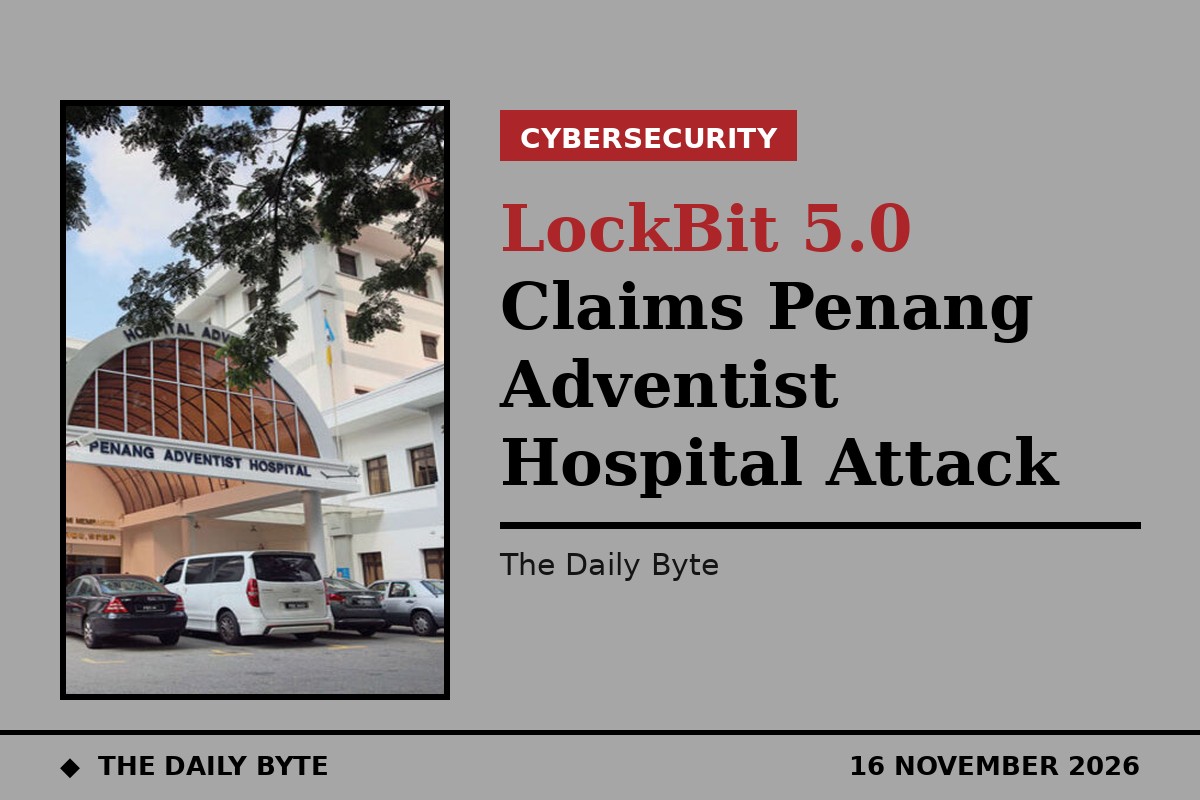
The LockBit 5.0 ransomware operation has named Penang Adventist Hospital in Malaysia as an alleged victim, adding the hospital to its dark-web leak site on 15 November 2026. The listing has raised concern in Malaysia's healthcare sector, but the group's claim remains unverified: no stolen data, no samples and no ransom demand have been published.
Penang Adventist Hospital is a private, non-profit hospital in Penang, founded in 1924. As of publication, no official statement from the hospital about the listing has been identified, and it is not known whether hospital systems were disrupted.
What the listing does — and does not — show
According to reports of the leak-site listing, LockBit 5.0 has published the hospital's name only. The listing does not include the volume of any stolen data, the categories of information supposedly accessed, evidence of unauthorised access, sample files or database records, or a ransom deadline or payment demand.
That matters because a ransomware leak-site listing is an extortion tactic: operators publish a victim's name and threaten to release data unless the organisation negotiates. The appearance of a name on such a site does not, on its own, establish that systems were breached, that data was stolen or that files were encrypted.
Patient records, appointment information, insurance documents, billing records and internal administrative files are the kinds of information a hospital holds, and any of them could in theory be at risk if an intrusion took place. But at this stage there is no evidence establishing that any of these categories were accessed or stolen in this incident.
LockBit 5.0 in context
LockBit was one of the world's most active ransomware operations before a law-enforcement disruption, Operation Cronos, targeted its infrastructure in February 2024. The operation later re-emerged under newer versions, including LockBit 5.0, continuing to publish victim names and use the threat of data exposure as leverage.
Healthcare organisations are frequent ransomware targets because their systems hold sensitive personal and medical information and because disruption to clinical and administrative systems carries immediate consequences. That is also why unverified listings about hospitals attract attention quickly — and why they should be reported carefully.
What patients should do
Patients of Penang Adventist Hospital should be cautious about unexpected messages claiming to come from the hospital, particularly any asking for medical information, passwords, verification codes or payments, or referring to appointments, procedures or insurance claims. Such messages could be used in phishing campaigns if attackers hold genuine patient information.
Anyone who receives a suspicious message should contact the hospital through its published official channels rather than replying to the message or clicking links in it.
What happens next
The next meaningful development would be technical evidence, an official hospital statement or independently corroborated information about the alleged compromise. LockBit 5.0 may publish further material if its extortion attempt continues, or the listing may remain without supporting evidence. DailyByte will update this story if the hospital or Malaysian cybersecurity authorities confirm or deny the claim.
Sources: Undercode News and DeXpose.


