Iran transcript puts Lula at odds with US over war
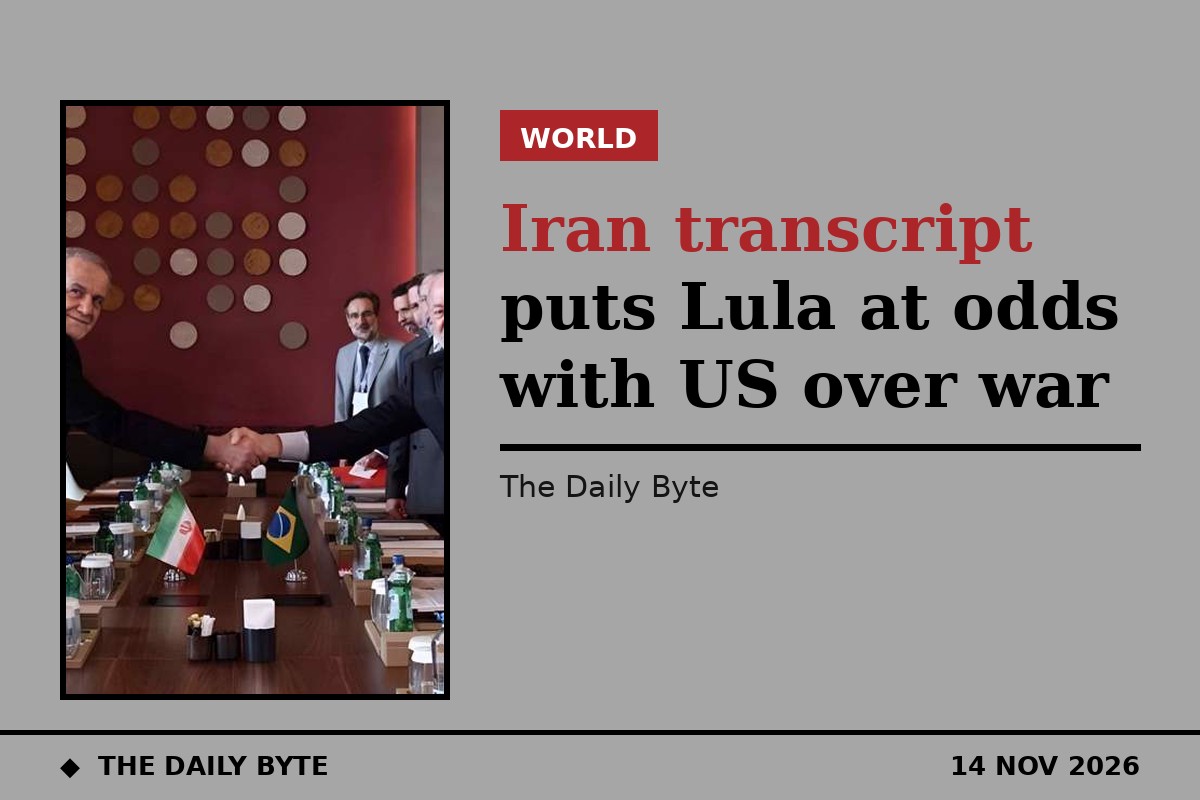
A row has broken out over what Brazil's President Luiz Inácio Lula da Silva said to Iran's President Masoud Pezeshkian in a private meeting at the COP31 climate summit, after Tehran published an account of the talks that attributes far stronger anti-American language to Lula than Brazil's own official version.
The two leaders met on Thursday, 12 November, on the sidelines of the United Nations climate conference in Antalya, Turkey. It was their first meeting since the war between the United States and Iran began, and it came as efforts to restart peace talks continued through mediators.
Brazil's presidential office, the Planalto Palace, issued a measured statement after the meeting. It said the leaders discussed the war in the Middle East, that Pezeshkian had briefed Lula on peace negotiations with Washington, including mediation by Qatar and Pakistan, and that Lula had urged a peaceful solution, defended Iran's right to civilian nuclear energy, and raised concerns about the war's effect on fuel and food prices. The statement also said Lula backed free navigation in the Strait of Hormuz and wanted to expand trade, including Brazilian imports of Iranian fertiliser. Bilateral trade between the two countries totalled about $3 billion in 2025.
The Iranian presidency's version, published in Persian and reported by Brazilian outlets including Metrópoles, tells a different story. According to that account, Lula told Pezeshkian that, in Brazil's view, an injustice had been committed against Iran in the war and that the United States was guilty of and responsible for the aggression. The transcript also quotes him describing American officials as accustomed to lying, saying that the lies of the Americans have no limits, and calling for efforts to correct and discredit false narratives about Iran.
The Iranian account further portrays Lula expressing deep solidarity with Iran and describing the bombings, including those that killed Supreme Leader Ali Khamenei, as very hard and bitter. It also links the conflict to higher energy prices that have hurt Brazil and other countries. Brazilian officials have not confirmed any of these remarks, and the Planalto Palace has not endorsed the Iranian version of the conversation.
The gap between the two accounts has fuelled political criticism of Lula at home in Brazil, where opponents have seized on the reported remarks to question his handling of relations with Washington. The episode is awkward for a president who was only recently re-elected and who has sought to keep Brazil's ties with the United States on an even footing while defending an independent foreign policy.
For Tehran, the publication of the transcript looks like an attempt to show that a major developing-world leader shares its view of the war. Iran's English-language statements about the meeting, by contrast, have been more restrained, focusing on expanded cooperation, trade and multilateral dialogue, in line with the account carried by the Iranian state news agency IRNA.
The meeting itself was only one part of a busy COP31 schedule for Lula. In his speech to the summit, he criticised governments that choose war over climate action, and he held a series of bilateral meetings before travelling on to the Philippines for the ASEAN summit in Manila.
What matters now is whether either government clarifies the record. Brazil has not denied the Iranian account outright, but it has not confirmed a word of it either. Until it does, the remarks attributed to Lula will remain just that: attributed, by one side, in a transcript the other side has not verified. The episode is a reminder of how easily a closed-door meeting can become a diplomatic incident when two capitals publish two different versions of the same conversation.


