Lula Picks Banker Trabuco as Finance Minister
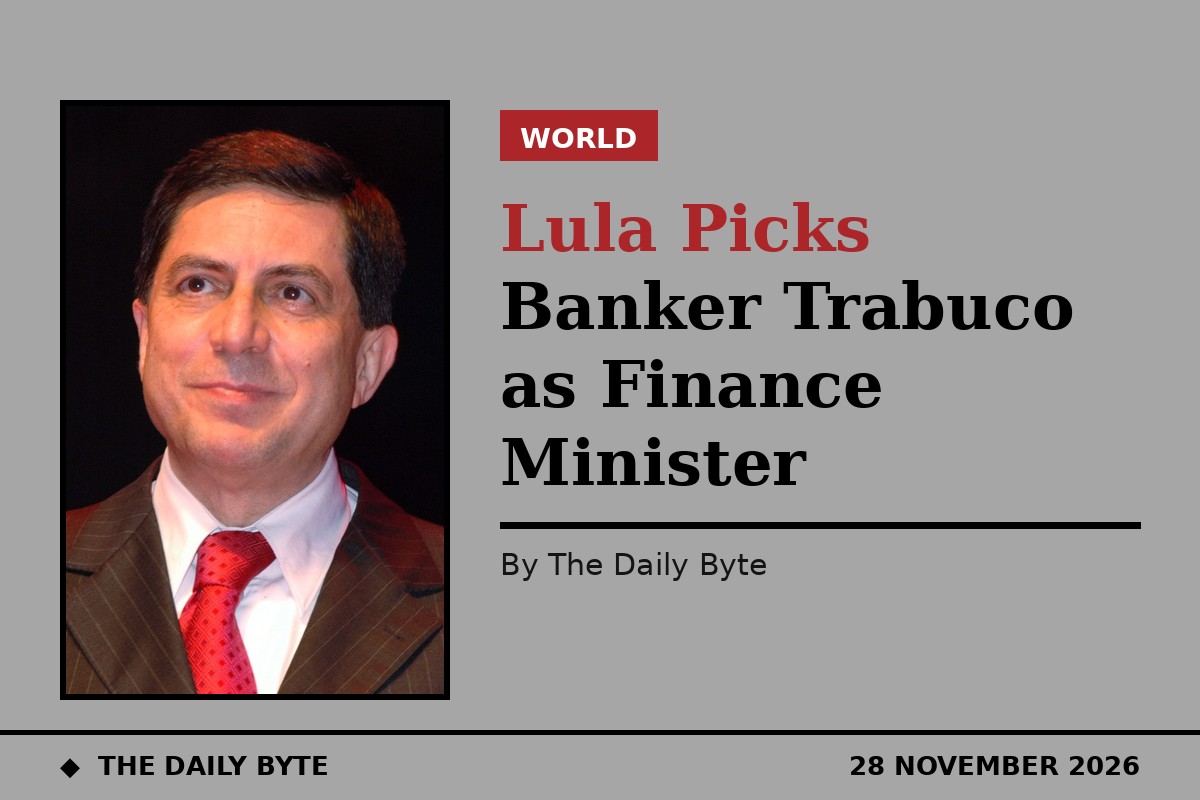
Brazil's financial markets rallied sharply on Friday after President Luiz Inacio Lula da Silva chose veteran banker Luiz Carlos Trabuco Cappi to lead the finance ministry in his next term, a move investors read as a turn towards steadier fiscal management.
Trabuco, 75, the chairman of Bradesco, accepted Lula's invitation on Thursday afternoon after travelling to Brasilia for talks with the president. The two men have known each other for years, and Trabuco has long been regarded as one of Lula's trusted contacts in the business world. He is due to take office in January 2027, when Lula begins a fourth term, succeeding Dario Durigan.
The market response was immediate. The real strengthened as much as 4.7% against the US dollar in spot trading, reaching 5.47 per dollar before easing to 5.55, while the Bovespa benchmark share index rose as much as 3.9%. Interest rate futures fell sharply and Brazil's longer-dated international bonds gained around two cents on the dollar, recovering most of the losses suffered since Lula's re-election. The rally had begun a day earlier: on Thursday the Bovespa closed 6% higher and the real gained 1.2% as reports emerged that the two men were meeting.
Why investors welcomed the choice
Brazilian assets had weakened since Lula defeated right-wing rival Flavio Bolsonaro in October's presidential election, as investors worried about the fiscal direction of a fourth term built on higher social spending. Trabuco's record at one of Brazil's largest banks offered reassurance. Analysts at Citi said the appointment could be read as a sign of a somewhat more market-friendly approach, given his standing in the financial community and his long experience in banking.
Trabuco joined Bradesco as a clerk at 17 and spent more than four decades rising through the bank, serving as chief executive from 2009 to 2018. His time in charge included the purchase of HSBC's Brazilian business in 2015. Bradesco is Brazil's second-largest private lender and its fourth-largest bank by assets.
The fiscal task ahead
His most pressing task will be to persuade investors that Brazil can slow the rise of public debt, now close to 83% of gross domestic product and up by about 11 percentage points since the start of Lula's third term. High official interest rates, at 13.75%, add to the pressure. The government has announced fiscal measures aimed at savings of 0.5% of GDP in 2027, but analysts say deeper spending cuts will be needed to stabilise debt and borrowing costs.
Economist Roberto Troster said he expected Trabuco to focus on long-term fiscal sustainability, including further pension reform and a review of indexation mechanisms. Treasury Secretary Daniel Leal said on Friday that Trabuco was expected to have a say in discussions over further fiscal measures now under consideration.
Other names had been considered for the post, including Vice-President Geraldo Alckmin and Rafael Fonteles, the re-elected governor of Piaui state. Lula's choice of a banker with deep roots in Sao Paulo's financial establishment signals that calming markets is a priority as he prepares for a fourth term.


