Lula says US share of Brazil trade falls to 9.2%
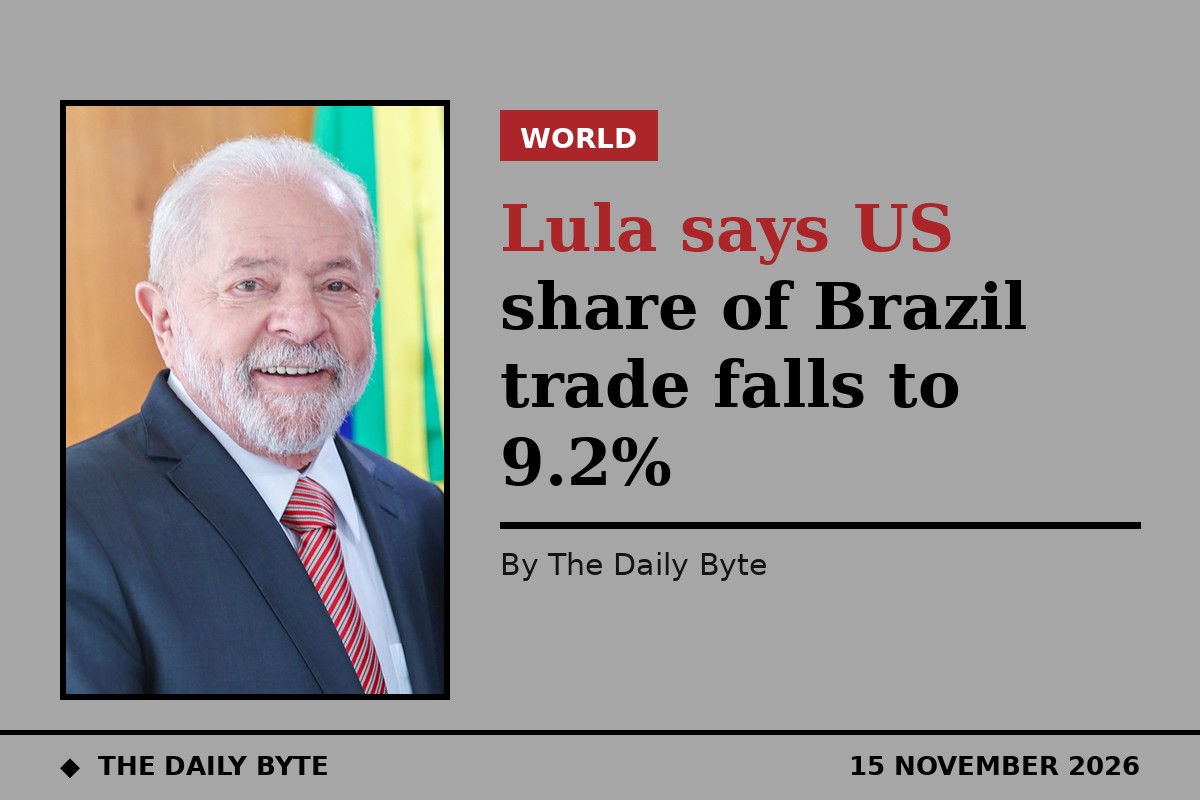
Brazilian President Luiz Inácio Lula da Silva has said the United States now accounts for only 9.2% of Brazil's global trade, after Washington imposed steep tariffs on Brazilian goods. Speaking in Manila on Sunday, he said Brazil had responded by finding new buyers and suppliers rather than seeking relief from the United States.
Lula was speaking to reporters on the sidelines of the 49th ASEAN Summit in the Philippines, where he attended as a guest of Philippine President Ferdinand Marcos Jr. He said Brazil had “learned an extraordinary lesson” from the tariffs, and argued that the episode showed multilateral trade was more effective than unilateral action.
China trade up by almost 20%, Lula says
According to Lula, trade with China increased by almost 20% after the tariffs took effect, while trade with Indonesia rose by 15%, Germany by 15.8% and Vietnam by 13%. He said trade had increased across 50 countries by an average of 10.5%, and that Brazil's trade surplus had climbed to R$80 billion from R$50 billion.
The figures are Lula's own account of the shift, and he did not specify the comparison period or the methodology behind them in the remarks reported on Sunday. They should therefore be read as the president's description of the trend, rather than as independently published customs data for a stated period.
“Instead of crying or begging the American government to have pity on Brazil, we decided to look for other partners to sell to and buy from,” Lula said, in remarks reported by Clash Report.
Tariffs raised to 50% in 2025
In late July 2025, US President Donald Trump imposed measures that raised tariffs on most Brazilian goods to 50%, taking effect around 6 August. Washington cited concerns related to the prosecution of former Brazilian President Jair Bolsonaro and other issues framed as a national emergency. The package included exemptions for civil aircraft, certain energy products and orange juice.
Lula had vowed retaliation at the time. On Sunday, he presented the search for alternative markets as a deliberate strategy, saying Brazil had chosen to widen its trading relationships instead of pressing Washington for concessions.
Brazil looks to ASEAN for new markets
A central part of that strategy is Southeast Asia. Lula said Brazil's trade with ASEAN grew to R$38.80 billion in 2026 from R$3 billion in 2003, although he described that growth as small given the size of the bloc's economies. He said Brazil wants to become a permanent partner of the bloc so it can double that trade.
He also invited Marcos to visit Brazil next year, after the two leaders met in Manila and witnessed the signing of memoranda on agriculture and competition policy. The visit was the first by a sitting Brazilian head of state to the Philippines, as the two countries mark 80 years of diplomatic ties. Lula said he had also invited the leaders of Canada, South Korea and Singapore to visit Brazil.
From raw materials to manufacturing
Lula tied the search for new partners to a push for domestic manufacturing. “We want to produce batteries in Brazil, produce chips in Brazil, because Brazil no longer wants to be an exporter of raw materials or commodities,” he said. “Brazil wants to be an exporter of knowledge and intelligence.”
He invited foreign governments and companies to invest in Brazil's critical minerals, provided that industrial value stays in the country, and said Brazil wants partners to process critical minerals and rare earths locally rather than simply buying them for export.
Lula arrived in Manila from COP31 in Antalya, Türkiye. According to BusinessWorld, he said he would stop in Spain on his way home and return to Brazil on Tuesday. The coming months will show whether the trade shift he described is sustained, and whether the new partnerships in Asia can match the scale of the market Brazil has lost in the United States.


