Madina ends school shift system with new classrooms
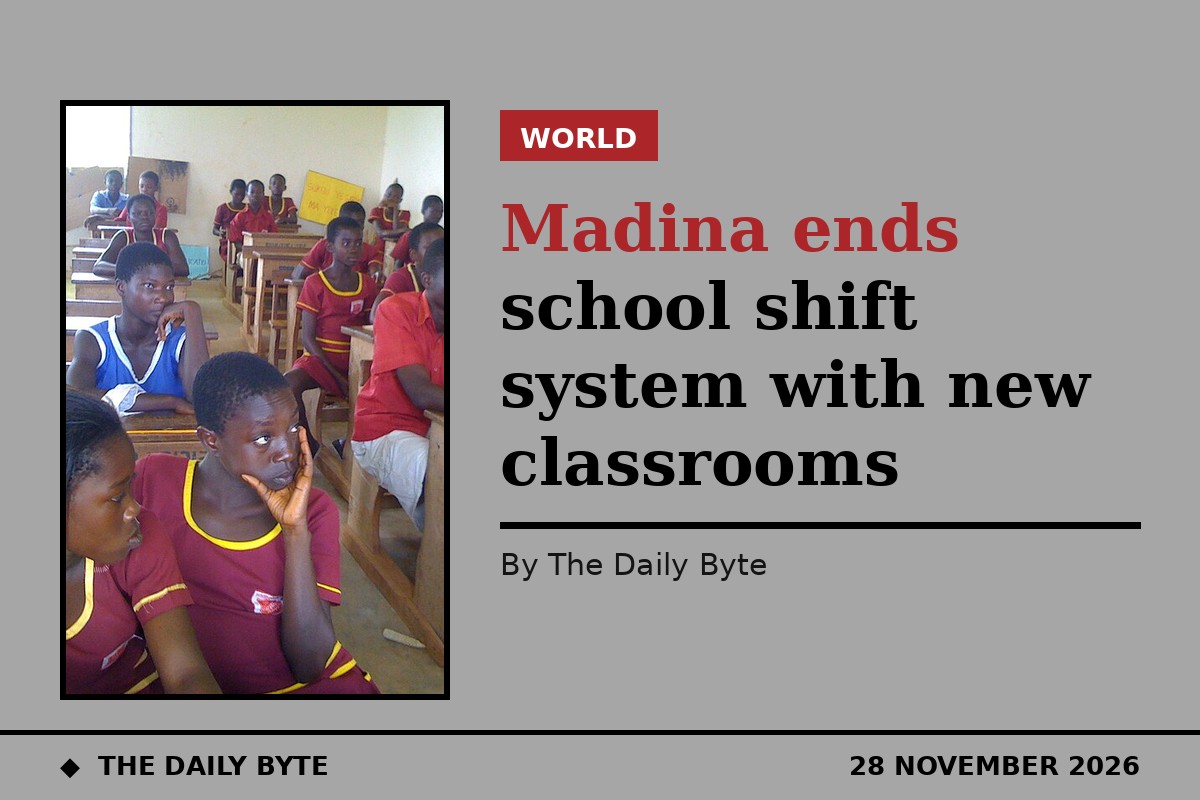
New classroom blocks commissioned in Madina, Ghana, have brought an end to the shift system in the area's public basic schools, ending years of overcrowding that forced pupils to learn in turns.
The Municipal Chief Executive (MCE) of the La Nkwantanang Madina Municipal Assembly, Ibrahim Faila Fuseini, and the Member of Parliament for Madina, Francis-Xavier Kojo Sosu, commissioned the new facilities at Babayara Basic School on Friday, 27 November 2026. The project, delivered as Babayara School Phase 1, includes a three-storey, 18-unit classroom block, a clinic and a nurses' and teachers' bungalow.
On the same day, the MCE, the MP and traditional leaders commissioned a modern three-storey, 28-unit classroom block at UBH School in Madina Zongo. Citi Newsroom reported on Saturday, 28 November that the Assembly had abolished the shift system in nearly all public basic schools in the municipality.
What the shift system meant for pupils
The shift system, known locally as double track, was introduced as a temporary response to overcrowding and a shortage of classrooms. Under it, different groups of pupils used the same classrooms at different times of the day, shortening teaching hours for each group. The new blocks give the schools enough space for all pupils to attend at the same time.
Fuseini said the new classroom blocks, built by the Qatar Charity Foundation and the Assembly, had ended double track in Madina after years of overcrowding at the Madina Zongo Islamic School at Babayara. He said the Zongo project was completely funded by the Qatar Charity Foundation, while the newer project was built with partial support from the foundation and the Assembly. The partnership goes back years, he said, to his time as presiding member and assembly member, and he took up the project with the foundation soon after assuming office as MCE on 5 May 2025.
He said the schools would be turned into model or demonstration schools so they could be managed effectively, bringing facilities of the standard found in residential areas to ordinary communities. He encouraged parents to enrol their children, saying the community had been deprived for a very long time. The Assembly is working with the head of the Education Directorate, the Director of Education, Mr Philip, to put a strong management team in place for the schools.
More blocks on the way
More building work is under way. The MCE said another full 18-classroom block, completed by the Assembly for the Pantai Electoral Area, would be commissioned next week. The new facilities also bring healthcare closer to the schools: the clinic at Babayara serves pupils and the surrounding community, and the bungalow provides accommodation for nurses and teachers.
Education Minister Haruna Iddrisu has said the shift system is not a national policy and has largely been phased out across Ghana, with the Ministry of Education and the Ghana Education Service continuing to build additional classroom blocks at the basic school level to eliminate it completely. The Madina commissionings are the latest step in that effort, and for the pupils of Babayara and UBH, the end of double track means a full school day in a proper classroom for the first time.


