Ellis Wants ABA Accreditation Back in Texas
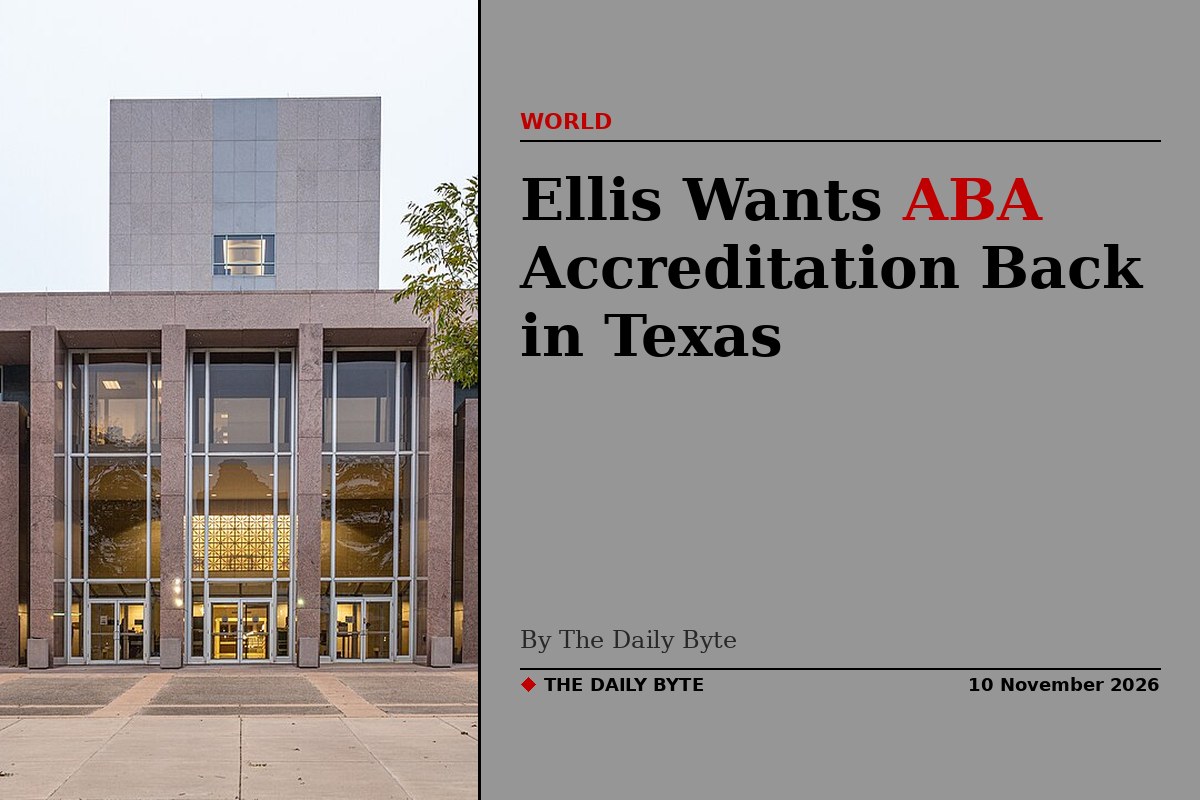
Texas chief justice-elect Maggie Ellis wants the state to restore the American Bar Association (ABA) as the accreditor of its law schools, she told Bloomberg Law last week, in one of her first policy statements since winning election on 3 November.
Ellis, a Democrat, defeated Republican incumbent Jimmy Blacklock with 52.45 per cent of the vote to become the first woman elected chief justice of the Supreme Court of Texas. She is also the first openly LGBTQ+ person elected to statewide office in Texas, according to her campaign. She takes office in January 2027.
A break with the governor’s agenda
Texas moved away from the ABA, the only national accreditor of law schools, in a process that began in early 2025. Governor Greg Abbott, who appointed seven of the court’s nine justices, including all four who lost their seats last week, had directed state agencies to eliminate diversity, equity and inclusion policies around the same time.
Ellis said she wants the new court to revisit the decision on its own terms. “My hope is that we’re able to each share ideas and the new supreme court can look at it and not base it on following in the footsteps of initiatives of the governor,” she told Bloomberg Law on Thursday.
She added that she planned to speak with Blacklock, who reached out after the election to discuss her arrival on the court. On leading a court that will still have a Republican majority, Ellis said: “I think it’s important that we’re able to disagree without being disagreeable.”
A reshaped court
Ellis was one of four Democrats to win seats on the nine-member court last week. Chari Kelly, Kristen Hawkins and Gisela Triana won the other three seats on the ballot, ending 26 years in which all nine justices were Republicans. The court will now have a 5–4 Republican majority, and seven of its nine justices will be women — the first majority-female court in Texas outside a specially appointed all-woman court in 1925.
The new justices will serve six-year terms. Texas tests the third-largest number of bar candidates in the United States, so any change to law school accreditation would be watched closely by law schools and the legal profession across the state.
Ellis has also signalled she wants the court to revise its October 2025 guidance on the Code of Judicial Conduct, under which judges who officiate weddings must perform them for all couples or for none. That proposal is likely to be an early test of how far a chief justice’s influence reaches on a court where she leads a minority bloc.


