Malawi Fuel Crisis: Queues, Black Market and Protests
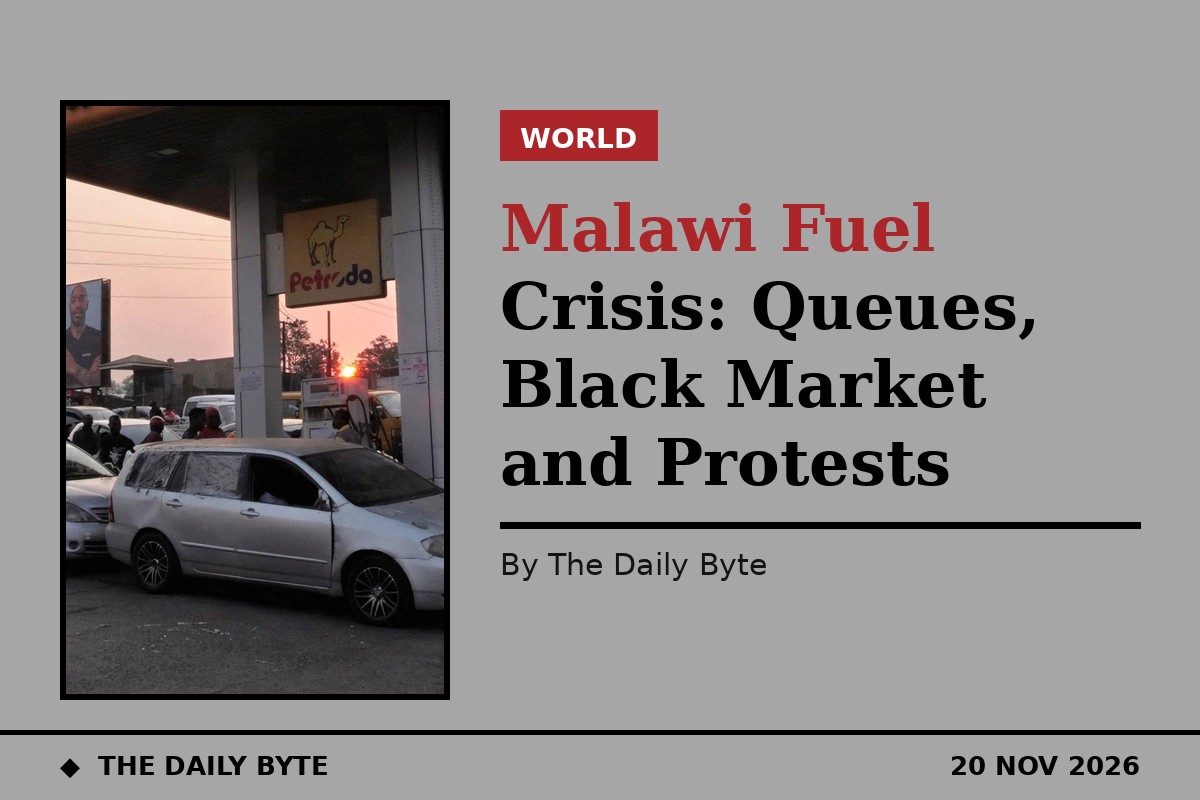
Finding fuel in Malawi has become a daily struggle. Motorists wait for hours, and sometimes whole nights, at filling stations for tankers that may never arrive, while businesses lose customers and a dangerous black market fills the gap left by empty pumps.
In Blantyre, the commercial capital, car dealer Ken Mhango told Al Jazeera he spent four hours in a queue to buy 20 litres of petrol, while others stayed overnight. On another occasion he joined a convoy of drivers chasing a delivery, waiting from 5pm until a tanker arrived at 9pm. “The crisis has completely changed and messed up everything,” he said, adding that customers had stopped bringing their cars to his garage.
Queues, rationing and rising fares
Buyers are reportedly limited to 20 litres of fuel a day. The Malawi Energy Regulatory Authority publishes a daily list of the filling stations expected to receive supplies, but motorists say deliveries are too unpredictable to plan around. Queues have turned tense, with reports of scuffles and queue jumping by minibus and motorcycle taxi drivers.
The shortages are reaching beyond the forecourt. Students at Mzuzu University’s Dunduzu Campus have been hitching rides to lectures because only a handful of filling stations in Mzuzu have fuel and public transport has been disrupted. Motorcycle taxi operator Tadala Kachingwe in Limbe said his savings had disappeared since the shortages began, and commuters across the country report sharply higher fares as transport operators pass on their costs.
A black market with deadly consequences
Unable to find enough fuel at the pumps, many people are buying from informal vendors, even though selling fuel without a permit is illegal. Mhango said he paid 30,000 kwacha, about $17, for two litres of petrol for his father. Unsafe storage of black market fuel has caused deadly fires and explosions, and Malawi’s Nation newspaper has recorded at least six deaths from such blasts this year.
Petrol in Malawi costs about $3.24 a litre, according to GlobalPetrolPrices, more than double the global average of roughly $1.52. The high price reflects scarcity rather than tax: there is simply not enough fuel coming into the country.
Foreign currency shortage behind the crisis
Officials blame a lack of foreign currency for much of the problem. A Ministry of Energy spokesperson has acknowledged that foreign exchange constraints have made it hard to pay international suppliers, including problems with letters of credit at local banks. The country needs roughly two million litres of fuel a day, which places heavy pressure on its reserves.
In a statement this week, the ministry said the crisis was “largely attributable to a combination of financial, foreign exchange and logistical constraints” and rejected claims that the government was doing nothing. According to a ministry document, the National Oil Company of Malawi and Petroleum Importers Limited have struggled to meet their obligations, some suppliers have suspended loading or are demanding payment before releasing fuel, and the country’s strategic fuel reserves have been depleted since 2021.
Government measures and growing anger
The government says it is pursuing emergency and long-term measures, including mobilising foreign exchange, settling outstanding payments to suppliers and rebuilding strategic reserves. The energy ministry is engaging the Reserve Bank of Malawi and commercial banks to speed up letters of credit for additional imports.
Through the regulator, it has introduced mandatory rationing: motorcyclists are allocated a maximum of two litres, petrol vehicles 30 litres, light-duty diesel vehicles 50 litres and diesel trucks 120 litres. Between 12 October and 6 November, authorities confiscated 4,200 litres of fuel in operations against illegal trading, and the regulator has deployed 298 temporary compliance workers to monitor sales and manage queues. It is also developing a digital fuel management application to track imports, stocks and refuelling transactions.
Public anger is growing. The Human Rights Defenders Coalition had planned nationwide protests on 17 November to demand the energy minister’s resignation over fuel shortages and power cuts, but postponed them after police said they could not guarantee security because officers were needed for a ruling-party parade the same day. The coalition’s chairperson, Michael Kaiyatsa, described the situation as “heartbreaking” and said it was affecting access to healthcare, food, jobs and schooling. “Ultimately this is a human rights issue,” he told Al Jazeera.
The ministry has appealed to civil society groups planning demonstrations to reconsider and engage through dialogue, saying cooperation between government, civil society, the private sector and the public is needed to restore reliable supply. For now, though, Malawians face another day of queues, with no date given for when normal supply will return. Read the full reporting at QNC News and the Malawi Observer.


