Four Asian central banks sign local currency pact
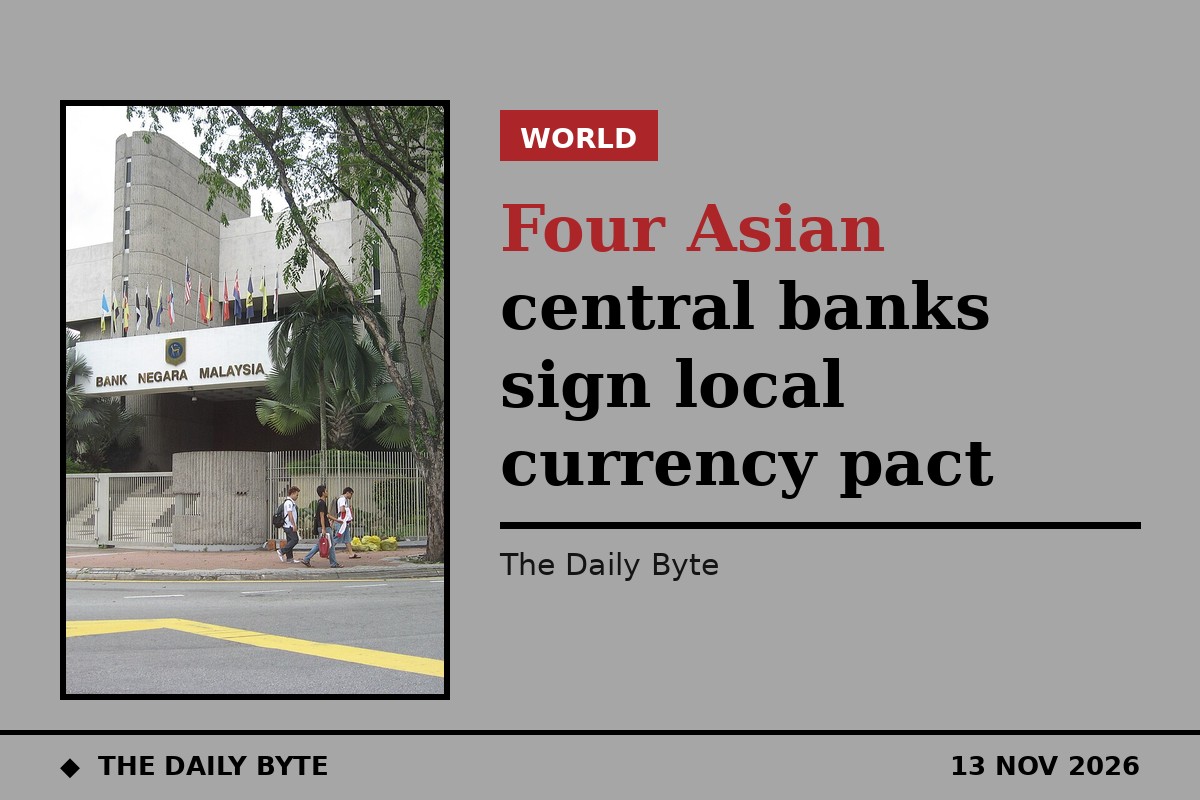
The central banks of Malaysia, Indonesia, Thailand and the Philippines have signed a new agreement to settle cross-border trade and investment in their own currencies, in a move designed to cut costs and reduce exposure to swings in foreign exchange markets.
Bank Negara Malaysia, Bank Indonesia, the Bank of Thailand and Bangko Sentral ng Pilipinas signed a memorandum of understanding on Friday 13 November under the Local Currency Transaction Framework. The agreement creates a shared framework for businesses in the four countries to pay each other in ringgit, rupiah, baht and pesos, rather than converting payments through a third currency first.
What the agreement changes
The new memorandum replaces the bilateral agreements previously signed by Malaysia, Indonesia and Thailand in August 2023, and brings the Philippines into the arrangement for the first time. The four central banks said the framework would cover bilateral transactions including trade, investment and other eligible dealings between the participating countries.
By encouraging the wider use of local currencies, the framework aims to make cross-border settlement more efficient, reduce the costs that come with multiple currency conversions, and give businesses and other market participants more flexibility in managing foreign exchange risks. The central banks said they would continue working together to develop and implement the framework, with the aim of gradually expanding local currency transactions and strengthening regional financial cooperation.
Who signed it
The memorandum was signed by Bank Negara Malaysia Governor Abdul Rasheed Ghaffour, Bank Indonesia Governor Destry Damayanti, Bank of Thailand Governor Vitai Ratanakorn, and Bangko Sentral ng Pilipinas Governor Eli M. Remolona Jr.
Bank Negara Malaysia said the expanded framework was another step towards deeper regional financial integration, as economies in Southeast Asia seek to strengthen their financial resilience and make cross-border transactions more efficient. The four central banks reaffirmed their commitment to advancing the framework and to expanding the use of local currencies in supporting economic activity across the region.
Why local currencies matter
For many businesses trading across Southeast Asia, invoices have traditionally been settled in a major international currency, which means paying conversion costs twice: once from the local currency into that currency, and again at the other end. Settling directly in the currencies of the two trading partners removes one of those steps and leaves firms less exposed to movements in exchange rates they do not control.
The agreement comes as Southeast Asian economies look for ways to deepen financial ties within the region. The four countries involved are among the largest economies in the Association of Southeast Asian Nations, and their central banks have been building local currency settlement arrangements with each other for several years. Bringing the Philippines into the framework extends that network to a fourth major economy, and the central banks say the arrangement will keep expanding to support trade and investment across the region.


