Malaysia to resettle 10,000 Rohingya in Turkey
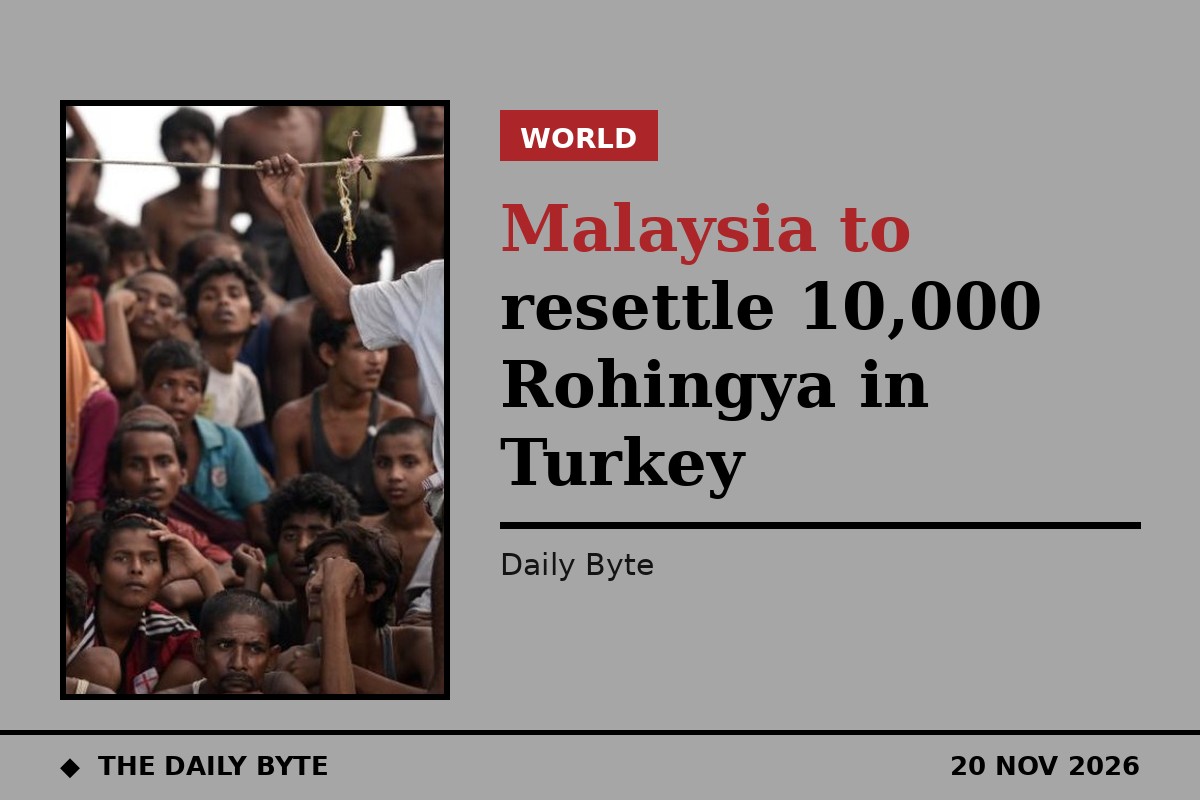
Malaysia will resettle 10,000 Rohingya refugees in Turkey through a structured skills training programme, in what would be one of the largest resettlement efforts involving the Rohingya since the 2017 military crackdown in Myanmar.
Deputy Prime Minister Ahmad Zahid Hamidi announced the plan on Friday, 20 November. He said Turkey had agreed to receive the refugees and that Malaysia’s Cabinet had approved the proposal, which followed his recent official working visit to Turkey.
“I welcome the government of Turkey’s agreement to receive 10,000 Rohingya refugees. This marks an important step in Malaysia’s efforts to find a long-term solution to an issue that has long posed challenges for migration management and national security,” Zahid said in a statement.
Training first, then resettlement
The programme is built around Technical and Vocational Education and Training, known as TVET, lasting between three and six months. The training will be tailored to the needs of different industrial sectors in Turkey, so participants arrive with practical skills employers there need.
“This approach goes beyond merely sending Rohingya refugees to a third country as it offers them the opportunity to build a new life through a Technical and Vocational Education and Training programme,” Zahid said. “Through this initiative, the participating Rohingya refugees will be equipped with practical skills and relevant professional competencies.”
Malaysia will work with the Turkish authorities, the UN refugee agency UNHCR and other relevant agencies to coordinate participant selection, training, documentation and resettlement. Zahid said implementation would take into account industry needs, the consent of the individuals concerned and applicable international rules.
No start date or timetable for the first departures was given in the announcement.
A day after the genocide ruling
The plan was announced a day after the International Court of Justice ruled that the killings and widespread sexual violence against the Rohingya by Myanmar’s security forces in 2017 amounted to state-sponsored genocide. Myanmar’s government has called the ruling unfair and said the decision was not unanimous.
Zahid said the initiative was in line with the long-term solutions advocated by UNHCR, including resettlement in third countries, and that it prioritised the safety, protection, dignity and future of refugees.
“Addressing the refugee issue should not be viewed solely from the perspectives of enforcement and repatriation, and it must also account for the humanitarian dimension,” he said. “Rather than simply being moved from one country to another, these individuals are provided with knowledge, skills, and opportunities to build a more secure future.”
Pressure inside Malaysia
Malaysia has come under pressure to send Rohingya refugees back to Myanmar amid rising tensions with local communities. According to UNHCR figures cited by Reuters, Malaysia had about 193,000 registered refugees from Myanmar at the end of February, around two-thirds of them Rohingya.
Malaysia has sent more than 10,000 Myanmar nationals back to their country since January. Zahid said a strategic partnership with a third country such as Turkey could serve as a new, more systematic and sustainable model for managing refugee resettlement.
Turkey’s foreign ministry did not immediately respond to a request for comment on the plan.
Sources: Reuters; Media Selangor.


