Manchester United Loss Widens to £18.1m in Q1
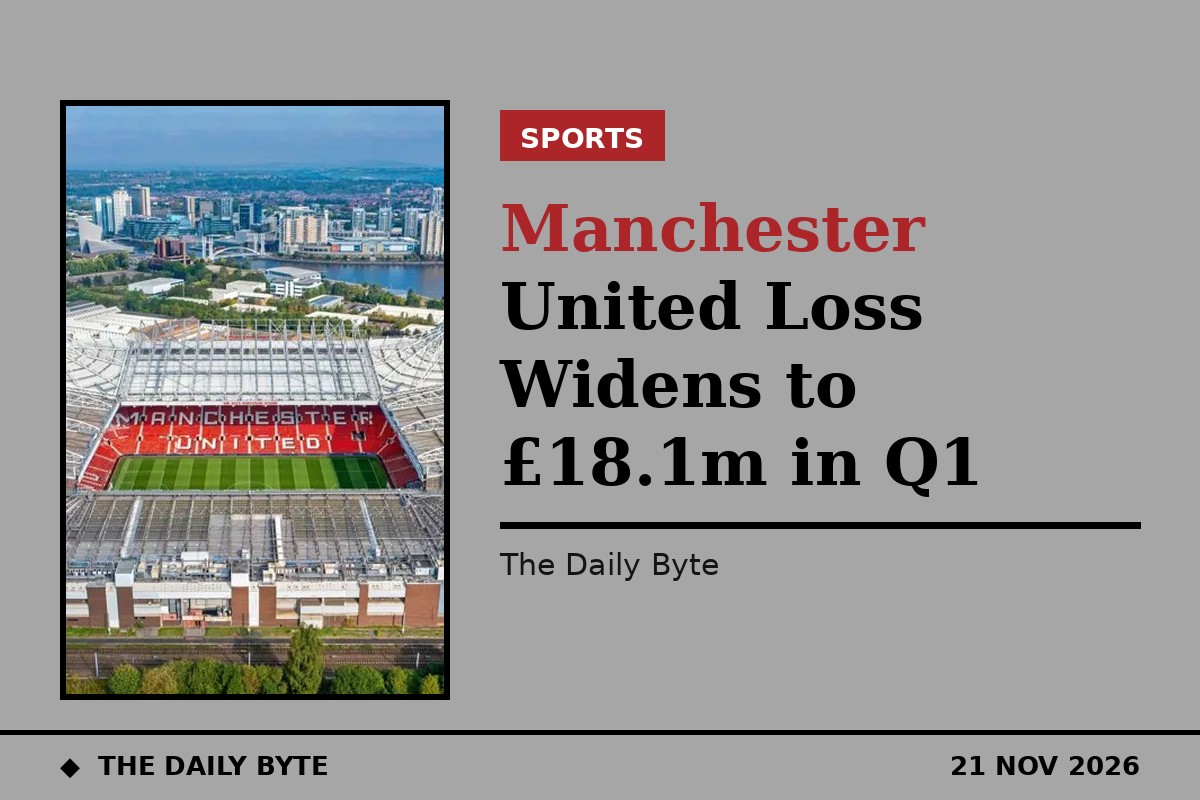
Manchester United have reported a quarterly net loss of £18.1 million, after a summer of heavy spending and rising wages outweighed a small rise in revenue.
The first-quarter results for fiscal 2027, covering the three months to 30 September 2026 and published on 19 November, show total revenue up 4.1 per cent to £146.1 million, compared with £140.3 million in the same quarter last year. Wages rose faster, up 8.6 per cent to £79.9 million, and the loss after tax widened from £6.6 million a year earlier, an increase of 174.2 per cent.
Broadcasting revenue provided the biggest lift, rising 17.7 per cent from £29.9 million to £35.2 million as the club returned to the Champions League. Matchday revenue rose 2.3 per cent, from £26.2 million to £26.8 million, and retail and merchandising grew 3.5 per cent, from £37.2 million to £38.5 million. Sponsorship revenue fell 3 per cent, from £47 million to £45.6 million, after a smaller pre-season tour.
The figures also show the cost of the summer transfer window. Net spending on intangible assets, which is mainly players, rose by £43.3 million to £143.1 million, while profits from player sales fell 54 per cent to £20.7 million.
On the debt side, non-current borrowings rose 19.2 per cent, from $650 million (£481.2 million) to $775 million (£577.4 million), mainly because of a refinancing. Current borrowings fell from £268 million to £207.1 million, and the interest paid in the quarter fell 32 per cent to £14.5 million.
Results do not cover Pochettino appointment
The report covers the summer transfer window but not the sacking of head coach Michael Carrick or the appointment of Mauricio Pochettino, both of which came after the quarter ended. Chief executive Omar Berrada said the club was pleased to welcome Pochettino and his staff, adding: “Our revenue remains strong and on track, while we continue to grow sustainably. Our priority is to support them as we look continuously to improve our performances on the pitch.”
Pochettino takes over a side sitting 18th in the Premier League and fighting a relegation battle, a very different picture from the one painted by the club’s commercial figures. United have kept their full-year revenue guidance of £740 million to £760 million, but the results underline how much of that income is already spoken for by wages and transfer commitments.
What the numbers mean
The pattern in the quarter is clear. Revenue grew, and the return to the Champions League lifted broadcasting income, but the wage bill grew more than twice as fast as revenue, and profits from selling players dropped sharply. The summer recruitment drive was paid for largely up front, with net spending on players rising by more than £40 million in three months.
The refinancing reshaped the debt rather than reducing it. Long-term borrowings rose by almost a fifth, while short-term borrowings fell, and the quarterly interest bill came down. For supporters, the more pressing question is on the pitch: whether a squad assembled at such cost can climb away from the bottom of the table under its new head coach.