Marcos signs Philippines school voucher law
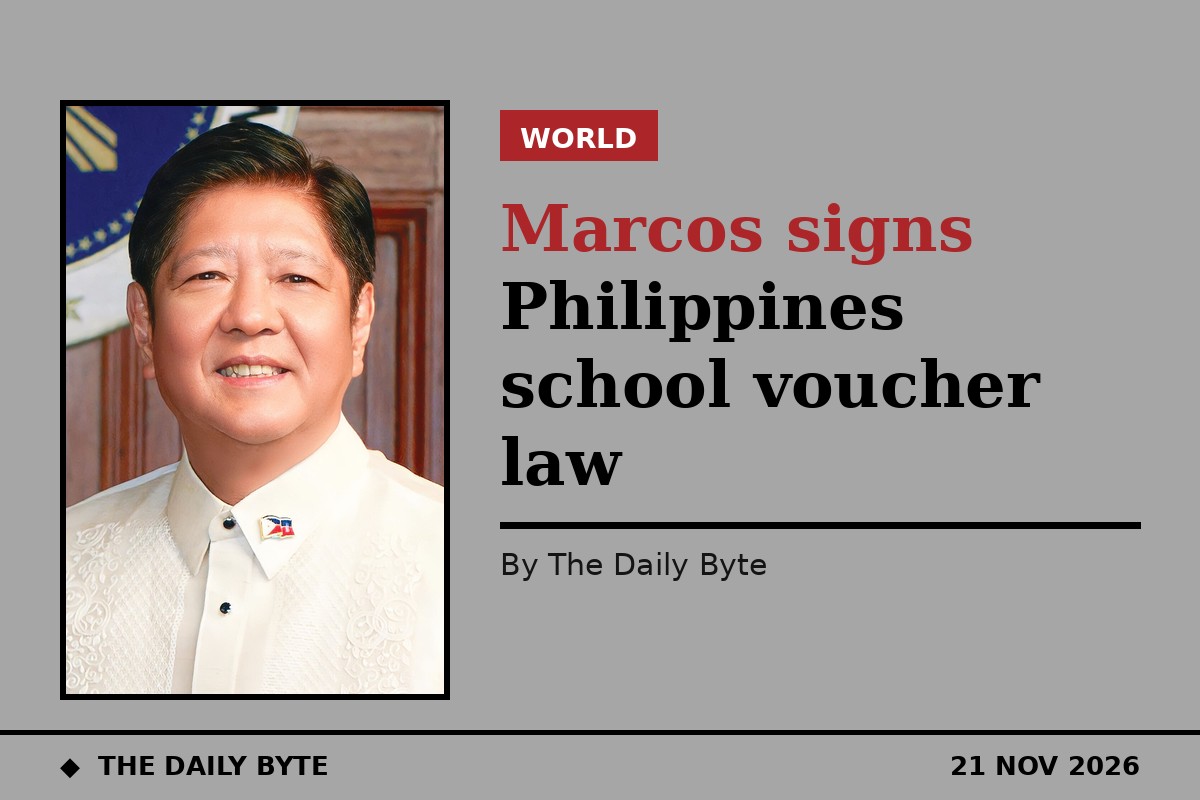
President Ferdinand Marcos Jr has signed a new law that extends the Philippines' school voucher system to kindergarten and elementary pupils, in a move aimed at easing severe overcrowding in public school classrooms.
Republic Act 12327, the Basic Education Voucher Assistance Act, was signed on 12 November and announced on 20 November, when it was published in the Official Gazette. It takes effect 15 days after publication. The measure turns the Department of Education's long-running voucher system into a permanent programme covering kindergarten to Grade 12, and it begins with the youngest pupils: kindergarten and elementary places will be covered from school year 2027-2028.
The programme starts with a budget of 4.34 billion pesos earmarked to support an estimated 292,000 pupils in 2,632 participating private schools across the country. Pupils qualify if they are enrolled in public schools designated by the Department of Education, known as DepEd, as congested, where enrolment exceeds physical classroom capacity, or if they live in remote areas without a public school within a three-kilometre walkable distance. Poor and low-income households get top priority, although pupils from middle-income families may also qualify.
Help for teachers as well as pupils
The law also reaches beyond tuition fees. It authorises salary subsidies and in-service training funds for teachers in participating private schools. The tax-exempt monthly subsidy is capped at 80 per cent of a public school teacher's salary and is to be paid within 60 days after the school year, on proof of service. Schools are expressly barred from using the money to offset or replace existing wage obligations and collective bargaining benefits.
Vouchers are also extended to senior high school pupils whose nearby public schools do not offer specific subjects or electives. Pupils already receiving help under the existing Educational Service Contracting scheme and the senior high school voucher programme will keep their assistance until they finish basic education.
Safeguards and a three-year review
To guard public funds, the law creates a new Bureau of Private Education inside DepEd and sets out strict anti-fraud measures, including centralised verification systems, stronger audit protocols and whistleblower protections. Schools found in breach face administrative fines of between 100,000 and 500,000 pesos, while fraud and misrepresentation will be prosecuted as estafa under the Revised Penal Code. DepEd will publish an online portal listing accredited private schools, and will build a nationwide classroom-mapping portal within a year to pinpoint the most overcrowded schools.
DepEd welcomed the signing on 20 November and said it would issue the law's implementing rules and regulations within 60 days, so the programme is ready for its first kindergarten and elementary intake in school year 2027-2028, subject to funding being available. A joint review led by DepEd, the Department of Economy, Planning and Development and the Department of Budget and Management will assess the programme every three years and recommend adjustments to Congress.
Education reformers gave the law a cautious welcome. Dr Karol Mark Yee, executive director of the Second Congressional Commission on Education, said vouchers are not a substitute for building classrooms, but used strategically they can help decongest public schools while the government continues to tackle the classroom backlog. For the families of nearly 300,000 young pupils, the first test will be whether the money, the school places and the rules are all in place when the new school year opens in 2027.


