Mehrgarh Museum in Quetta Reopens After US Upgrade
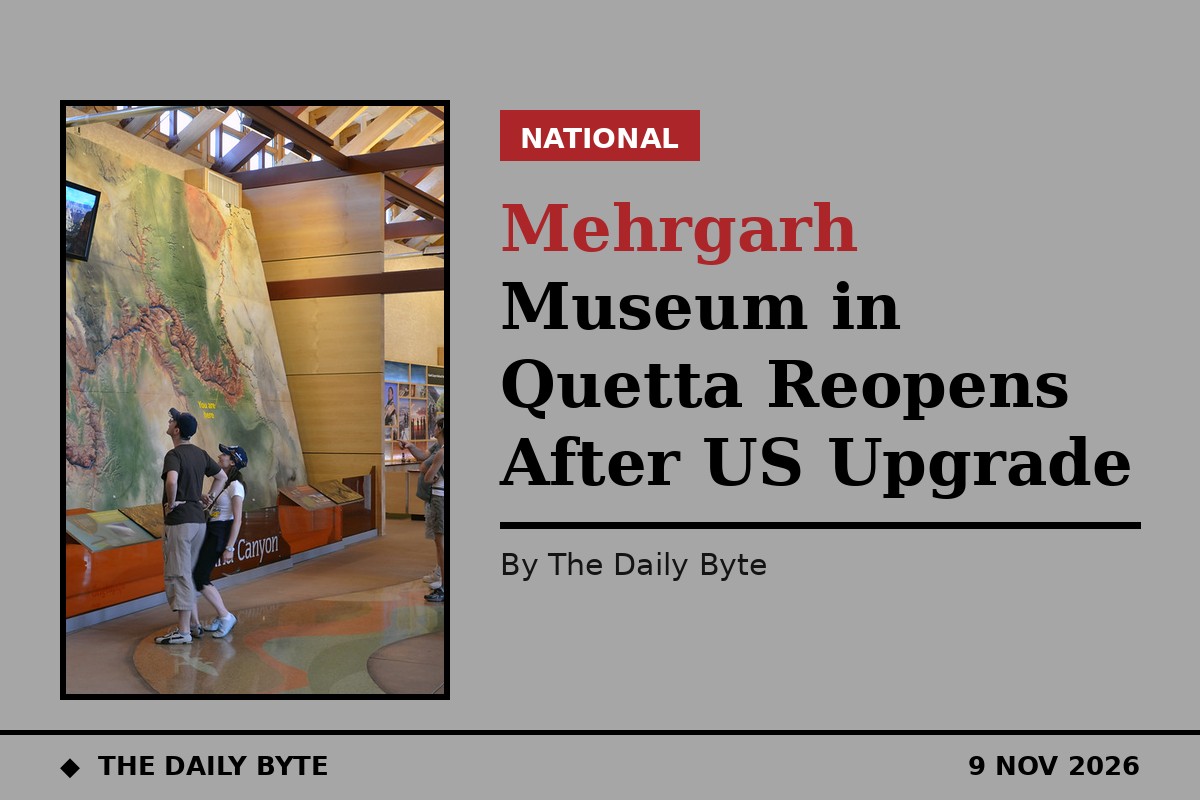
The Mehrgarh Museum in Quetta will reopen later in November after the completion of a $320,470 American-funded project to conserve its Neolithic collection and bring its displays up to international standards. Officials marked the completion of the work at a ceremony in Quetta on 7 November.
United States Chargé d'Affaires Natalie Baker joined Balochistan's Parliamentary Secretary for Culture, Nawabzada Mir Muhammad Zarain Khan Magsi, and project leads Dr Asma Ibrahim and Dr Kaleemullah Lashari to unveil a commemorative plaque that will stand at the museum's entrance ahead of its reopening. The exact reopening date has not been published.
The project was funded through the US Ambassadors Fund for Cultural Preservation and is the first initiative of its kind undertaken by the fund in Balochistan. It was implemented on the ground by the Sindh Exploration and Adventure Society together with the Balochistan Culture Department. Conservators stabilised and treated Neolithic and other archaeological objects from the Mehrgarh collection, upgraded display and storage, expanded community outreach and trained local curators, conservators and collection staff.
Baker said the museum would showcase the 8,000-year-old Mehrgarh civilisation and other heritage, and described the project as evidence of American expertise and of cooperation between the two countries. She also noted that the United States and Pakistan would mark 80 years of diplomatic relations in 2027. The completion of the project extends the Ambassadors Fund's presence to all four of Pakistan's provinces.
The financial details were reported by The Express Tribune: the fund provided $320,470 for the Mehrgarh project and, over 25 years, has committed $8.4 million to 35 cultural preservation projects across Pakistan. The museum itself was established in September 2022 to showcase the region's early history.
Mehrgarh matters far beyond Quetta. The site lies in the Kachi plain near the Bolan Pass, about 30 kilometres from Sibi, and covers roughly 250 hectares. Its archaeological sequence is more than 11 metres deep and spans the seventh to the third millennium BC. UNESCO's tentative-list entry records evidence of early cattle and barley domestication, mud-brick storage structures, formal cemeteries and a long transition from a cluster of small Neolithic units to a substantial Bronze Age village with its own craft production.
The site was abandoned before the urban phase of the Indus civilisation, but its sequence helps explain how farming and settled life developed in the region. It has been on Pakistan's UNESCO tentative list since 2004, a prerequisite for a full World Heritage nomination, though tentative listing by itself confers neither protection nor funding.
The museum upgrade does not by itself protect the archaeological mounds. The Express Tribune reported that concerns about alleged plundering at the site have raised questions about the protection of one of South Asia's oldest civilisations, even as the museum project was completed. The report gave no figures for losses and did not identify who was responsible. UNESCO's entry describes the exposed remains as eroding on the surface, and notes that most deposits lie buried deep under alluvium, which makes the site hard to monitor and easy to damage.
Pakistan has tried to address the wider trafficking problem. In May 2026 the United States returned more than 450 looted antiquities worth over $23 million under a bilateral cultural property agreement, which is meant to stop illegally exported objects entering the US market and to support training and museum exchanges. That agreement does not replace protection at the site itself.
The reopening later this month is the next test for the project. It will show whether the upgraded displays make the site's chronology and finds clear to ordinary visitors, and whether the training given to local staff translates into sustained care for the collection once the ceremony is over. The harder question remains who will protect the mounds themselves, and with what resources.