Meloni party moves to ban burqas in public places
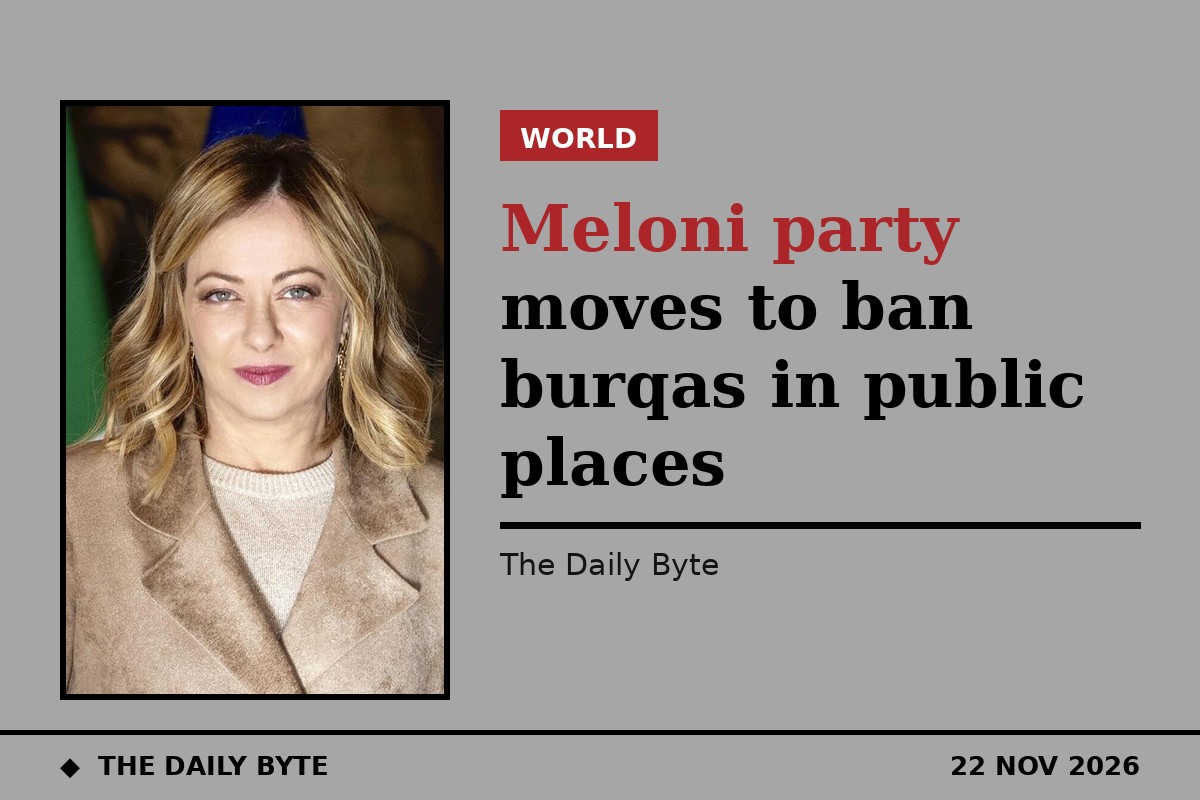
Italian Prime Minister Giorgia Meloni has announced that her Brothers of Italy party is introducing a bill to ban full-face veils in public places, in a move she presented as a defence of women's rights and national security. The announcement was made on 22 November 2026, and the proposal also covers transparency in foreign funding for mosques and powers to close places of worship where hate messages are spread.
"Brothers of Italy is introducing a bill to protect women's rights and our security," Meloni wrote on X. "No woman should be forced to wear a burqa or any other full-face veil. Women's freedom and dignity are non-negotiable." The party's post on X carried the same message in Italian, saying the bill would ban the full veil in public places, guarantee transparency over foreign funding for mosques, and close places of worship where messages of hate are spread.
What the bill would do
The new bill builds on legislation the party first unveiled in October 2025, which proposed banning the burqa and niqab in public places, including schools, shops and offices, with fines of between €300 and €3,000 for breaking the ban. That earlier bill was framed as part of a wider fight against what the party calls Islamic "separatism", and it also proposed criminal penalties for practices including virginity testing and tougher sentences for forced marriage.
The latest announcement widens the focus beyond face coverings. Alongside the public-places ban, the bill would require transparency over foreign funding for mosques and allow the closure of places of worship where hate messages are spread. Meloni has presented the package as a security measure as well as a women's rights measure, and immigration is expected to be a central issue in next year's general election.
School ban already moving through parliament
The public-places bill is separate from the government's school decree, which is already moving through parliament. In September, Meloni announced a ban on burqas and niqabs in Italian schools, alongside a cap on the number of international students per class. The decree was approved by Italy's upper house, the Senate, and is now before the Chamber of Deputies.
The school rules require pupils to attend with their faces uncovered and limit the share of pupils with a poor command of Italian in each class. Parents of pupils with serious integration problems would also be asked to learn Italian. Meloni has described the school measures as common sense, saying children learn best when they can see faces and follow the same language in class.
What happens next
The new bill has not yet been debated or passed in parliament, and no vote has been scheduled. Meloni's coalition holds a strong parliamentary majority, which makes the bill likely to pass if it reaches a vote. Several European countries already restrict full-face coverings in public spaces, but the Italian proposal goes further than most by combining the veil ban with mosque funding rules and closure powers.
Critics of the earlier bill questioned whether a ban was needed and raised concerns about religious freedom. Supporters argue it defends women's dignity and counters parallel societies. The debate is set to continue as the bill moves through parliament, with the government presenting it as part of a broader programme on integration and security.
Frequently asked questions
What is Meloni's party proposing to ban? The Brothers of Italy bill would ban full-face veils, such as the burqa and niqab, in public places in Italy.
Has the ban become law? No. The bill was announced on 22 November 2026 and has not yet been debated or voted on in parliament.
What else does the bill cover? It would require transparency over foreign funding for mosques and allow the closure of places of worship where hate messages are spread.
Is there already a ban in Italian schools? A separate school decree banning face-covering veils in schools was announced in September 2026 and approved by the Senate. It is now before the Chamber of Deputies.
Sources: Channel 14 reported the 22 November announcement and Meloni's statement; Bright Press covered the October 2025 bill, its proposed fines and its parliamentary status.


