Meloni: Ukraine War Must Not Reach Mediterranean
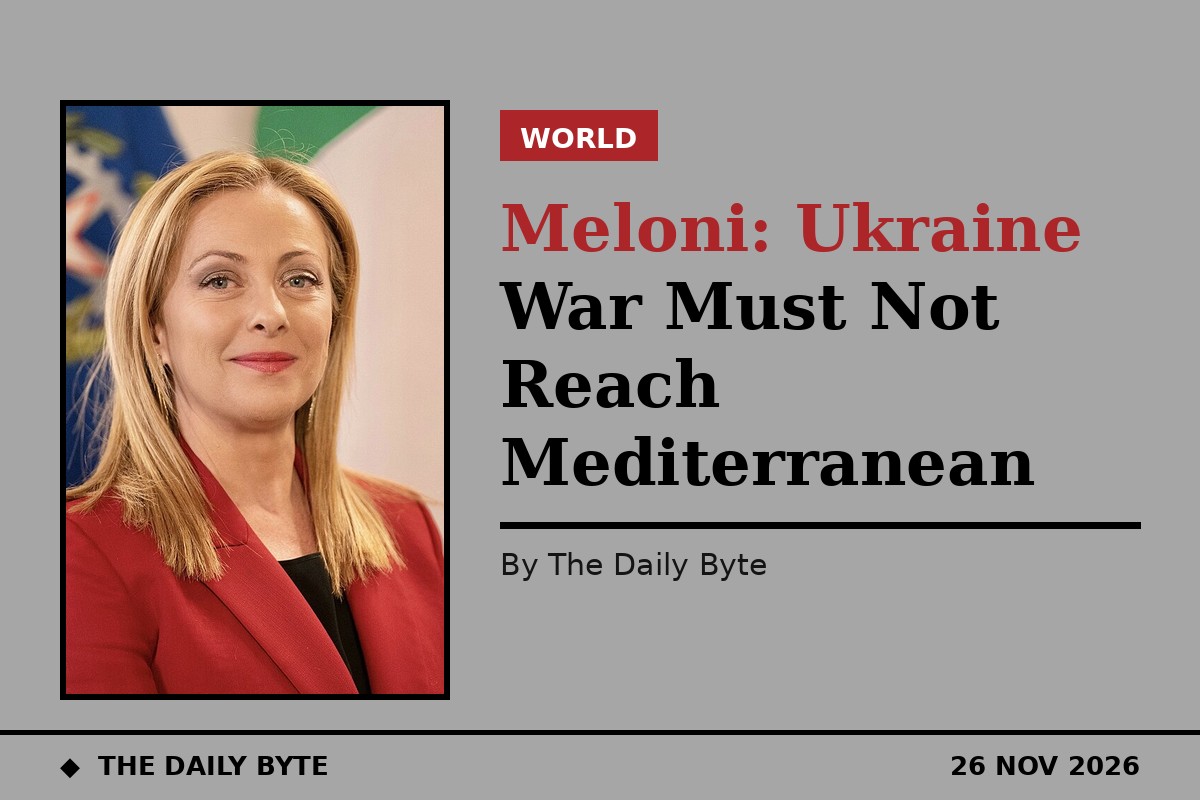
Italian Prime Minister Giorgia Meloni has warned that the war in Ukraine must not spread to the Mediterranean, after Ukrainian sea drones sank a Russian warship in Libyan waters at the weekend.
Meloni spoke to reporters in Brussels on Thursday on her arrival at a special European Council meeting. She said Italy would keep supporting Ukraine's defence but would be blunt with Kyiv about the risks of widening the war geographically.
"I believe that the war must not widen to the Mediterranean. We have to be clear with our Ukrainian friends and with our partners," Meloni said. "I intend to be very clear with (Ukrainian President Volodymyr) Zelenskiy."
Ukraine confirmed it used seven domestically built sea drones to attack Russian vessels at the port of Benghazi, in eastern Libya, on Sunday 22 November. The drones sank the Russian corvette Merkury, one of Russia's newest warships, and disabled the cargo vessel MV Angara, which Kyiv said was being used to transport weapons. A combat helicopter aboard the Merkury was also destroyed.
Italy raised concerns with Kyiv first
Meloni's warning follows diplomatic pressure from Rome earlier in the week. On Tuesday 24 November, Foreign Minister Antonio Tajani telephoned his Ukrainian counterpart, Andrii Sybiha, to express Italy's concern about the operations in eastern Libya. The Italian foreign ministry said Tajani stressed that Rome wanted to stop the conflict between Russia and Ukraine from reaching the Mediterranean, and that respecting Libya's sovereignty was necessary.
Meloni said she would not link the maritime incidents to Ukraine's financing, and she reaffirmed Italy's support for Ukraine's defence alongside protecting Italy's borders and citizens. EU leaders are separately discussing additional financing for Ukraine in 2027, and Meloni did not announce that she would block it because of the Libya operations.
Another party in Italy's governing coalition, the far-right League, also condemned the attack, calling it unacceptable and warning that it risked destabilising the north African country.
The African Union also responded. In a statement published on 24 November, African Union Commission chairperson Mahmoud Ali Youssouf condemned the attacks reported two days earlier in Benghazi port and off the city's coast, and backed a prompt, independent and transparent investigation to establish what happened and identify those responsible. He urged restraint to avoid drawing Libya into external conflicts.
The Tripoli government, which controls western Libya, said on Tuesday that it had not condoned the attack on the two Russian ships near Benghazi. Italian officials fear the strikes could reignite fighting between Libya's rival factions, possibly after Russian retaliation on Libyan soil.
The episode has underlined how far Ukraine's campaign against Russian military assets now reaches. Kyiv has used its domestically produced long-range weapons to strike targets deep inside Russia, and the Benghazi attack showed it can also hit Russian naval vessels far from the Black Sea, in waters that matter directly to Italy and other Mediterranean states.


