MEPs to debate Hungary rule of law under Magyar
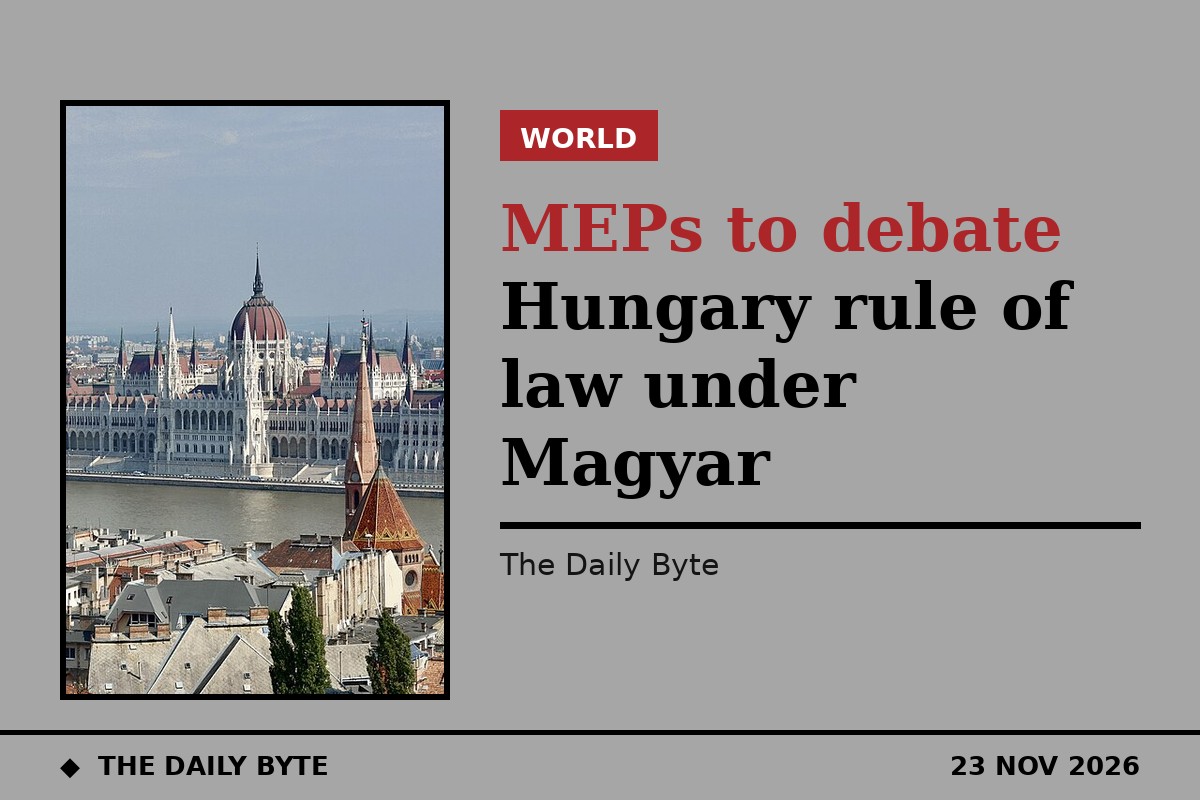
Members of the European Parliament will debate Hungary's rule-of-law reforms on Tuesday, 24 November 2026, in the first full assessment by the Strasbourg plenary since Prime Minister Péter Magyar took office after the April 2026 elections. The debate, part of the Parliament's four-day session in Strasbourg, will weigh the new government's reforms against continuing concerns about the courts, the media and corruption. A resolution is expected to follow in December.
The change of government in Budapest ended sixteen years in power for Viktor Orbán, and it has substantially altered Hungary's relationship with Brussels. European affairs ministers have already reviewed Hungary's progress as part of the European Union's annual rule-of-law dialogue, and a delegation from Parliament's Civil Liberties Committee visited Budapest in October. That delegation acknowledged considerable progress, while identifying areas that still needed attention.
What reforms has Hungary made?
According to EU Today, the reforms cited by supporters include ending emergency rule by decree, abolishing the Sovereignty Protection Office and repealing discriminatory provisions of the Child Protection Law. The Magyar government has also taken Hungary into the European Public Prosecutor's Office, which investigates offences affecting the EU's financial interests, including fraud involving European funds. Under Orbán, Hungary had stayed outside that institution despite repeated calls for closer cooperation with European anti-corruption authorities.
The financial stakes are large. On 13 October, the Council adopted an implementing decision lifting measures imposed in December 2022 to protect the EU budget against breaches of rule-of-law principles in Hungary, clearing the way for the release of approximately 4.2 billion euros in previously blocked funding. The decision followed an assessment of Hungarian reforms concerning public contracts, conflicts of interest, prosecutorial accountability and corruption prevention.
What still worries Brussels?
Concerns remain over judicial independence, the prosecution of high-level corruption, media ownership concentration and the rights of LGBTIQ+ people. Changing legislation is only one part of the process, and Brussels is watching whether courts, regulators, public broadcasters and other institutions operate independently in practice, not only on paper. The challenges include reforming institutions whose leadership, administrative structures and legal powers were established during Orbán's long period in office.
The largest immediate financial question concerns Hungary's allocation of approximately 10 billion euros from the EU's Recovery and Resilience Facility. Hungary submitted its first and final payment request in September, after a revised national recovery plan was approved during the summer. A European Parliament Research Service briefing set out a timetable providing for preliminary assessments by 20 November and final payments before the end of December, so the Commission's decision is now imminent. Recent reporting indicates that Commission officials consider the country's prospects of receiving most or all of its requested recovery funding favourable, although the assessment and formal authorisation procedures must still be completed before any payment takes place.
Why Article 7 still matters
Hungary continues to be subject to proceedings initiated under Article 7 of the Treaty on European Union in 2018, which address concerns about possible threats to the EU's fundamental values. That procedure is legally separate from the budgetary conditionality mechanism, so the lifting of financial restrictions in October did not automatically terminate the Article 7 proceedings. The Commission's 2026 Rule of Law Report provides the framework for assessing developments in the judiciary, anti-corruption safeguards, media pluralism and institutional checks on governmental authority.
The debate also matters beyond Hungary. Under Orbán, Budapest repeatedly opposed or delayed collective EU decisions, including measures supporting Ukraine and sanctions against Russia. Closer cooperation between Hungary and other member states could reduce some of the difficulties associated with decision-making by unanimity. For Brussels, the wider question is whether financial conditionality can encourage durable compliance with European legal obligations rather than temporary political concessions. Tuesday's debate will show how far MEPs believe the Magyar government has gone towards answering that question.
Frequently asked questions
When is the Hungary debate? On Tuesday, 24 November 2026, during the European Parliament's plenary session in Strasbourg, which runs from 23 to 26 November.
What reforms has the Magyar government made? It has ended emergency rule by decree, abolished the Sovereignty Protection Office, repealed discriminatory provisions of the Child Protection Law and taken Hungary into the European Public Prosecutor's Office.
How much EU funding is at stake? About 4.2 billion euros in previously blocked funding was cleared for release on 13 October, and about 10 billion euros from the Recovery and Resilience Facility is awaiting a Commission decision.
Is the Article 7 procedure over? No. The Article 7 proceedings opened in 2018 remain open, because they are legally separate from the budgetary conditionality mechanism.
Sources: European Parliament and EU Today.


