Merz Calls Berlin Summit on Ukraine Aid and Guarantees
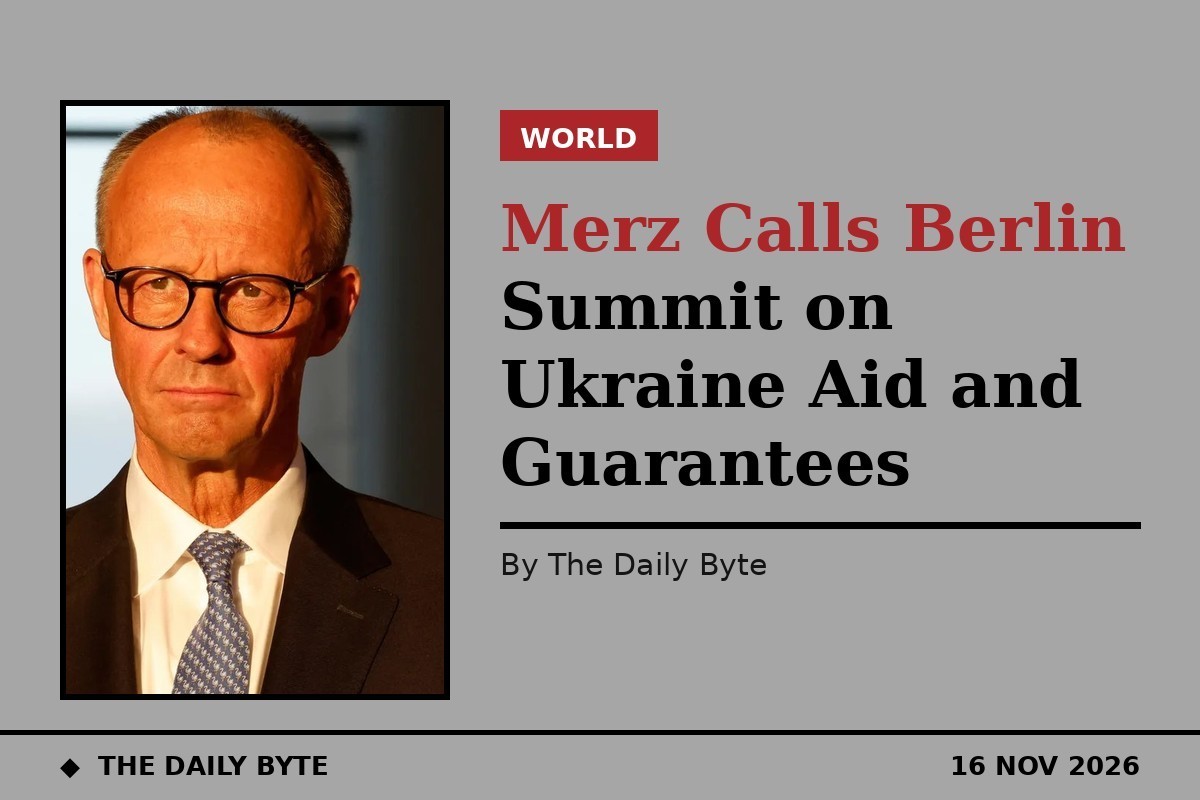
German Chancellor Friedrich Merz has called leaders of the Coalition of the Willing to Berlin on Thursday 19 November to agree funding for Ukraine's defence in 2027 and a common European position ahead of any future peace talks with Russia. The meeting at the Federal Chancellery, held under the theme "United for Peace in Ukraine and European Security", is being hosted jointly with French President Emmanuel Macron and British Prime Minister Andy Burnham.
More than 20 heads of state and government are expected to attend. The agenda, set out by the German government on 13 November, covers coordination of ongoing diplomatic efforts, security guarantees for Ukraine after the war, and continued support for Kyiv. The summit is an invitation to talks, not an agreement on deploying troops or a completed peace settlement.
Two priorities for the Berlin meeting
Speaking to journalists in Dublin on Friday 13 November, Merz set out two aims for the gathering. The first is to settle funding for Ukraine's defence for the coming year, 2027. The second is to establish a unified allied position on future peace negotiations with Russia, including European representation in those talks.
Merz also used the Dublin visit to urge the United States not to surprise its European and Ukrainian partners in its dealings with Moscow. The warning followed a new round of US-brokered talks between Russia and Ukraine in Abu Dhabi on 10 and 11 November, the first trilateral meeting in nine months, held without Europeans at the table.
The German government has stressed that the coalition's common goal remains a just and lasting peace for Ukraine, and describes Germany as the leading supporter of Kyiv among European states. NATO allies had already agreed about 70 billion euros of military support for Ukraine in 2026, according to Merz, and Berlin announced a further 200 million euros in winter aid earlier this month.
What security guarantees are on the table
The guarantees under discussion would apply after a ceasefire, not during the fighting. A Paris declaration agreed by coalition members on 6 January 2026 outlined five proposed elements of future guarantees, all conditional on a ceasefire being in place. The Berlin meeting is expected to revisit those elements and test how far allies are willing to commit.
No deployment has been agreed, and the summit itself does not authorise one. The exercise of the coalition's military arm, the Multinational Force Ukraine, has been running separately in Poland from 9 to 22 November, with about 2,800 troops from 11 nations taking part under British and French command.
The timing matters because the diplomatic track is moving quickly. US envoys Steve Witkoff and Jared Kushner met Russian President Vladimir Putin in Moscow on 12 November, a day after the Abu Dhabi talks ended, and European leaders want a coordinated position before the next round of negotiations. The Berlin summit is their attempt to set one, with the question of who pays for Ukraine's defence next year at the top of the agenda.
Sources: deutschland.de; Ukrinform via EuropeSays.


