Met Police Ruined My Life, Says Wrongly Jailed Kenyan
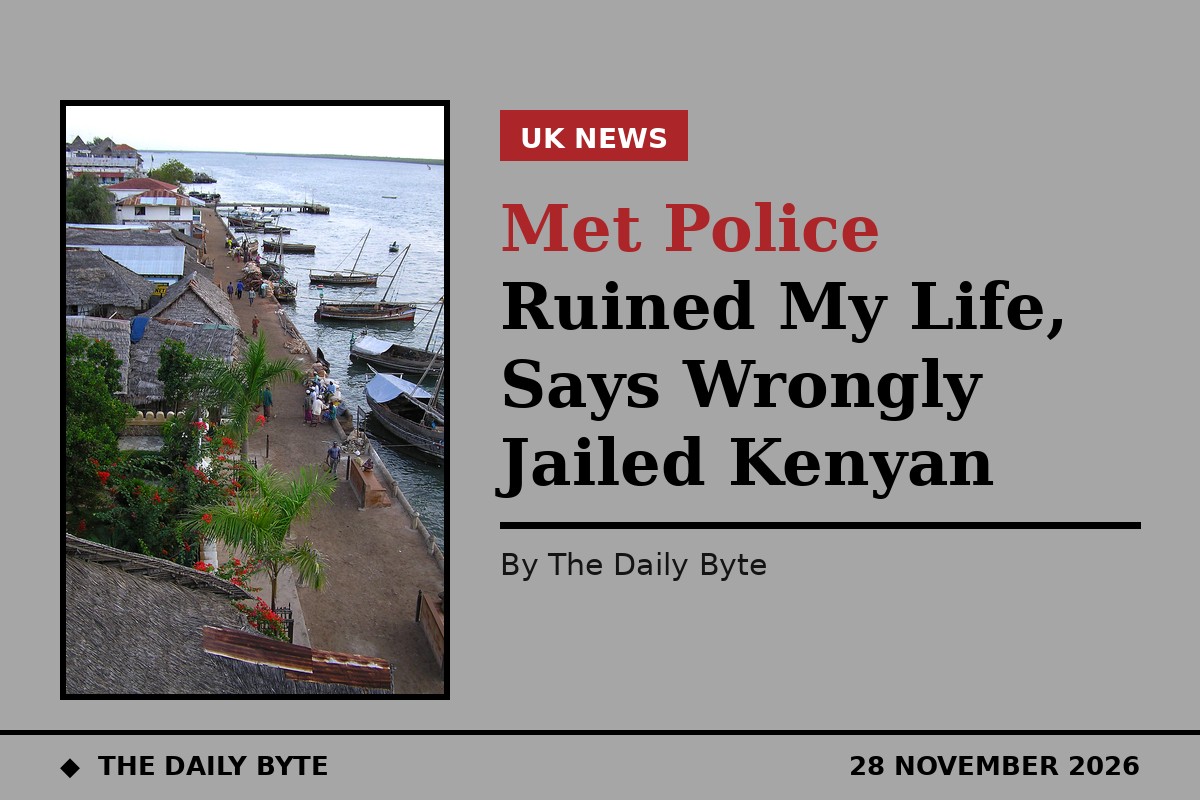
Ali Kololo, a Kenyan woodcutter who was wrongly sentenced to death over an attack on a British couple, has told the BBC that actions by London's Metropolitan Police destroyed his life. In his first media interview, Kololo described a 15-year ordeal that ended only when a Kenyan court quashed his conviction in 2023.
Somali gunmen broke into the beach bungalow of David and Judith Tebbutt on the Kenyan coast in 2011. They shot David dead and abducted Judith, holding her captive in Somalia for six months. Met detectives flew to Kenya to help the investigation, and their evidence helped convict Kololo, who spent more than a decade in prison before his conviction was overturned.
Kololo, who could not read or write, says Kenyan police beat him for days, burned him with cigarettes and made him press his thumbprint onto a statement claiming he had led the attackers to the couple. "I didn't understand anything," he told the BBC, calling the statement "a mountain of lies".
The Met officer's evidence
Within days of the attack, a team of Met officers led by then Detective Superintendent Neil Hibberd arrived to support the Kenyan investigation. The UK government had instructed the officers not to accept information from the Kenyan authorities that had been obtained by interrogating detainees. But Hibberd requested Kololo's statement and later relied on it when giving evidence for the prosecution at his trial.
Hibberd also told the Kenyan court that Kololo had been wearing a type of shoe that matched footwear marks found in the sand at the resort. The officer who arrested Kololo said he had been barefoot when he was handed to police, and the Met's own forensic examination could not establish whether the shoe in question had made the marks. That finding was not disclosed to the court, the BBC reported.
Kololo had no lawyer at first. He had to cross-examine the prosecution witnesses himself, including Hibberd, through an interpreter who spoke Swahili, which was not Kololo's first language. "I believe I was framed because I am a poor man and I did not have the strength or means to fight for myself," he said.
Death row and release
Kololo was convicted of kidnap and robbery with violence, the only person ever convicted in connection with the attack. He was sentenced to death in 2013 and spent three years on death row before his sentence was commuted to life imprisonment. He recalls seeing his prison file, where someone had written "death" as the expiry date.
Years later, the UK's Independent Office for Police Conduct established that Hibberd had omitted significant forensic evidence at the trial. It found he would have had a case to answer for gross misconduct, but he could not face disciplinary proceedings because he had retired from the force in 2017. At the time, his lawyer said Hibberd absolutely disagreed with the report's findings.
In April 2023, Kenya's High Court quashed Kololo's conviction because of doubts over the prosecution's evidence. The decision followed years of work by the legal charity Reprieve and Kenyan lawyer Alfred Olaba, who represented him without charge. They were supported by Judith Tebbutt, who believed Kololo was innocent. In a 2022 interview she said he had been scapegoated by Scotland Yard, adding: "He was not there on the night. He was not part of the group that held me."
A life still to rebuild
More than three years after his release, Kololo says he is still living with the effects of his torture and decade in prison. He contracted tuberculosis twice and nearly died, and he is now too frail for the woodcutting work he once relied on. He lives alone in a mud hut on Lamu, the small island off Kenya's northern coast where he was sentenced to death.
His wife divorced him after he went to prison, and their children went to live with his mother. They dropped out of school because the family could not pay the fees, and when he was released they barely remembered him. "They were too young. Only now are they starting to regain the memory that 'this is our father who disappeared'," he said.
Kololo is now suing the Met, claiming Hibberd gave misleading evidence at his trial and acted unlawfully to secure his conviction. The force has not apologised or admitted wrongdoing, and it is contesting his compensation claim, which his lawyers say could take years to resolve. The Met told the BBC that neither it nor Hibberd wanted to comment on the claim.
"Even if I get a billion shillings, I will never be the same," Kololo said. "But if I get the justice I deserve, I can help my children and take care of myself when I am an old man."


