Meta Rethinks 2030 Net-Zero Goal as AI Emissions Jump
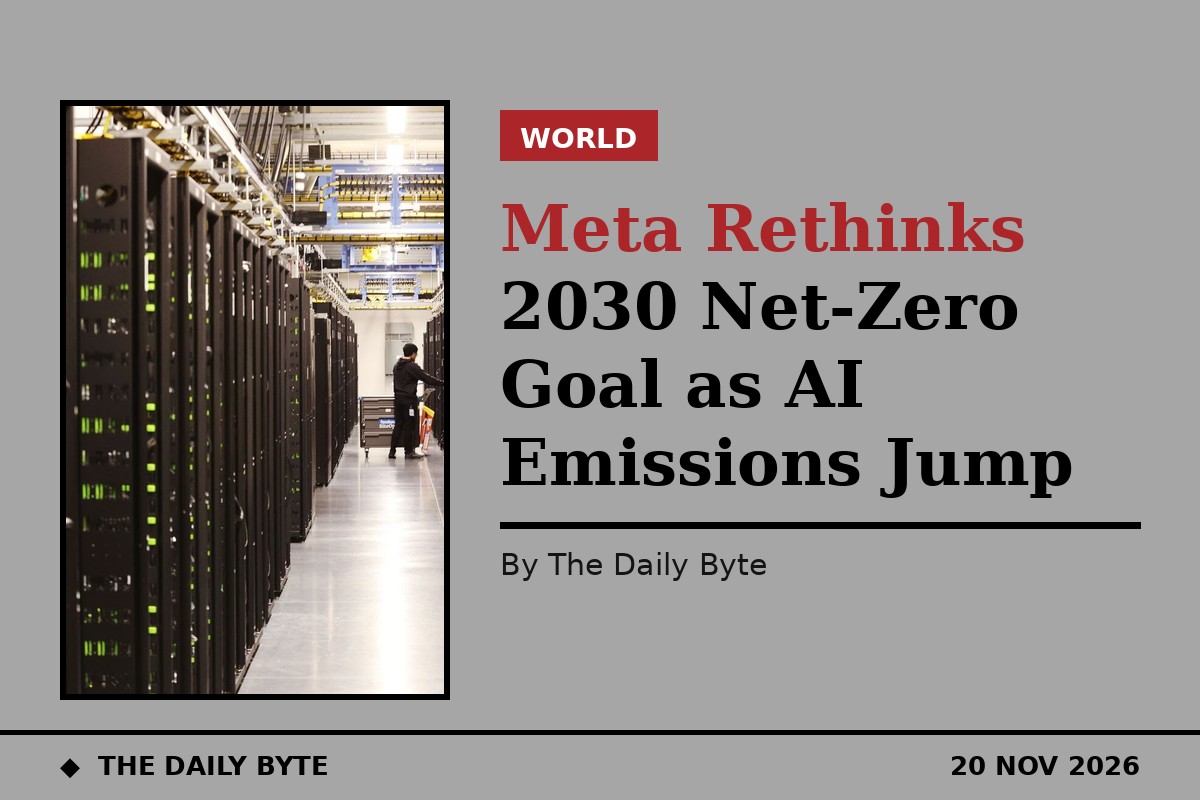
Meta is re-evaluating its pledge to reach net-zero emissions by 2030, conceding that the race to build artificial intelligence infrastructure has made the target much harder to hit than it expected when the goal was set.
The company disclosed the review in its annual sustainability report, published on Thursday, 19 November. Rachel Peterson, Meta's vice president of data centres, and Blair Swedeen, its global head of net zero and sustainability, wrote that the company is "re-evaluating our timelines, sequencing, and interim milestones, including the 2030 timeframe for our net zero emissions goal". Meta has not announced a replacement commitment or said when the review will conclude.
Emissions up 45 percent in a year
The numbers behind the rethink are stark. Meta reported that its net carbon-equivalent emissions climbed 45 percent in 2025, to 11.8 million metric tonnes, while its electricity consumption rose about 35 percent. The company attributed the rise to the infrastructure required to develop and run AI systems: large data centres, advanced semiconductors and the electricity to power them.
Meta set the goal in 2020, when it was still known as Facebook and before the generative AI boom, pledging net-zero emissions across its entire value chain by 2030, in line with the Paris Agreement's effort to hold long-term warming to 1.5 degrees Celsius. The commitment covers not only the company's own operations but also purchased goods and services and capital goods such as equipment, machinery and buildings.
"When we set our net zero emissions goal, we anticipated steady growth, falling clean energy costs, and changes in the broader system that would enable progress at the pace we envisioned. The reality has been far more complex," Peterson and Swedeen wrote. Delivering on Meta's vision, they added, "requires building the infrastructure that powers AI".
Clean power is not keeping pace
Meta says it has contracted more than 30 gigawatts of clean energy, spanning nuclear, solar and geothermal sources, and that it matched 100 percent of its annual electricity demand with clean energy. But less than half of that contracted capacity is generating power so far, leaving a short-term gap between what its data centres need and what clean sources can supply.
To meet immediate needs, the company says it may turn to natural gas plants when utilities cannot deliver electricity quickly enough, and offset methane emissions tied to its gas use by paying for cleaner production elsewhere. In Louisiana, utility Entergy is pursuing seven new gas-fired generating units totalling more than 5,200 megawatts to serve Meta's data centres. Ohio regulators have approved a 200-megawatt gas plant built specifically for the company's facilities, and research firm Cleanview has identified a 521-megawatt gas project under construction for Meta in Utah.
Meta's emissions growth outpaces the increases reported by its largest peers. According to Axios, Google's emissions rose 18 percent, Amazon's 16 percent and Microsoft's 25 percent in their most recent reporting years. Meta also reported that its direct water consumption fell 4 percent, but consumption in regions under high water stress rose 24 percent, and the estimated water consumed in generating its electricity climbed 37 percent.
The wider data-centre squeeze
The shift highlights how quickly data centres are reshaping corporate energy use. A study published this week in the journal Nature Sustainability estimated that the 403 largest and most powerful data centres in the United States account for about 2 percent of the country's electricity use, with a carbon footprint comparable to Denmark's. Around 1,200 such "hyperscale" facilities are already running, with hundreds more planned.
Globally, data centres used about 415 terawatt hours of electricity in 2024, about 1.5 percent of worldwide supply, and that could nearly double by 2030, according to the International Energy Agency. Suppliers accounting for 62 percent of Meta's supplier emissions have now set science-aligned reduction targets, up from 48 percent a year earlier, the company said.
No new deadline yet
Meta has not said whether it will retain its existing deadline, extend it or revise the scope of its commitment. The review comes as other large technology companies, including Microsoft, Alphabet and Amazon, face the same tension between expanding computing infrastructure and meeting climate commitments. For now, the 2030 goal stands as an ambition under review rather than a target the company says it can still hit on schedule.


