Mexico Seeks US Talks on SpaceX Airspace Use
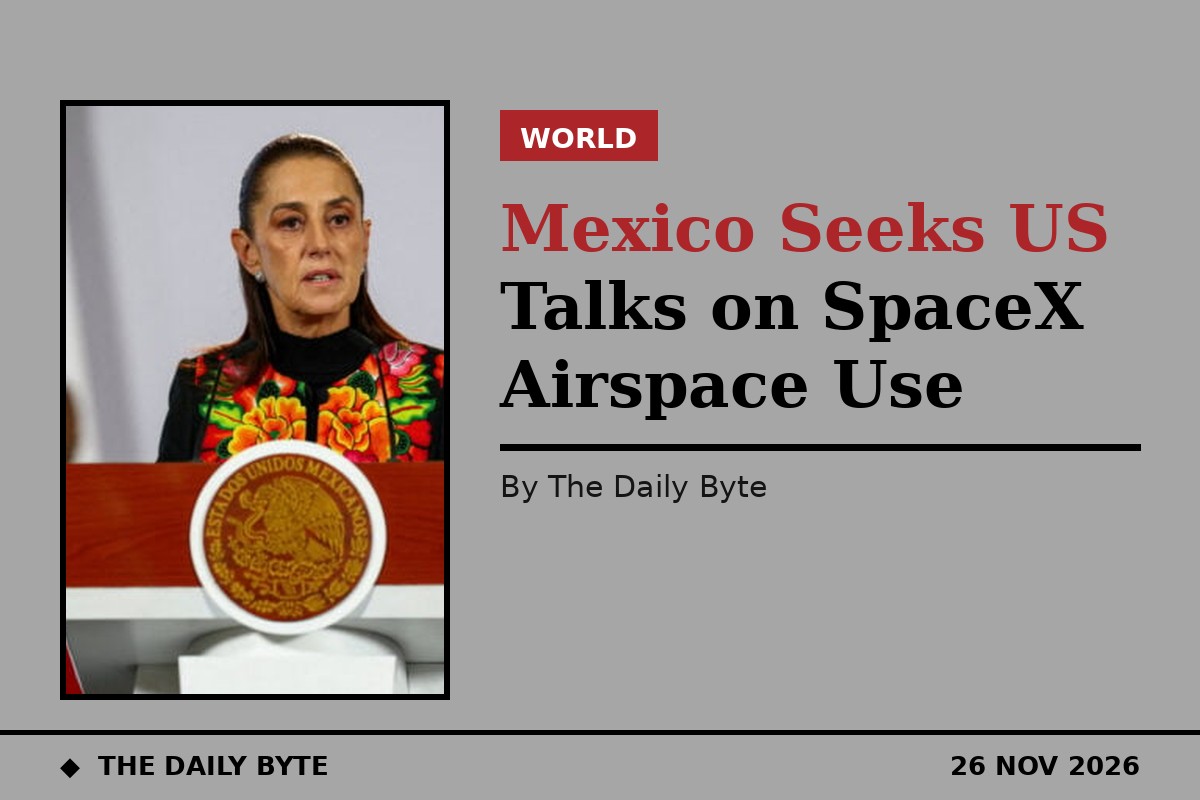
Mexico is seeking a meeting with United States aviation authorities to discuss permits for SpaceX to use Mexican airspace, President Claudia Sheinbaum said on Thursday 26 November, raising the possibility that the company's launch site could be moved.
Speaking at her morning press conference, Sheinbaum said Mexico wanted the talks arranged through its embassy in Washington. The meeting would bring together the space authorities of both countries to settle whether SpaceX may use Mexican airspace, how often that would be allowed, and whether the launch site would need to be relocated.
“What we're seeking through the Embassy is a meeting between the US and Mexican space authorities to establish permission for the use of Mexican airspace, how often that would be permitted, and, if necessary, the relocation of the launch site,” she said. “And then there's the issue of the debris,” she added.
Debris on a Tamaulipas beach
SpaceX launches its Starship rockets from Starbase in Boca Chica, Texas, close to the Mexican border. Its operations there have become a growing political issue in Mexico, where the government accuses the company of causing contamination and other environmental damage when debris from its rockets falls on Mexican territory.
The latest incident followed the 15th Starship test flight on 13 November, when a booster exploded over the Gulf of Mexico after an aborted catch attempt. Fragments began washing up on 17 November at Bagdad Beach near Matamoros, in the border state of Tamaulipas, south of the Starbase site.
Mexico's environmental protection agency, Profepa, said its crews collected about four pounds of material potentially linked to the flight on the first day, and that the amount recovered had risen to 13 pounds by an update on 20 November. Profepa urged the public not to touch fragments and to report them, and the material was held at a navy facility.
SpaceX has pushed back against reports of contamination. The company said its crews collected material on Boca Chica Beach and offered to send specialists to Mexico if requested. It said independent tests on materials inside Starship and its Super Heavy booster, including toxicity analyses, found no chemical, biological or toxicological risks, and it described many of the claims circulating online as fabrications.
A dispute that keeps returning
The dispute is not new. Debris from SpaceX explosions reached the Tamaulipas coast last year as well, and Sheinbaum threatened legal action at the time. In July 2026 she ruled out a lawsuit for the time being, saying Mexico would instead pursue talks with the United States. Thursday's announcement is the sharpest step in that direction, putting a formal meeting and the launch site itself on the table.
The United States Embassy in Mexico referred Reuters to the State Department, which did not immediately respond to a request for comment on the proposed meeting. SpaceX also did not immediately respond to a request for comment on Sheinbaum's statements.
The talks would come as the US Federal Aviation Administration reviews a proposal that could eventually allow 456 launches and 912 landings a year at Starbase. The first phase would allow 100 launches a year, compared with the 25 currently authorised. Public comments on that proposal are due on 7 December.
No date has been set for the meeting Mexico is seeking, and no agenda has been published. What is clear is that the debris washing up on Mexican beaches has turned a local environmental complaint into a diplomatic question about who controls the airspace above the border, and how often rockets may cross it.


