Mexico Urges Asia to Crack Down on Tariff Dodging
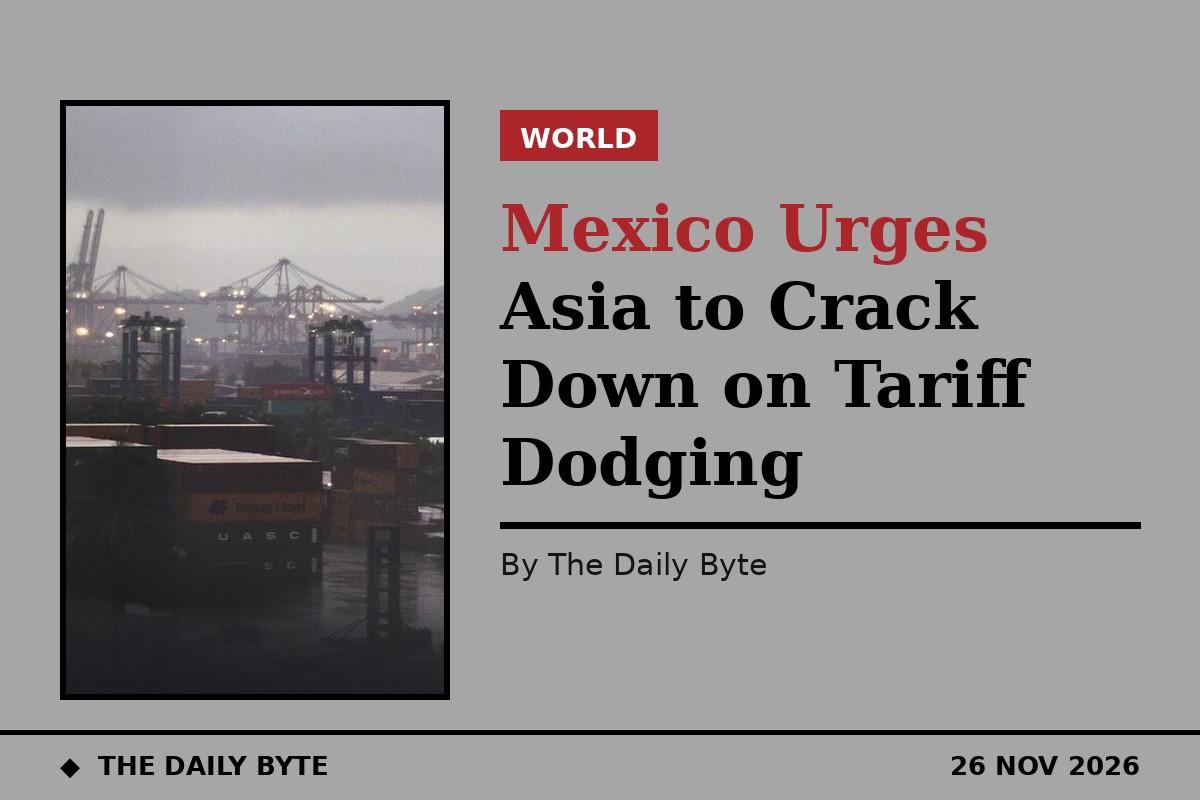
Mexico called on its Asian trade partners on Thursday to tighten checks aimed at preventing tariff evasion, as the country faces pressure from Washington to curb the flow of Chinese goods through North American supply chains.
Economy Minister Marcelo Ebrard, speaking at a meeting of Pacific Rim trade ministers in Vietnam, urged countries to strengthen enforcement of rules determining where goods are made and whether they qualify for preferential tariffs.
“We are not going to weaken our treaties or the rules that we ourselves established, for example, regarding transshipment or other practices,” Ebrard said.
Pressure from Washington
The push comes as Mexico faces pressure from Washington to tighten rules governing the origin of goods, particularly those containing Chinese components, during negotiations over the future of the United States-Mexico-Canada Agreement (USMCA).
US Trade Representative Jamieson Greer said in July that Washington wanted tougher rules requiring North American-made vehicles to contain more regional parts and fewer Asian components, as well as stricter requirements for electronics and pharmaceuticals.
Ebrard said countries needed to improve the traceability of goods to establish where they were produced and prevent illegal transshipment, in which products are routed through third countries to improperly obtain trade benefits.
Mexico has already raised tariffs to as much as 50 percent on a broad range of imports from countries without free-trade agreements, including China, as it seeks to protect domestic manufacturers.
Ebrard also urged Pacific trade partners to buy more Mexican goods to address a large trade imbalance, while proposing joint investments in manufacturing, particularly electronics.
Caught between two pressures
The intervention shows Mexico caught between two pressures. Washington wants tighter origin rules and fewer Asian components in North American supply chains, and it is using the USMCA talks to push for them. At the same time, Mexico's own manufacturers rely on imported inputs, and its trade partners in Asia are being asked to police the very flows that feed Mexican factories.
By calling on Asian partners to do more, Ebrard is trying to show Washington that Mexico is acting, while insisting that Mexico will not give up its own trade rules. The message to partners was two-sided: help us stop goods being routed through third countries to dodge tariffs, and buy more of what Mexico makes.
The USMCA negotiations will test how far that balance can hold. Tougher origin rules would raise costs for manufacturers across North America, but Washington has made clear it sees them as a priority. Mexico's tariffs of up to 50 percent on imports from countries without trade deals are already one of the sharpest responses in the region, and Ebrard's appeal in Vietnam suggests Mexico wants the enforcement burden shared rather than carried alone.


