Microsoft Brings Azure OpenAI to Qatar Cloud
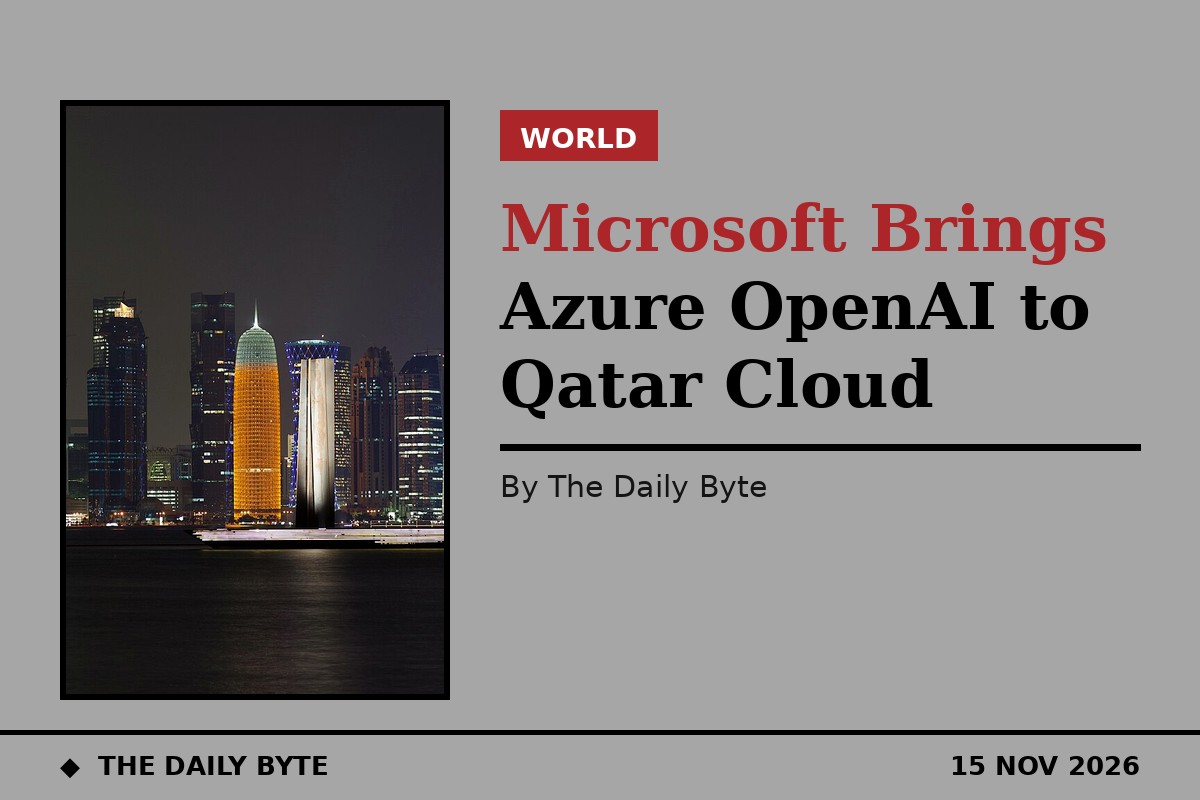
Microsoft and Qatar's Ministry of Communications and Information Technology (MCIT) have marked the availability of Azure OpenAI Service from Microsoft's Qatar Central cloud region, allowing government bodies in the country to run generative AI workloads on infrastructure located inside Qatar. The milestone was highlighted during MWC26 Doha, Microsoft said in an announcement published on 10 November and widely reported on 15 November.
The move means Qatari government entities and organisations can now use OpenAI's models through Microsoft Foundry without their data leaving the country. That matters for public bodies that must meet local data residency rules and regulatory requirements, which have previously kept sensitive workloads away from cloud AI services hosted abroad.
Why running AI inside Qatar matters
Data residency is the central point of the announcement. Until now, Qatari public bodies that wanted OpenAI's models through Microsoft generally had to send their data to cloud regions outside the country. Serving the models from Qatar Central keeps the processing at home, which Microsoft says gives organisations the confidence to use generative AI while keeping their data in Qatar.
The milestone builds on a long-standing collaboration between the ministry and Microsoft, through which more than 70 public entities have moved existing on-premises infrastructure to Microsoft Azure. Microsoft Foundry offers a catalogue of more than 10,000 AI models, and the company says it plans to expand the model offers available in the Qatar region over time.
What Qatar plans to use it for
Demand from Qatar's public sector already spans citizen services, healthcare, transport, justice, economic intelligence and digital government, according to Microsoft. Planned applications include citizen credential verification, building permits, AI-assisted case analysis, an economic intelligence data hub, maritime navigation and a Qatar Digital Twin, a virtual model of the country used for planning and simulation.
Sami Mohammed Al Shammari, Assistant Undersecretary for Infrastructure and Operations Affairs at MCIT, said developing Qatar's cloud and AI infrastructure was a strategic priority for strengthening national digital capabilities. He said the availability of Azure OpenAI Service in Qatar supports government entities in adopting advanced technologies and delivering better services for citizens and residents.
Ahmad El Dandachi, General Manager of Microsoft Qatar, said the collaboration was about putting world-class AI capabilities in the hands of Qatar's government entities on trusted infrastructure in the country. He said Microsoft looked forward to seeing how public-sector entities, customers and partners use the capabilities to deliver impact for people across Qatar.
Part of a wider digital plan
The launch supports Qatar's Digital Agenda 2030 and Qatar National Vision 2030, the country's long-term plans for digital government and economic diversification. It also completes a plan the ministry and Microsoft set out in February 2025 at Web Summit Qatar, when the two sides first outlined bringing Microsoft's AI platform to the local cloud region.
Microsoft Foundry is designed for a diverse range of industries, including government, healthcare, finance, education and energy. Developers can use its pre-trained models to build AI applications such as intelligent assistants, document and case analysis, content generation and knowledge search, while maintaining ownership of their data.
Some details remain open. Microsoft has not said which OpenAI model versions are served from Qatar Central, or given details of the computing capacity behind them, and no timeline has been given for the wider model rollout in the region. The announcement also comes as Gulf states compete to host AI infrastructure, with the region's governments investing heavily in data centres and cloud capacity.
Sources: Microsoft Source EMEA; EuropeSays AI.


