Microsoft chief warns more tech outages are coming
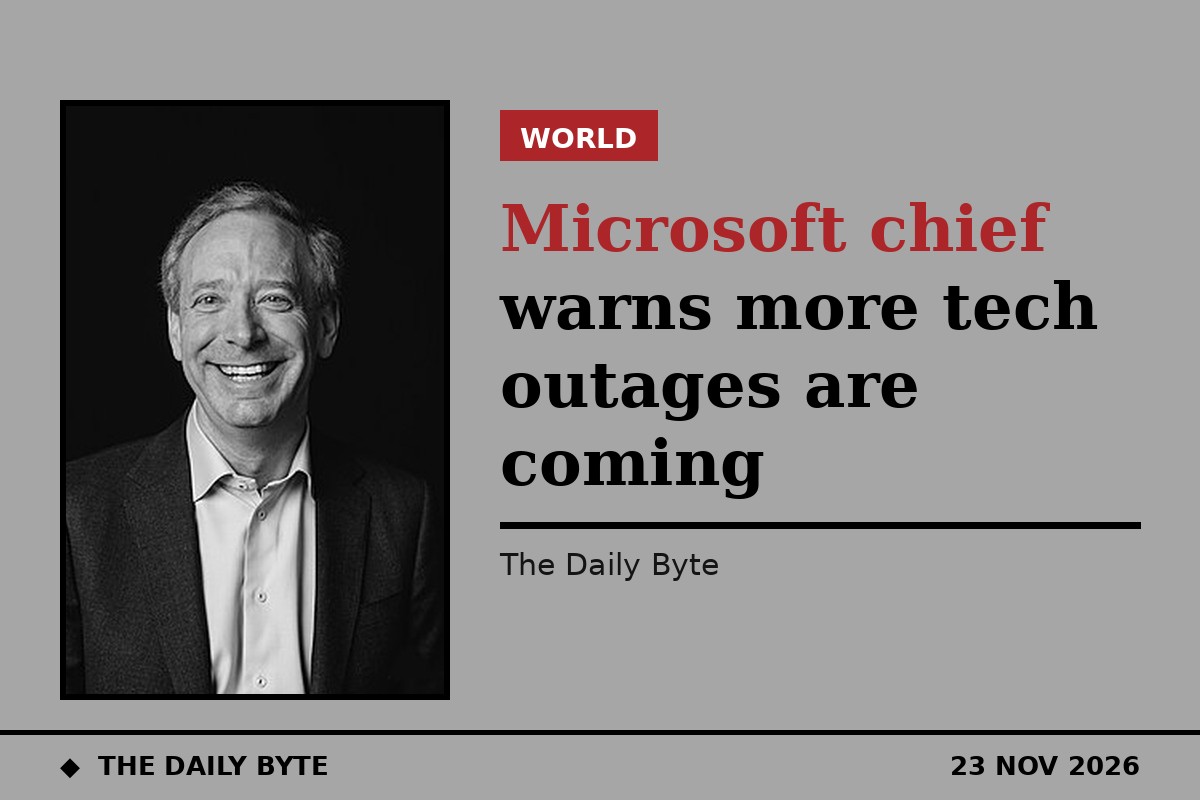
Microsoft president Brad Smith has warned that businesses and the public should prepare for more technology outages in the coming months, as companies race to fix software flaws that artificial intelligence is exposing faster than ever before. Speaking on CBS's Face the Nation on Sunday, 22 November 2026, Smith said the disruption was not over.
"I think we have to be prepared, frankly, for the coming months because this isn't the type of thing that just gets done in a couple of weeks," Smith said. "The whole information infrastructure of the world is in effect being upgraded right now."
AI is finding flaws faster than teams can fix them
Smith's argument is that AI tools have made it much easier to discover weaknesses hidden in computer code. That discovery helps defenders, but it helps attackers too, so companies are now locked in a race to patch vulnerabilities before they can be exploited. Patching at that speed, particularly on older systems, leaves less time to test how a change will behave, and that itself raises the risk of something going wrong.
"You can think about what's happening with all of these outages, at least in substantial part, as sort of AI ripple effects," Smith told the programme. He urged ordinary users to install security updates on their phones and laptops promptly, and called on companies to modernise ageing infrastructure and share threat information more closely with governments.
Microsoft's own outage was not AI and not an attack
Smith apologised again for Microsoft's own global outage on 12 and 13 November 2026, which disrupted Microsoft 365, Exchange Online and Outlook email for businesses and government agencies worldwide for almost 24 hours. He was clear that it was neither caused by AI nor a cyberattack, describing it instead as a "perfect storm" in which software updated four months earlier interacted badly with a newer update and a shift in network traffic.
Microsoft has published two post-incident reports on the failure in the past ten days, has completed nine corrective steps and has committed to 13 more, Smith said. The company has said the outage was a technical failure and that customers do not need to change anything in their accounts.
A month of unrelated failures
The Microsoft outage was one of a run of unrelated technical failures in November. A JPMorgan Chase software bug on 16 November held up some payments, including through Zelle; the US Federal Aviation Administration ordered a nationwide ground stop on 13 November after a newly installed router flooded legacy equipment; Apple blamed an internal update for iCloud sign-in and App Store problems on 17 November; and on 22 November Delta Air Lines lost the automated system that calculates aircraft weight and balance, forcing ramp crews to count bags by hand. None of the incidents has been attributed to a cyberattack.
Smith's warning is that the underlying cause — a worldwide upgrade of old systems under pressure from AI-discovered flaws — will take months to work through, so further disruption should be expected even though the individual failures have different causes.
FAQ
What did Brad Smith warn about? That more technology outages are likely in the coming months as companies rush to patch software flaws that AI tools are uncovering, sometimes with too little time to test the fixes.
Was Microsoft's November outage caused by AI or hackers? No. Smith said it was a technical failure, a "perfect storm" of an older software update interacting with a newer one and a change in network traffic, and not a cyberattack.
What should users do? Smith's advice was simple: install security updates on phones and laptops as soon as they arrive, because the patches make devices safer.
Sources: IANS; CBS News, Face the Nation transcript, 22 November 2026.


