Salvage race to refloat grounded ship off France
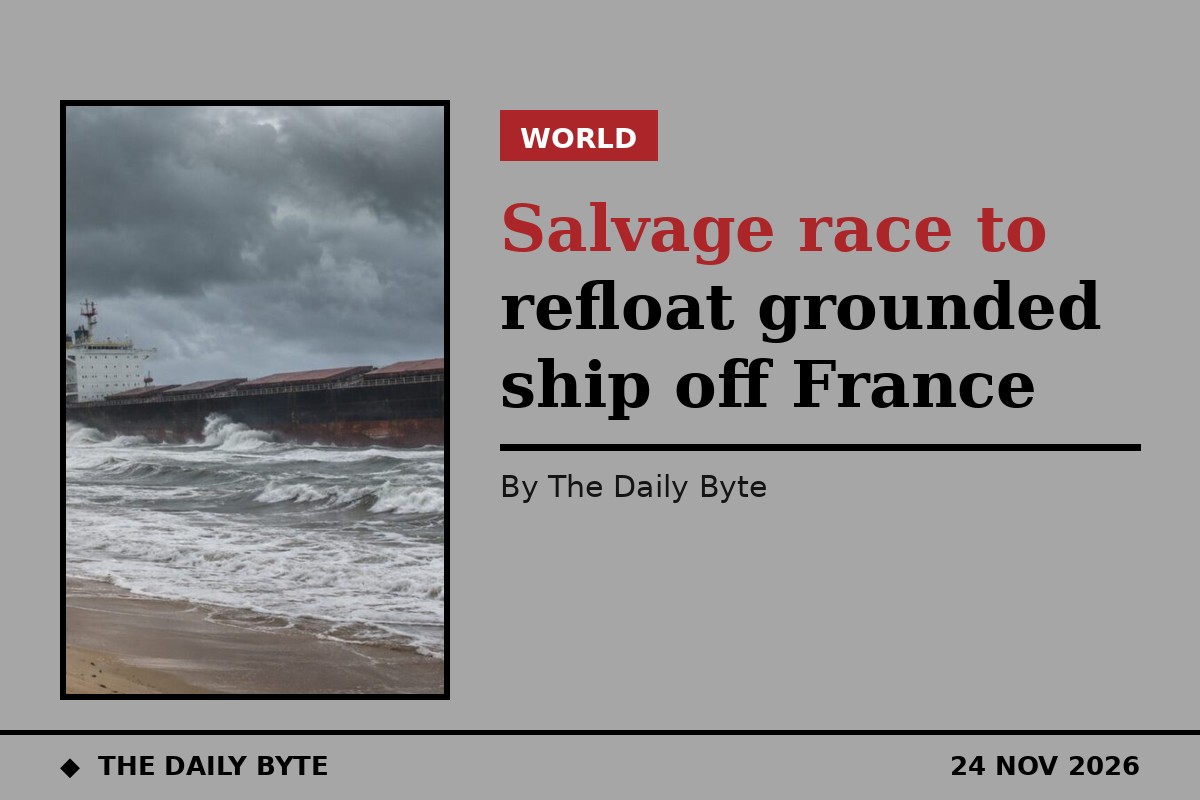
Salvage teams in south-west France are racing a falling tide to refloat a 169-metre bulk carrier that has been stuck on a beach in the Landes region since early on Friday 20 November. The Malta-flagged Miro G ran aground near Cap de l'Homy, close to the village of Lit-et-Mixe on the Atlantic coast, after heavy weather left it unable to manoeuvre. French maritime authorities say the operation could take several days or longer, and if the next attempt fails the ship may have to be dismantled where it lies.
The vessel had left Egypt on 13 October and was heading for the French port of Rouen when it reported steering difficulties on the evening of Thursday 19 November. Crew tried to anchor off the coast, but gusts of about 90 kilometres per hour dragged the anchor and pushed the ship towards the shore. It grounded shortly after midnight with 22 seafarers on board, according to Marine Insight. The ship was sailing without cargo, but it carries just over 100 tonnes of diesel fuel for its engines, making pollution a live concern.
Crew lifted off as the storm closed in
A French Air and Space Force helicopter airlifted 19 of the 22 crew to safety on Friday 20 November. The captain and two crew members stayed on board to help with the salvage effort. France's Atlantic maritime prefecture activated level 3 of its maritime emergency plan, the highest level, along with the Franco-Spanish Biscaye Plan, and a French Navy surveillance aircraft flew over the site and found no sign of pollution.
On Saturday 21 November, authorities evacuated the last 11 people on board ahead of a coastal storm, with westerly winds of force 7 to 8 on the Beaufort scale forecast for the following day. The group included the three remaining crew members, four specialists from the French Navy's assessment and intervention team, three representatives of salvage company Les Abeilles International and one representative of the shipowner's insurer. Before leaving, the team filled the ship's ballast tanks with seawater to hold it steady and reduce the risk of it capsizing or shifting further up the beach, Brussels Reporter reported.
A difficult tow in shallow water
Refloating the Miro G is a hard technical problem. The French emergency tug Abeille Bretagne sailed from Brest to the scene, collecting a towline of about 1,000 metres at La Pallice near La Rochelle. But shallow water prevents the tug from coming closer than about 900 metres to the stranded vessel, so the line must be hauled across the surf and secured before any pull can begin. The ship's hull is touching the seabed, and the prefecture has warned that it could become unstable as the tide changes, creating a risk of capsizing.
Two further problems complicate the work. Both of the ship's main generators have failed, which makes it harder to run the pumps that would empty the ballast water and lighten the vessel so it can be pulled free. Engineers have made temporary repairs, but their use depends on having enough water depth to cool the circuits, and the team plans to airlift mobile generators to the ship. Tidal coefficients along the coast are also falling, reducing the depth of water under the hull at high tide, so the refloating attempt must be made at high tide when the weather allows.
A narrowing window
French authorities say they have only until Thursday to take advantage of a favourable tidal pattern, with the high tide running as much as a metre higher than when the ship went aground. Salvage experts from Les Abeilles International and SMIT Salvage are working with the French Navy on the plan, and a lifeboat from the French National Sea Rescue Society will help secure the towline. The prefecture has created a temporary safety zone around the wreck, banning maritime activity within five nautical miles, and access to Cap de l'Homy beach has been restricted while the response continues.
If the attempt fails, the vessel could have to be taken apart on the beach, a far longer and costlier outcome. For now, the prefecture has stressed that success cannot be guaranteed, and that each stage of the operation must be assessed before the next begins. The Miro G's week on the sand is a reminder of how quickly a routine voyage can turn into a major salvage operation when heavy weather meets a lee shore.


