Mitchells & Butlers flags £95m cost hit as profit edges up
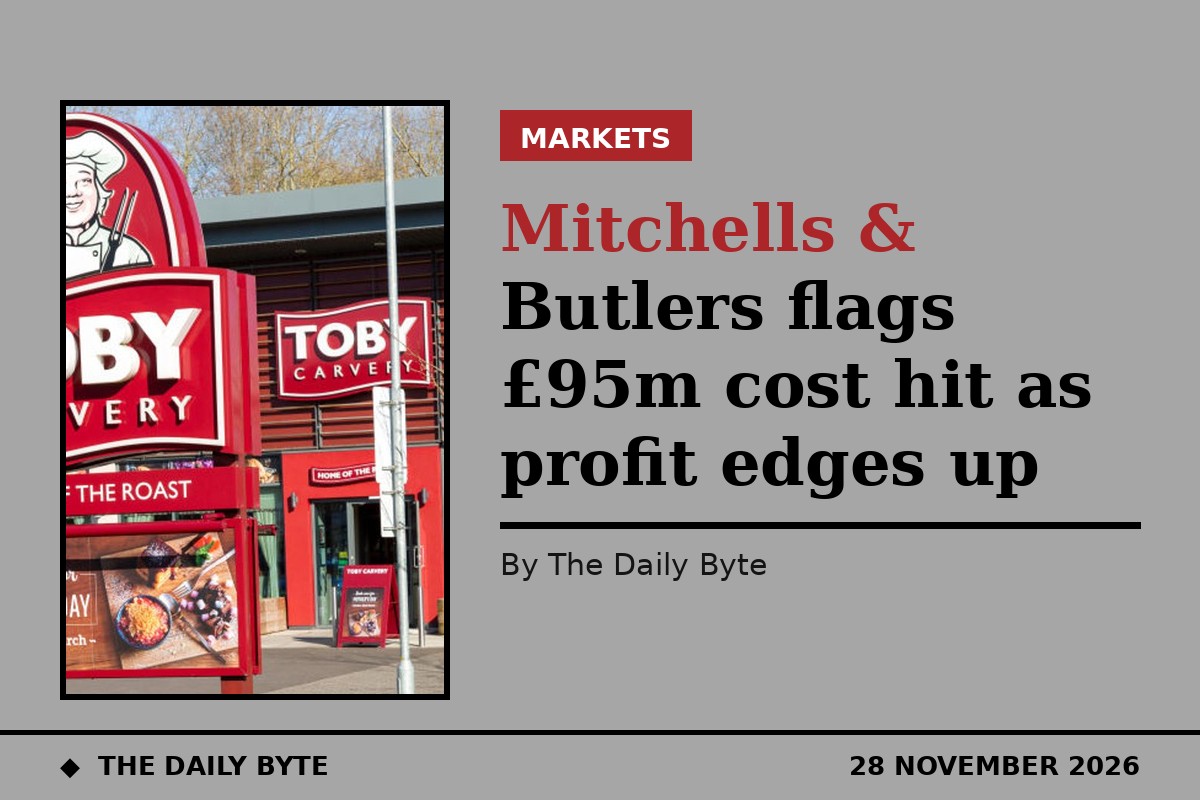
Mitchells & Butlers, the pub and restaurant group behind Toby Carvery, Harvester and All Bar One, reported a small rise in annual adjusted operating profit on Thursday 26 November, but warned of about £95 million of fresh cost pressure in the year ahead.
Adjusted operating profit edged up to £332 million in the 52 weeks to 26 September 2026, from £330 million a year earlier, as sales growth and cost savings offset £120 million of cost increases. Revenue rose 1.3% to £2,746 million, while like-for-like sales grew 2.1%, which the company said was ahead of the wider hospitality market.
The shares slipped on the day. Investors focused less on the year just ended and more on the guidance underneath it: cost headwinds of around £95 million in the 2027 financial year, equal to about 4% of the group's cost base before any mitigation, driven mainly by higher labour costs from statutory rate rises.
A year shaped by costs and weather
The year just reported was shaped by a difficult trading backdrop. The group started strongly, with like-for-like sales up 4.5% in the first quarter and 10.5% over the five key festive days, including a record sales day on Christmas Day. Growth slowed to 1.8% in the second quarter, was flat in the third quarter after extended periods of extreme heat and the timing of Easter, and recovered to 1.7% in the fourth quarter as weather conditions returned to normal.
Drink-led brands performed best. Like-for-like drink sales rose 4.0% over the year, helped by strong trading in drink-led formats and at the group's London sites. Food sales were steadier, and the group said its estate of pubs and restaurants continued to take market share.
Cost pressures were the dominant theme of the year. The £120 million of cost increases in the 2026 financial year came mainly from labour, including rises in the National Living Wage and higher employer National Insurance contributions, and from food costs, notably meat. Adjusted operating margin slipped slightly to 12.1%, from 12.2% a year earlier.
Statutory profit falls as property values drop
On a statutory basis, operating profit fell to £302 million from £322 million, after £30 million of separately disclosed items, mainly a £27 million net property valuation charge. Profit before tax was £229 million, down from £238 million, and basic earnings per share were 28.8p, down from 29.7p. Adjusted earnings per share rose to 32.8p from 30.9p.
The balance sheet strengthened. Net debt excluding leases fell by £100 million to £743 million, and net asset value increased to 519p per share from 476p. Capital spending rose to £220 million from £181 million, funding 221 remodels, eight conversions and 16 acquisitions, including 14 freehold sites.
Slower start to the new year
Trading since the year end has been more modest. Like-for-like sales rose 1.1% over the first eight weeks of the new financial year, against a strong comparative period, and the group said it continued to outperform the market. It has secured 50% of its energy requirements for the 2027 financial year, with energy markets still volatile.
No dividend was declared or paid during the year, and the group said it will update investors on its capital allocation framework at its half-year results in May 2027. Chief executive Phil Urban said the group remained confident in its ability to drive the business forward through operational execution, its Ignite improvement programme and disciplined investment.
The wider sector backdrop remains tough. The group said the number of licensed outlets across the industry fell by 1% in the year to September 2026, with leased sites down 5% and an average of 13 food-led and community pub closures a week, a sign that cost pressures are still forcing weaker operators out of the market.


