Moldova Dismisses Russian Provocation Warning
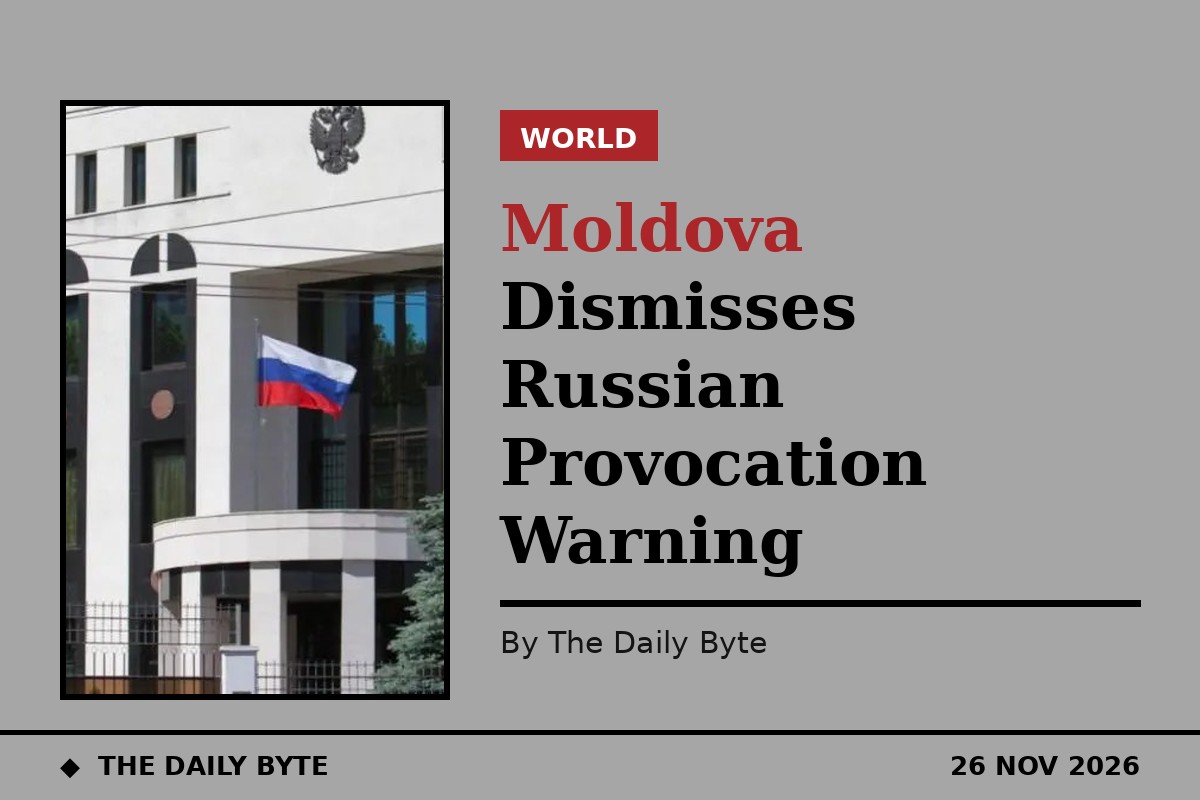
Moldova has dismissed a warning from the Russian Embassy in Chisinau about an alleged anti-Russian provocation, calling it a new disinformation tactic designed to distract from repeated Russian drone incursions into Moldovan airspace.
The Russian Embassy said on Wednesday evening that it had received information about an "anti-Russian provocation" planned for the coming days, aimed at drastically worsening relations between Moscow and Chisinau. The diplomatic mission published the claim on social media but provided no evidence, no details about the nature of the alleged incident, and no indication of who might be behind it.
Russian diplomats said they had repeatedly warned about the risk of such staged incidents and claimed their warnings were now beginning to prove true. They urged the authorities in Chisinau not to be drawn into a confrontation with Russia and to avoid what they described as "reckless steps towards escalation", adding that any breakdown in bilateral relations would primarily affect Moldovan citizens.
The embassy also called on Moldovan citizens to remain vigilant, avoid believing what it described as manipulative information, and refrain from jumping to conclusions.
The government in Chisinau rejected the claim on Thursday. Government spokesman Dumitru Ciorici said Russia was resorting to new information-based diversions to distract from the increasingly frequent incursions into Moldovan airspace by drones, which endanger citizens. "Russia is resorting to new disinformation tactics to divert attention from the increasingly frequent drone incursions into our airspace, which endanger our citizens," he said.
Daniel Voda, an associate expert in foreign policy and strategic communication at the Institute for European Policies and Reforms, noted that the Russian diplomatic mission had failed to provide any verifiable information to substantiate the alleged provocation. Instead, he said, it resorted to accusations and insinuations that could be interpreted as threats against the authorities in Chisinau, and urged citizens to remain calm and rely on credible sources.
The dispute comes against a backdrop of repeated airspace violations. Moldova's Ministry of Defence recorded ten air incidents between 14 and 20 November amid Russian attacks on Ukraine, and the authorities have recorded more than 80 incidents involving drones and other aerial threats in 2026 alone.
Separately, Moldova approved a 30-day state of alert for its energy sector on Wednesday to prevent potential supply shortages. President Maia Sandu warned during a meeting of the NATO Parliamentary Assembly on 23 November that Russia is waging a "cognitive war" against Moldova through disinformation, manipulation, and attempts to influence the decisions of its citizens.
Russia's ambassador-designate to Chisinau, Oleg Ozerov, was summoned to the Ministry of Foreign Affairs over the drone incidents. During the meeting, he suggested the incidents might be provocations orchestrated by Ukrainian special services, intended to strain relations between Moscow and Chisinau, but provided no evidence to support the claim.
Moldova's Ministry of Foreign Affairs has not commented on the embassy's latest warning. Relations between Moscow and Chisinau have deteriorated sharply since Russia's full-scale invasion of Ukraine, with drones identified as Russian repeatedly entering Moldovan airspace.


