Western Sahara: US and Morocco defend autonomy at UN
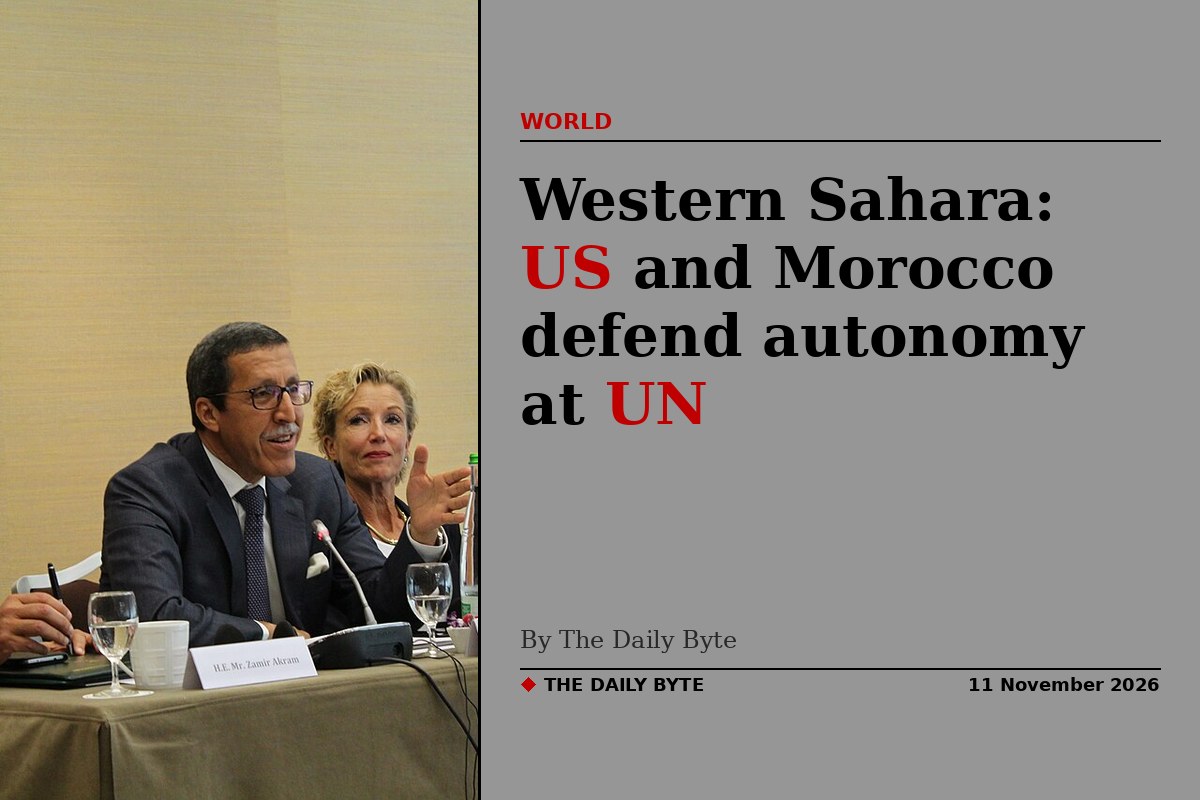
The United States and Morocco have defended the autonomy plan for Western Sahara before the United Nations General Assembly, after Russia's veto on 30 October ended the mandate of the UN mission in the territory.
The Assembly met in New York on Tuesday 10 November to hear the United States and Russia explain their vetoes. The US draft resolution would have renewed the mandate of the UN Mission for the Referendum in Western Sahara, known as MINURSO, for another 12 months, until 31 October 2027, while establishing Morocco's autonomy proposal as the basis for negotiations. It received 11 votes in favour, one against and three abstentions, but was not adopted because of the Russian veto.
Russia's own draft, which proposed a renewal of the mandate for another year without the autonomy references, received three votes in favour, one against and 11 abstentions, and also failed.
Hilale: veto will not change the Sahara's future
Morocco's ambassador to the United Nations, Omar Hilale, told the Assembly that a veto could block a resolution but would not change Morocco's sovereignty over the Sahara or alter the future of the political process.
"The Sahara was Moroccan before October 30, it is even more Moroccan after October 30, and it will remain Moroccan until the end of time," Hilale said.
He argued that the veto was not the cause of the decades-long deadlock but a consequence of it, and that Security Council Resolution 2797 had marked a major shift by moving the issue away from simply managing the conflict towards seeking a final political settlement. Morocco's autonomy plan under Moroccan sovereignty, he said, remains the basis for a final settlement and offers a practical form of self-determination.
Hilale used much of his speech to challenge Algeria's role, putting six questions to Algiers, which he accused of contributing to the deadlock while refusing to acknowledge its role as a party to the dispute. "A veto can end a mandate, but it will change neither history nor Morocco's sovereignty over its Sahara," he said.
US: referendum is unworkable
The US ambassador to the United Nations, Mike Waltz, told the Assembly that the Western Sahara issue had been dominated for decades by wishful thinking that a referendum would somehow materialise, and that approving the same mandate year after year had kept the conflict frozen for 50 years.
He said Resolution 2797 had established Morocco's autonomy proposal as a basis for negotiations, and that three rounds of high-level talks had followed, one in Madrid and two in Washington, bringing the parties to the table for the first time in nearly a decade, with Algeria and Mauritania present as observers.
Waltz said successive secretaries-general, UN personal envoys and former MINURSO chiefs had all warned that the original referendum framework was impractical and unworkable, and that MINURSO's own website recorded that it had not been preparing for a referendum for more than two decades.
He also drew attention to the Sahrawi families who have spent 50 years in refugee camps near Tindouf, in Algeria, saying nearly two-thirds of children under five suffered from anaemia and only one in ten received a minimally acceptable diet. The UN refugee chief had described the status quo as untenable, unsustainable and inhumane, he said.
What happens next
The dispute over Western Sahara dates back to 1975, pitting Morocco, which controls most of the territory, against the Polisario Front, which is backed by Algeria and calls for a self-determination referendum. Morocco's autonomy initiative, submitted in 2007, has been described by the Security Council as serious and credible, and has won the support of a growing number of states, including the United States, France and Spain.
France's representative told the Assembly that the departure of MINURSO did not imply the closure of the political process to resolve the dispute. Waltz said the United States was not finished trying to resolve the conflict, thanked the observers and staff who had served with MINURSO for 35 years, and said Washington would continue working with the parties and the United Nations towards a lasting settlement.
"We welcome Morocco's commitment to maintain the ceasefire," Waltz said. "We expect and call on the Polisario to do the same. The door to peace remains open to all parties, and to all observers."
Source: United States Mission to the United Nations
Source: Morocco Telegraph


