Moyale ceasefire frees 300 Kenyan trucks after 34 days
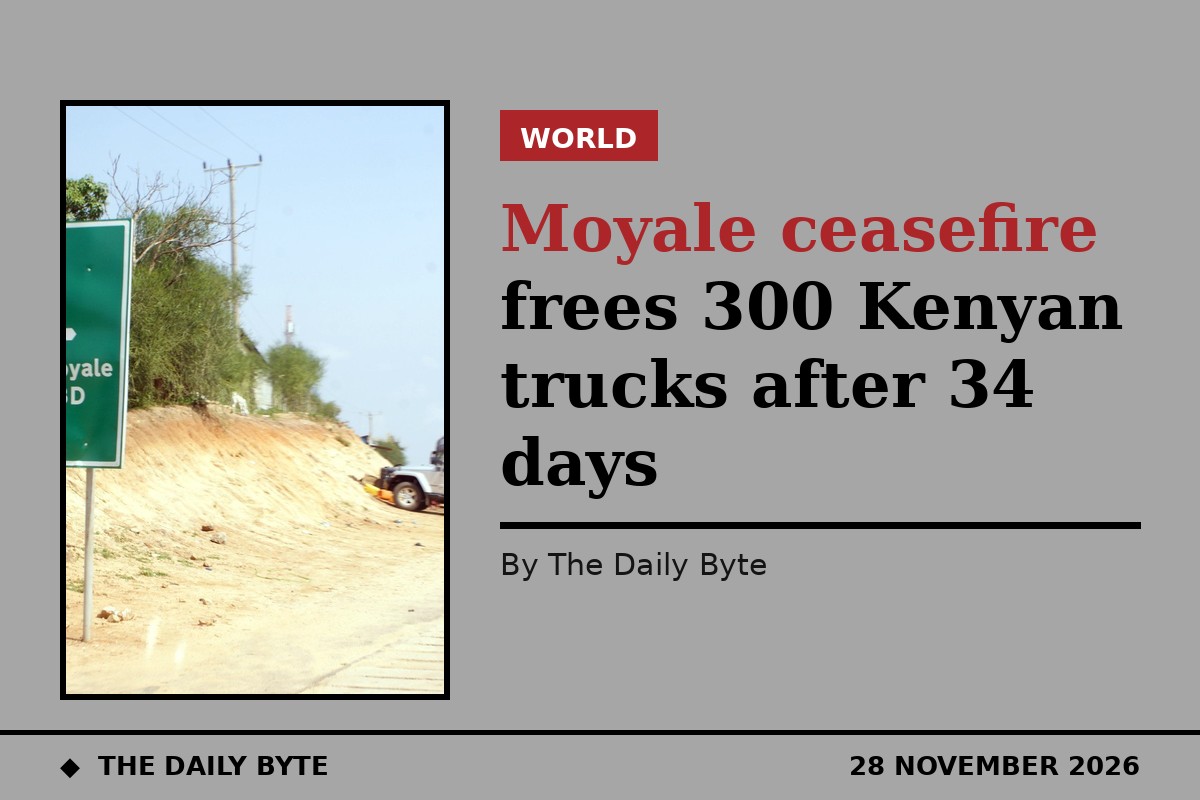
More than 300 Kenyan trucks stranded in Ethiopia for weeks crossed back into Kenya on Thursday 26 November under Ethiopian military escort, after the Ethiopian government announced a ceasefire ending 34 days of fighting around the border town of Moyale.
The convoy had been stuck inside Ethiopia since clashes broke out in mid-October between Oromo and Somali communities in southern Ethiopia. The fighting centred on Moyale, a town divided by the Kenya-Ethiopia border and a key transit point on the road linking Nairobi with Addis Ababa. With the route unsafe, Kenyan drivers and their vehicles were unable to move, and trade through the corridor ground to a halt.
Ceasefire announced after 34 days of fighting
The Ethiopian government announced the ceasefire on Thursday 26 November, the same day the trucks began moving. Federal police have been deployed to the area to restore public order and strengthen security, according to reports of the announcement.
The clashes were driven by long-running disputes over territory and administration, and over control of trade routes connecting southern Ethiopia with Kenya and Somalia. Reports of the latest escalation say it began in mid-October amid disagreements over the administration of disputed areas and the raising of the Somali regional flag.
The movement of the trucks followed diplomatic efforts by the Kenyan government and the Kenya Truckers Association to secure the drivers' safe passage. Ethiopian troops escorted the convoy across the border into Kenya.
Truce terms not made public
Important details of the truce remain unclear. Officials have not publicly identified who signed any agreement, which parties entered into it, or what terms it contains. That uncertainty matters, because the corridor has been volatile for weeks and residents and aid workers remain cautious about whether the calm will hold.
The human cost of the fighting has been heavy. More than 60,000 people have been displaced, according to humanitarian agencies cited by Borkena, and at least six people were reported killed in incidents on the Kenyan side of the border. Those casualty figures should be treated as reported estimates until confirmed by the relevant authorities.
A vital trade corridor
Moyale matters far beyond the town itself. It sits on the main commercial artery between Kenya and Ethiopia, carrying goods between Nairobi and Addis Ababa and onward to Somalia. When the road closes, truckers lose income, traders cannot move stock, and prices rise in the towns that depend on cross-border supply.
The return of more than 300 trucks therefore brings real relief to Kenyan transport operators whose vehicles and drivers were caught in the crisis. But the relief is only partial. Federal forces are now patrolling the area and transit operations are resuming, yet the underlying disputes over territory and administration have not been settled in public, and no published agreement explains how displaced families will return or how trade will be protected if fighting resumes.
For now, the immediate priority is keeping the corridor open and safe. Drivers, traders and residents along the border will be watching whether the federal deployment holds, whether the trucks keep moving in both directions, and whether the two communities reach an agreement that outlasts the escort that brought the stranded drivers home.


