Mozambique Court Backs State Grain Import Control
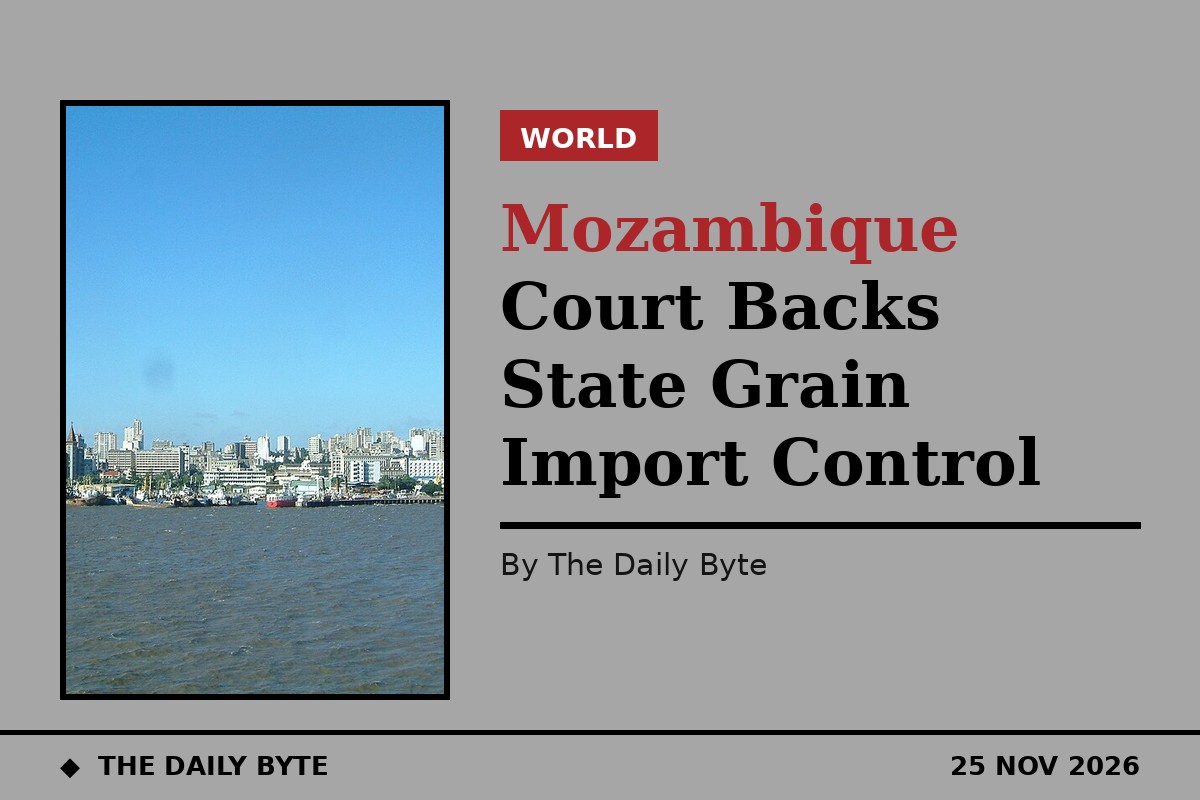
Mozambique's Administrative Tribunal has again rejected a legal challenge to the state's control of rice and wheat imports, leaving the Mozambique Grain Institute, known as the ICM, in charge of the trade. The court dismissed a second interim injunction filed by Companhia Industrial da Matola, or CIM, one of the country's largest grain importers, which had asked for the system to be suspended.
The ruling means the existing framework stays in force, with the ICM continuing to plan and monitor all rice and wheat entering the country. CIM had argued that the decree behind the system was unlawful, but the tribunal's latest decision reinforces the state's position, according to Club of Mozambique, which first reported the ruling.
The dispute centres on Ministerial Diploma No. 132/2025, issued on 31 December 2025 by Economy Minister Basílio Muhate, which gave the ICM control over imports of rice and wheat. The institute was made responsible for making the grains available to traders who sell on the domestic market. The control mechanism was introduced for rice in February and for wheat in May, with the stated aim of tightening oversight of foreign currency use.
The ICM argues that centralising imports is essential to stop over-invoicing, a practice it claims drains about $100 million from the national treasury each year. The institute says it will continue operating within its legal mandate and following current regulations.
Seizures and a business backlash
Tensions in the dispute escalated in October and November. On 12 October, CIM went to the Administrative Tribunal, accusing the minister and the ICM of acting illegally and of raising the charge paid by importers from $5 to $16 a tonne without authorisation. The next day, the ICM suspended CIM and two other companies, África Indústria and the Kenyan firm Pembe, accusing them of irregular imports, and confiscated 9,000 tonnes of wheat and 25,000 tonnes of rice from the three firms.
CIM then filed an emergency petition, and the court issued a summons certificate, a provisional measure suspending the effects of the ICM's action while the case was heard. On 22 October, the ICM wrote to commercial banks, copying the Bank of Mozambique, telling them to keep requiring its explicit authorisation for any import transaction involving CIM and to disregard the court certificate.
The ICM has since lifted restrictions on África Indústria and Pembe, but it has maintained the ban on CIM, citing specific regulatory breaches. In November, the ICM, alongside the General Inspectorate of Food and Economic Security, seized grain from CIM as the standoff continued.
The business community has pushed back. On 30 October, a group of Mozambican business leaders publicly demanded the suspension of the decree, saying it lacked a legal basis and conflicted with Mozambique's international commitments. The CTA, the main business association, had already called for the grain monopoly to be suspended immediately. CIM has labelled the government's actions legally baseless and accused the ICM of creating an illegal monopoly.
The court's reasoning, set out in an earlier ruling in the case, was that CIM had failed to demonstrate that the temporary continuation of the rules would cause it irreparable or difficult-to-repair harm, and that halting the decree could undermine the public interest in organising national cereal supply, given the importance of rice and wheat to domestic consumption and market stability. That earlier ruling, No. 152/2026, was dated 3 November and published on 13 November.
The tribunal's decisions so far do not settle the legality of the import regime. The matter will continue to be examined in the main proceedings, and CIM may appeal to the Full Bench of the Administrative Tribunal within ten days of receiving formal notification. For now, though, the state-run system stands, and the ICM remains the gatekeeper for two of the staple foods on which Mozambican households depend.


