Mozambique Acts to Curb Rovuma River Pollution
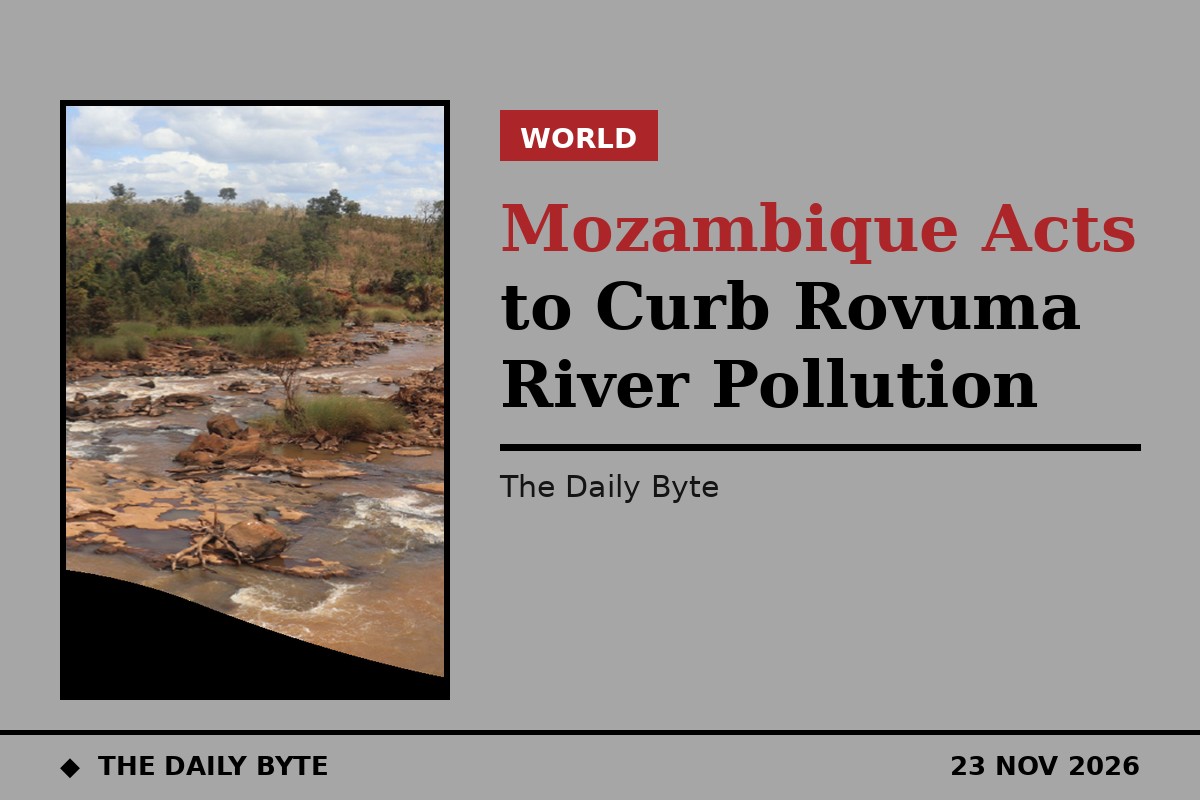
Mozambique's government in Niassa province is to build five dams to hold back polluted water from artisanal gold mining in Lupilichi, in Lago district, in a bid to stop contamination reaching the Rovuma River. The plan was announced by the province's Secretary of State, Silva Livone, and reported by Jornal Notícias on 22 November 2026, with construction due to start in the first quarter of 2027.
The dams, known locally as represas, are settling ponds designed to retain and filter the residual water left over from washing mineral ore, so that sediment can settle out naturally before the water reaches the streams that feed the Rovuma. Livone described the pollution as a threat to public health, animal life and the ecological balance of the area, and said the situation was urgent.
A river shared with Tanzania
The Rovuma, known upstream as the Ruvuma, forms part of the border between Mozambique and Tanzania, so pollution flowing past Lupilichi is a cross-border problem. Livone said Mozambique has a duty to protect the river and to keep its pollution from harming its neighbour, placing the plan in a diplomatic as well as an environmental frame. The river is a vital resource for communities on both sides, who rely on it for water, farming and fishing.
Artisanal gold mining around Lupilichi has released toxic substances into the water, threatening the health of people who depend on the river and the long-term balance of the ecosystem. A 2026 multisectoral inspection described the area as having unlicensed mining, river pollution, no adequate rehabilitation of mined land, precarious working conditions and foreign nationals working irregularly. Mozambique's 2024 National Action Plan under the Minamata Convention on mercury named the Mpapa mining community in Lupilichi as a site of substantial mercury contamination.
What the plan does and does not cover
The announcement covers five ponds at Lupilichi, the location, the stated health and ecological reasons, and a start date in early 2027. No funding source or budget has been published, and the ponds are designed mainly to deal with sediment, while mercury, the pollutant scientists worry about most in artisanal gold areas, is not removed by settling alone. Any judgement of the plan's impact will have to wait until a budget, an operator and a design appear.
The move comes as Mozambique steps up action against illegal mining more broadly. On 20 November, Attorney-General Américo Letela called for stronger investigations into illegal mining, arguing that law enforcement should target not only the miners but also those who finance, organise and protect clandestine networks. Renamo has separately demanded a parliamentary inquiry into suspected water pollution in Moma and Larde districts in Nampula province, linked to mining activity.
Frequently asked questions
What is being built on the Rovuma River? Five settling ponds, or dams, at Lupilichi in Lago district, Niassa province, to retain and filter wastewater from artisanal gold mining before it reaches the river.
When will construction start? In the first quarter of 2027, according to Niassa Secretary of State Silva Livone.
Why does the Rovuma matter beyond Mozambique? The river forms part of the border with Tanzania, so pollution from Lupilichi affects communities in both countries.
Read the report from SaharaWire, and analysis of the plan from Discovery Alert.


