MSF Urges Wider ERVEBO Access as Ebola Deaths Pass 5,300
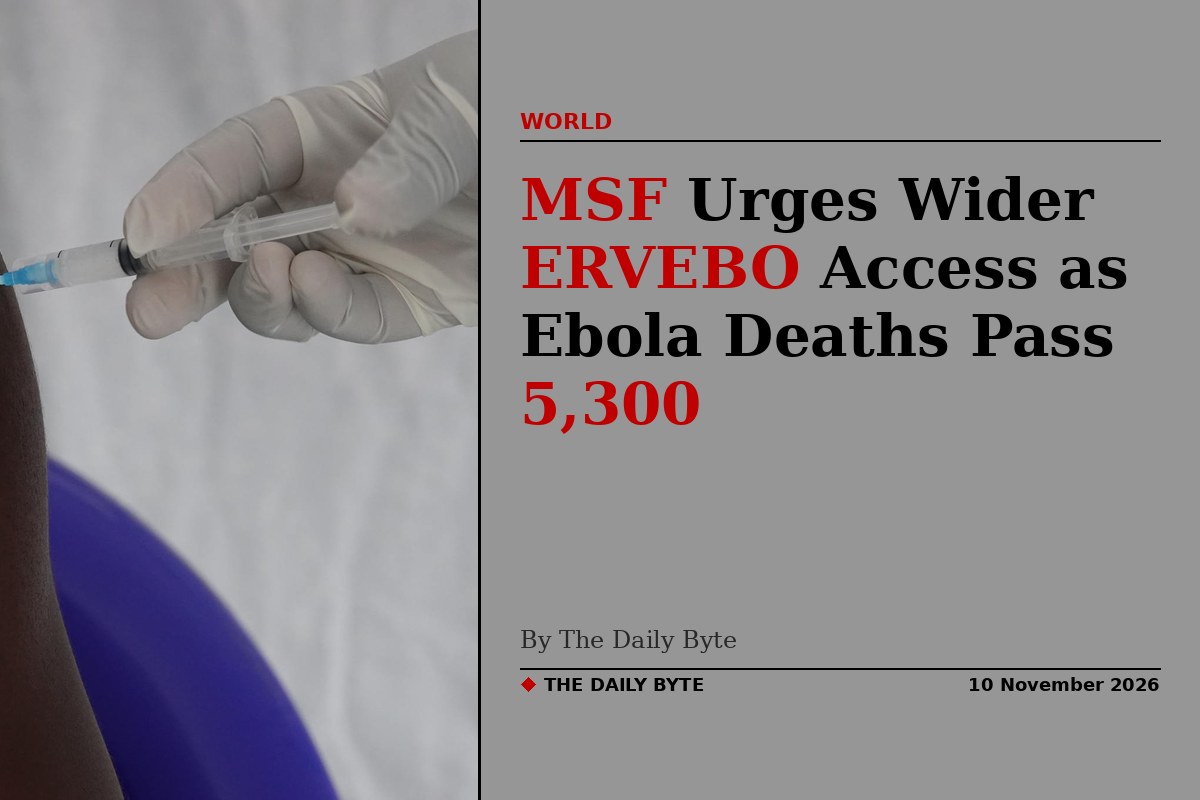
Médecins Sans Frontières (MSF) has called for rapid expansion of access to the ERVEBO Ebola vaccine in the Democratic Republic of Congo (DRC), warning that waiting for a vaccine designed specifically for the Bundibugyo strain is leaving health workers and communities exposed. The appeal, published on Tuesday 10 November 2026, comes as the outbreak's death toll passes 5,300.
No licensed vaccine exists specifically for Bundibugyo ebolavirus, the strain behind the current outbreak. Vaccines designed for it are still under study, and results are months away. MSF argues that this should not stop wider use of ERVEBO, the only Ebola vaccine currently available at scale, while that research continues.
Why MSF wants ERVEBO used now
ERVEBO is licensed for use in people aged one year and older, has a well-established safety profile and has been used extensively in earlier Ebola responses in the DRC. Although it was designed for the Zaire strain rather than Bundibugyo, MSF says animal studies and immunological data, together with encouraging observations from its own teams, suggest it may still offer protection against Bundibugyo.
Guyguy Manangama, an epidemiologist and deputy director of operations at MSF, said: “For MSF, the absence of a Bundibugyo-specific vaccine should not prevent the use of the only vaccine currently available.” He added that every month spent waiting for dedicated tools leaves health workers, frontline responders, contacts of confirmed cases and affected communities exposed to a potentially deadly disease.
Etienne Gignoux, epidemiologist and director of the Department of Epidemiology at Epicentre, MSF's epidemiology research centre, said decisions in an outbreak often have to be made before the evidence is complete and the tools are ideal, and that public health authorities must balance the need for research with the urgent need to save lives.
Access remains tightly restricted
At present, access to vaccination remains highly restricted. Frontline workers can generally only be vaccinated through research protocols or compassionate-use mechanisms, while contacts of confirmed cases usually only have access through ongoing clinical trials. MSF says only a small fraction of the people who could benefit are likely to be enrolled under those strict requirements.
Supply is also short. In August, the DRC government, with support from Africa CDC, requested 500,000 doses of ERVEBO from the World Health Organization's International Coordinating Group on Vaccine Provision. Only 70,000 doses were released. MSF says broader vaccination will only be possible if more doses are released from existing stockpiles, subject to endorsement by the WHO's Strategic Advisory Group of Experts on Immunization at its next meeting on 17 November.
Outbreak passes 5,300 deaths
According to Africa CDC figures reported on Monday, the outbreak has killed 5,376 people: 5,372 in the DRC and two each in Kenya and Uganda. Some 10,444 people have been infected, giving a death rate of more than 50 per cent. The DRC declared its 17th Ebola outbreak in mid-May, and it is now the largest in the country's history.
Separately, the WHO has recommended adding two Bundibugyo-specific vaccine candidates to the ongoing Tumaini clinical trial in the DRC: ChAdOx1, developed by the University of Oxford with the Serum Institute of India, and Moderna's mRNA-1469. A trial that began last month is already testing whether ERVEBO offers any cross-protection against Bundibugyo, and results from the new vaccine candidates are expected in early 2027. The trial is led by the DRC's National Institute for Biomedical Research, backed by the WHO and other partners.
Vaccination alone will not end the outbreak
MSF stresses that vaccination alone will not bring the outbreak under control. It must sit alongside surveillance, rapid case detection, laboratory diagnosis, contact tracing, quality clinical care, infection prevention and control, safe and dignified burials, community engagement and support for frontline health workers, all of which it says require urgent reinforcement.
The organisation is calling on Merck, the maker of ERVEBO, and on global health authorities to ensure vaccine allocations match the scale of public health need, so that a meaningful expansion of vaccination is possible.


