Muhoozi arrests deepen Uganda succession crisis
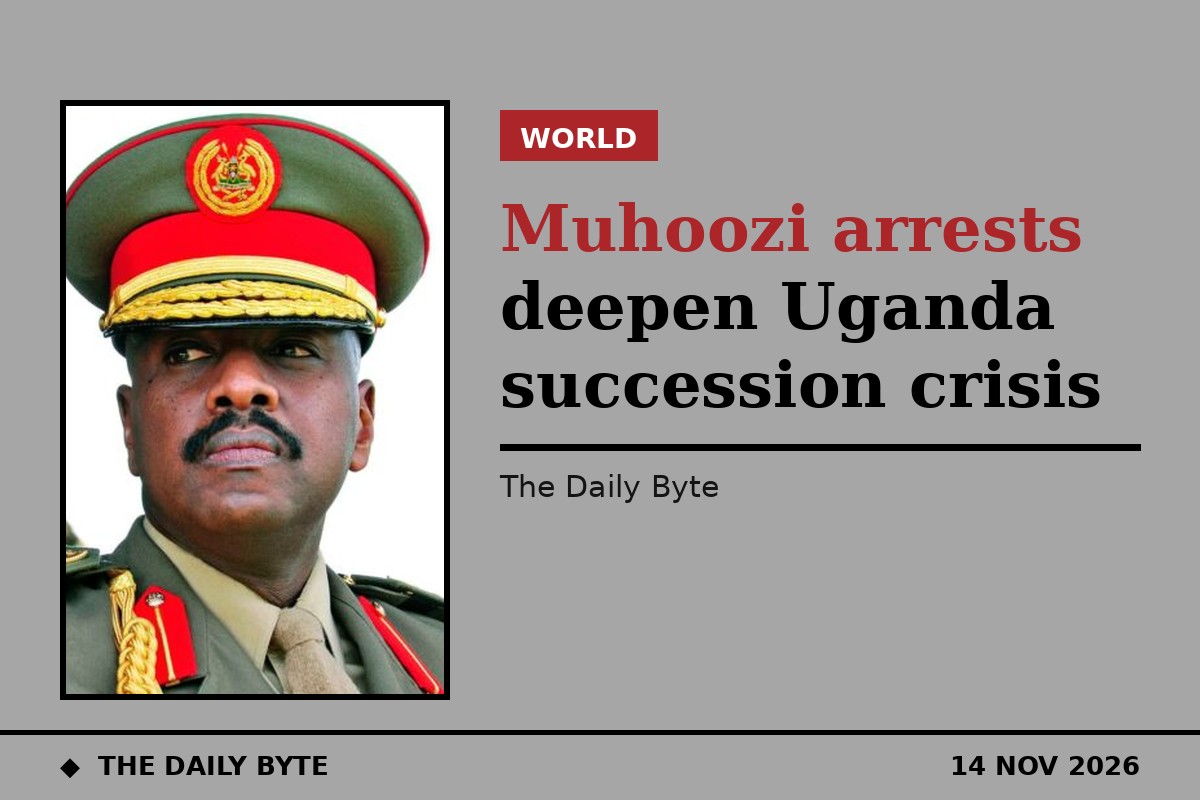
At least a dozen generals and senior officers have been arrested in Uganda over the past 15 months under the country's powerful army chief, Gen Muhoozi Kainerugaba, as the question of who will succeed his father, President Yoweri Museveni, turns into an open power struggle. A BBC analysis published on Saturday says the crackdown has unsettled the military's top ranks and exposed divisions inside the ruling National Resistance Movement (NRM).
Gen Kainerugaba, 52, is the eldest son of Museveni, 82, who has ruled Uganda since 1986 and was sworn in for a seventh elected presidential term earlier this year. The general is widely seen as a potential successor and has signalled that he intends to seek the presidency in 2031, when his father's current term is due to end. He also leads the Patriotic League of Uganda, a political movement that has mobilised support around his leadership.
Generals arrested as succession debate sharpens
The detention that brought the crackdown into sharpest focus was that of Lt Gen Peter Elwelu, one of Uganda's most prominent former commanders. The former deputy army chief was arrested on 2 November over allegations of involvement in activities aimed at destabilising the country, and Gen Kainerugaba announced on social media that he had been stripped of his insignia and demoted to the rank of private. Military spokespeople later confirmed his detention.
Elwelu is among at least a dozen generals and senior officers detained since April 2025, according to an investigation by Uganda's Daily Monitor newspaper cited by the BBC. Maj Gen James Birungi, a former head of defence intelligence and security, was arrested in August 2025 on allegations including treason, terrorism and corruption.
Dr Gerald Bareebe, a Ugandan-born political scientist at Canada's York University, told the BBC he sees a connection between the arrests and political manoeuvring over the succession, often referred to as the "Muhoozi Project". "Senior officers believed not to support the project have been arrested, detained or charged with corruption and treason," he said, adding that the allegations against some officers were widely viewed as politically motivated.
Vice-president threatened
The row spilled into civilian politics this week when Gen Kainerugaba turned on Vice-President Jessica Alupo. On the night of 9 November he accused her of supporting what he called the "treachery" of Elwelu, threatened her with dismissal and possible arrest, and suggested he should take her job. Capital FM reported that he later deactivated his X account after the outburst.
"There are already strong signals that Jessica was supporting the treachery of Elweru. If that is true she will account for it," he posted. In another post he wrote: "As Vice President, the government will operate on military terms. There will be no more inefficiency." He added: "We shall arrest Jessica, without hesitation if she is part of Elweru's treachery."
Divisions inside the ruling party
The NRM's top leadership met on 10 November to discuss the succession question, but the meeting ended without agreement on a proposal to position Gen Kainerugaba as Museveni's successor, according to the AFP news agency. The party has rejected reports that its senior leadership turned down the proposal, describing the claims as "completely false".
At the meeting, one official reportedly urged Museveni to retire his son from the military and give him a civilian role to gain administrative experience. Local media reported that some party officials consider Gen Salim Saleh, Museveni's younger brother, better suited for civilian leadership, although there is no indication that he is interested in becoming president. Others defended Gen Kainerugaba, pointing to his military leadership, anti-corruption campaign and grassroots political mobilisation.
Bareebe argues that the Special Forces Command, which Gen Kainerugaba used to lead and which protects the president and strategic installations, could prove crucial in any transfer of power. "The regular army remains important but has been sidelined by the SFC, which now functions as a personal army for Museveni and his son," he said.
Pressure on the opposition
The succession debate is unfolding against a backdrop of sustained pressure on the opposition. Veteran opposition politician Kizza Besigye remains in detention on treason charges, which he denies, while Bobi Wine, who came second to Museveni in this year's presidential election, has gone into exile in the United States after being threatened by Gen Kainerugaba. The government has consistently defended its security operations as lawful and necessary to maintain stability.
Gen Kainerugaba has said he intends to leave the post of Chief of Defence Forces within months and dedicate his life to Christ, but he has given no handover date and named no successor. For now, Museveni remains in power, but the arrests, his son's threats and competing accounts of divisions within the ruling party have intensified questions about how Uganda's next political transition might unfold.


