Museveni Retires 11 in Uganda Civil Service Shake-Up
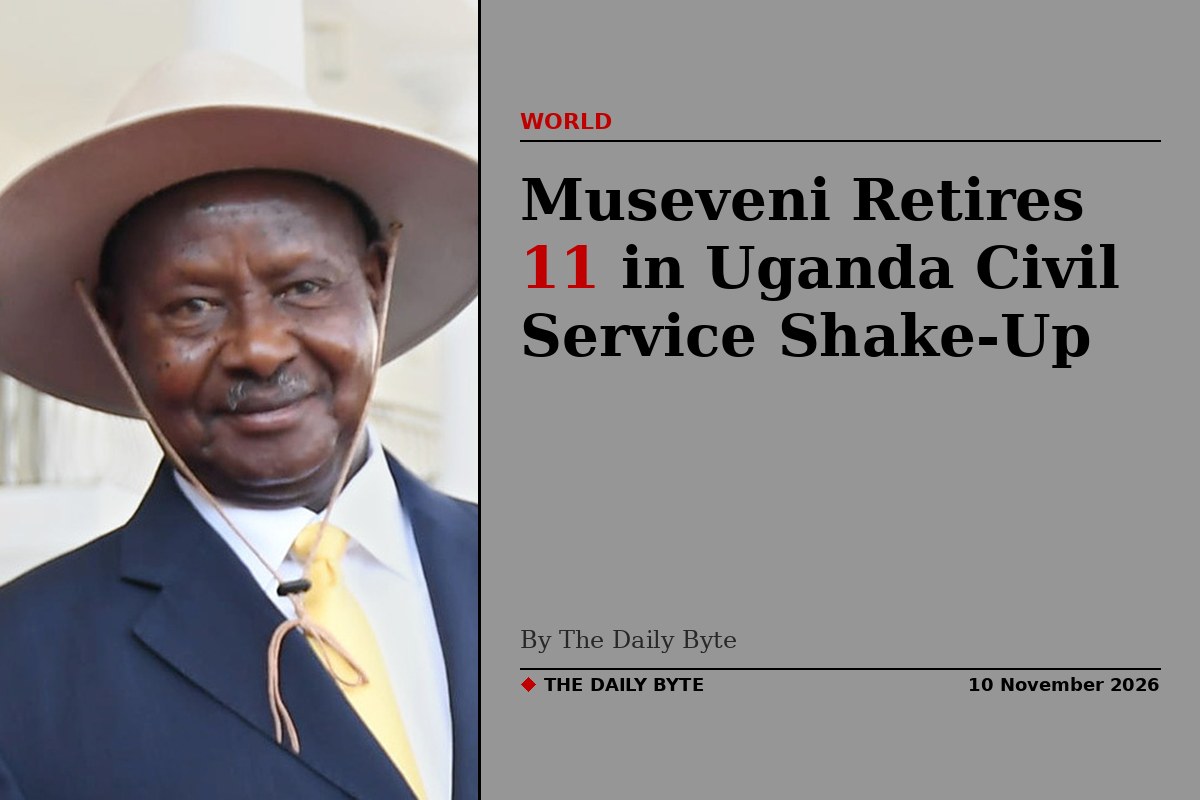
President Yoweri Museveni has ordered a major shake-up of Uganda's senior civil service, retiring 11 permanent secretaries, redeploying 11 others and naming 13 new senior officials to lead key ministries.
The changes were announced on 8 and 9 November 2026 and affect ministries responsible for agriculture, foreign affairs, defence, works and transport, water and environment, public service, information technology and the Office of the Prime Minister. Sixteen permanent secretaries keep their current posts.
Museveni acted under Articles 99, 172(1)(a) and 174(2) of Uganda's 1995 Constitution. The names of 12 nominees for permanent secretary posts have been sent to the Public Service Commission for assessment and advice before the appointments are finalised.
Who is leaving and who is coming in
Among those retiring is David Kasura-Kyomukama, who served as permanent secretary at the Ministry of Agriculture, along with former MP and cabinet minister Adolf Mwesige Kasaija. The departure of Mr Bageya follows months of scrutiny over alleged corruption linked to the Busega-Mpigi Expressway project; he was asked to step aside in June 2026 and was cleared of wrongdoing by the Inspector General of Government on 23 October 2026.
New faces named to lead ministries include Edith Butuuro, who takes over at the Ministry of Defence and Veteran Affairs, and engineer Flavia Guto Bwire, appointed to lead the Ministry of Works and Transport. Professor Stephen Akandwanaho will head the Ministry of ICT and National Guidance, while Charles Ssentongo moves to Foreign Affairs.
At the Office of the Prime Minister, Emmanuel Freddie Mugunga has been named to replace Alex Kakooza, who has been redeployed to the Ministry of Trade, Industry and Cooperatives. Dr Edward Sengonzi Damulira has been named for the position of Clerk to Parliament.
Why the changes were made
The Presidential Press Unit said the reorganisation is intended to strengthen institutional leadership, improve administrative efficiency, remove bureaucratic bottlenecks and improve the delivery of government programmes.
The shake-up comes as the government prepares to implement programmes under the Fourth National Development Plan, known as NDP IV, which aims to speed up economic transformation. Uganda is pursuing an ambition to expand its economy tenfold by 2040, and the changes place new leadership in several ministries responsible for delivering that agenda.
What happens next
The 12 permanent secretary nominees must first be assessed by the Public Service Commission, which will advise the president before the appointments are confirmed. The 11 redeployed officials move to new ministries, while the 16 retained permanent secretaries stay in their current roles to keep services running during the transition.
In a separate announcement, the commander-in-chief of the armed forces, General Muhoozi Kainerugaba, said he intends to step down as chief of the Uganda People's Defence Forces after about one more year, and pledged a salary increase for private soldiers.


