Museveni, Suluhu Launch 30m Truck Plant in Mpigi
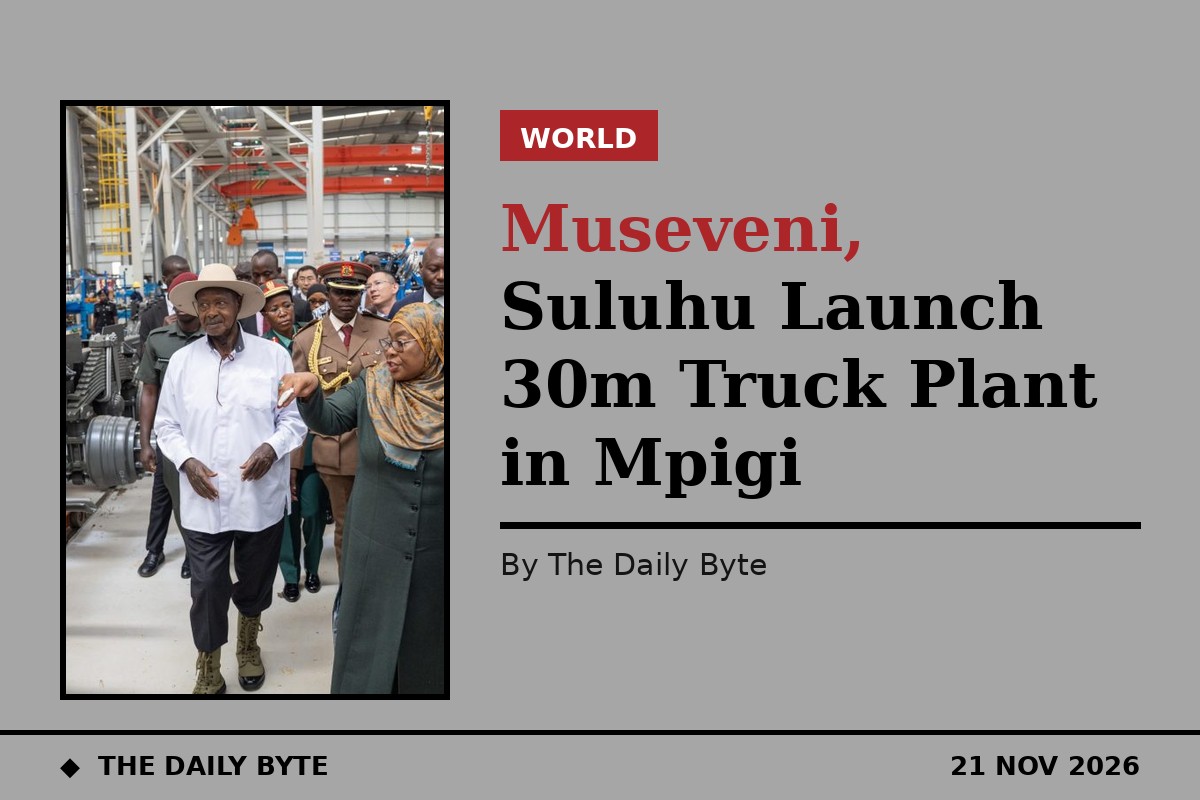
Ugandan President Yoweri Museveni and Tanzanian President Samia Suluhu Hassan have jointly launched a 30 million dollar vehicle assembly plant in Mpigi District, in a step both leaders presented as a milestone for East African manufacturing. The Double Q Automotive Assembly Plant, in Nakirebe, was commissioned on Thursday, 19 November, at the close of President Suluhu's two-day state visit to Uganda.
The facility, built on 45 acres of independently acquired land, assembles Sinotruk heavy-duty trucks and also represents the GMC and XCMG automotive brands in Uganda. It has an annual assembly capacity of 4,000 trucks and directly employs more than 1,200 Ugandans, according to the government.
From transporter to truck builder
Double Q Automotive's move into vehicle assembly has been gradual. Managing Director Lin Yu said the company began operations in Uganda in 2013 as a transporter of construction materials, before moving into Sinotruk spare parts, after-sales services and vehicle leasing, and becoming an official Sinotruk distributor in Uganda in 2017.
The company started assembling Sinotruk vehicles locally in 2020, and Yu said more than 5,000 trucks have since been assembled through its Ugandan operations. The new plant gives that work a dedicated home, with room to expand production, and the company says it intends to move into passenger vehicles and electric trucks.
Yu said the ambition goes beyond assembling imported components. "We want to buy more materials locally, make more truck parts in Uganda, and expand our work in metal fabrication, engineering, and logistics," he said, adding that the company wants to build a broader automotive manufacturing ecosystem around local steel production.
Jobs, pay and skills
The Minister of Works and Transport, Fred Byamukama, said the 30 million dollar investment had created substantial employment opportunities, particularly for young Ugandans. He said the plant directly employs more than 1,200 Ugandans, many of whom have gained practical skills through government skilling programmes and on-the-job training, and disclosed that the lowest-paid employee earns approximately 800,000 shillings a month.
Double Q is also developing training partnerships with Kyambogo University, Uganda Christian University and Nakawa Vocational Institute, aimed at preparing Ugandan engineers, technicians and other professionals for the automotive sector. The government said it was also talking to the company about expanding beyond assembly into manufacturing, including a proposed tyre production facility at Kayunga Industrial Park.
Steel, gas and regional markets
At the launch, President Museveni urged the company to strengthen the links between vehicle assembly and Uganda's steel industry, arguing that locally available raw materials should increasingly support domestic manufacturing. He noted that the facility was already carrying out vehicle body-building, contributing about 20 per cent in local value addition, and said Uganda's iron ore deposits offered a chance to build a domestic steel industry that would supply manufacturers and retain more value in the economy.
He also pointed to the value of combining the two countries' resources, noting that Tanzania has natural gas while Uganda has iron ore. "You find that Tanzania has got gas, Uganda has got iron ore, and other products. So, when you put them together, instead of using them in a fragmented way, you will do better business. You succeed more easily," he said.
President Suluhu described the plant as an important milestone in Uganda's industrialisation, and said industrialisation was no longer merely an economic option but a necessity for transforming African economies through jobs, value addition, technology transfer and export growth. She warned against unnecessary competition among East African countries in building similar industries, calling instead for complementary industrial policies and regional value chains.
"East Africa must compete with the world, not within itself," she said, adding that Sinotruk operations in both Uganda and Tanzania should be seen as an opportunity for cooperation rather than rivalry. She also welcomed proposals for harmonised regulations on vehicle assembly across the region, and said Tanzania was exploring partnerships to establish a railway locomotive manufacturing plant.
She pointed to the Port of Dar es Salaam, which she said handled approximately 33 million tonnes of cargo in 2026, as evidence of growing regional demand for transport and logistics. The Chinese Ambassador to Uganda, Wu Guangrong, welcomed the investment and urged Chinese companies operating in Uganda to comply with local laws, uphold workplace safety, protect the environment and invest in developing local talent.
Sinotruk International General Manager Song Yang said the company's products serve customers in more than 160 countries and regions, with overseas heavy-duty truck sales exceeding 1.2 million units. He projected that Sinotruk would produce and sell more than 360,000 heavy-duty trucks globally in 2026, with about 110,000 destined for African markets, and said success should be measured not only by sales but by the jobs created, skills transferred and value delivered to local economies.


