Myanmar Plans April By-Election in 55 Seats, Including Conflict-Hit Areas
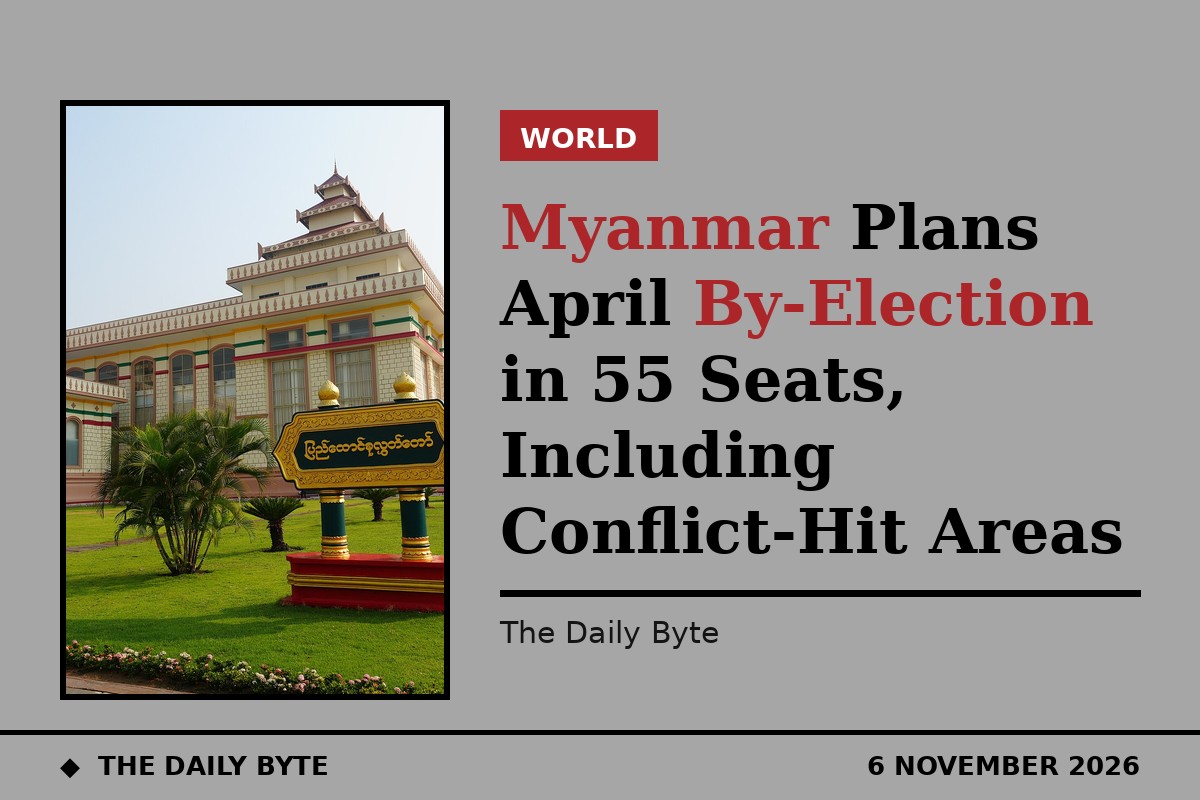
Myanmar will hold parliamentary by-elections on 4 April next year to fill 55 vacant seats, including constituencies in areas affected by the country's long-running civil war, its military-appointed election commission has announced.
The vote will be the first electoral exercise since a general election held in December and January, which was won overwhelmingly by the military-backed Union Solidarity and Development Party in the absence of any viable opposition. Critics described that election as designed to strengthen military rule.
What the vote will cover
The by-elections will fill 55 constituencies: 34 seats in the lower house, five in the upper house and 16 in regional and state parliaments, according to the announcement published in the state-run Myanma Alinn newspaper on Friday.
The seats include vacancies left by elected representatives who took up ministerial or other government posts, as well as areas that could not take part in the general election because of armed conflict.
At least seven of the constituencies are in towns recently recaptured by the military from armed groups opposing it. Others are in seven states and regions where fighting is still under way.
Conflict areas included — and one left out
Several seats will cover townships in the Sagaing Region and in Chin and Shan states, where anti-military resistance forces have a strong presence. Rakhine state, bordering Bangladesh, is not included. The military is locked in fierce fighting there with the rebel Arakan Army.
The general election was held in 692 constituencies, with voting excluded in 121 areas outside the military's control. The Union Solidarity and Development Party currently controls 84 per cent of the bicameral parliament, while military-appointed representatives hold 25 per cent of seats in each chamber.