Namib pours first gold at Zimbabwe's Redwing mine
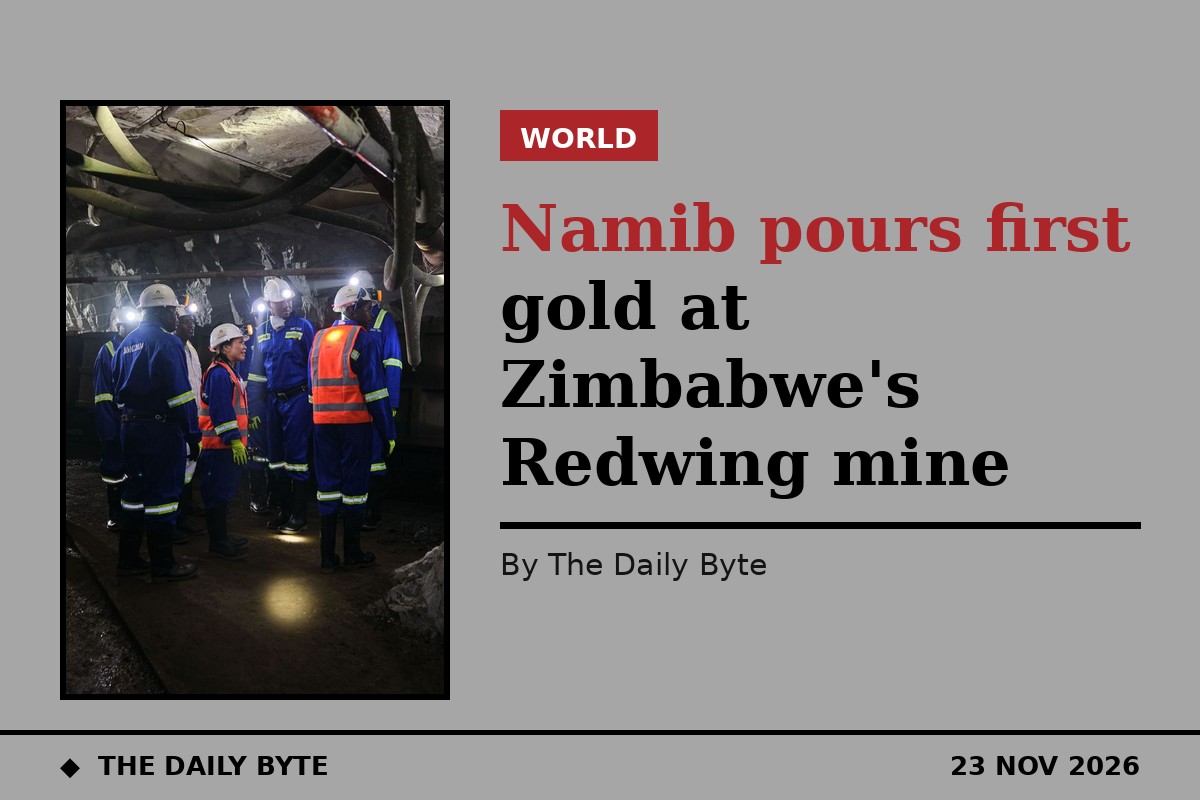
Namib Minerals has poured first gold at its Redwing mine in eastern Zimbabwe, bringing the century-old mine back into commercial production seven years after operations there stopped. The Nasdaq-listed company announced the milestone on Monday, 23 November 2026, saying the pour was achieved in line with the November target it set out earlier in the month.
The first pour marks Redwing's return as a producing mine and gives Namib a second operating asset alongside its How Mine near Bulawayo, which produced 25,000 ounces of gold in 2025. Reuters reported that the restart follows the rehabilitation and recommissioning of the mine's infrastructure and processing facilities after years of inactivity.
A mine mothballed in 2019
Redwing sits near Penhalonga in Manicaland province, about 20 kilometres north-east of Mutare, close to Zimbabwe's border with Mozambique. Namib was created from gold assets formerly owned by Metallon Corporation, once among Zimbabwe's biggest gold producers, which mothballed the Mazowe and Redwing mines in 2018 and 2019 respectively because of adverse economic conditions. Namib acquired Redwing in 2025.
The mine is more than a century old and has produced about 650,000 ounces of gold since 1981, according to the company. Its return comes as Zimbabwe's gold sector enjoys a strong run: the country produced a record 46.7 metric tons in 2025 and expects output to pass 50 tons this year as mothballed mines return to production.
Policy change pushed the restart forward
Namib had originally guided that first gold would come no later than January 2027, but it accelerated the restart after Zimbabwe's Ministry of Mines and Mining Development moved to restrict foreign ownership of gold mines producing under 20 kilograms a month. The company announced the faster timetable on 3 November, targeting a first pour during November, and has now delivered it.
The restart is being carried out in stages. Namib initially expects to process about 3,600 tonnes of ore a month for roughly 338 ounces of gold, rising to about 10,000 tonnes and 835 ounces a month by the second quarter of 2027. A higher-capacity winder, which the company expects to receive by the end of the first quarter of 2027, is intended to lift underground haulage and support that ramp-up.
Feasibility study still to come
The accelerated restart runs alongside, rather than instead of, the technical work on Redwing's longer-term future. A definitive feasibility study is fully funded and is expected to conclude in early 2027, followed by resource-definition drilling. The study is examining a redesign of the mine to support a larger long-term production capacity.
Namib plans to spend 300 million dollars on restarting its mines, and its longer-term ambition is combined annual production of about 300,000 ounces across Redwing, How Mine and Mazowe Mine. The company stresses that this is a strategic ambition, not current production guidance, and that it remains subject to technical studies, permitting, financing and development decisions.
"Redwing is back," chief executive Tulani Sikwila said in the company's announcement. "Today is an important moment for Namib Minerals because we have brought a historically significant mine back into gold production." He added that "first gold is the beginning of the next phase, not the end of the job", with the focus now on establishing consistent, reliable production and executing the planned ramp-up.
Namib says it will give 2027 production and cost guidance during the first quarter of 2027, once it has enough operating data from Redwing. For now, the first pour turns the company from a single-mine producer into a two-mine operator, and it gives Zimbabwe another producing gold mine as the country chases record output.


