Nehammer Denies Media Meddling at Pilnacek Inquiry
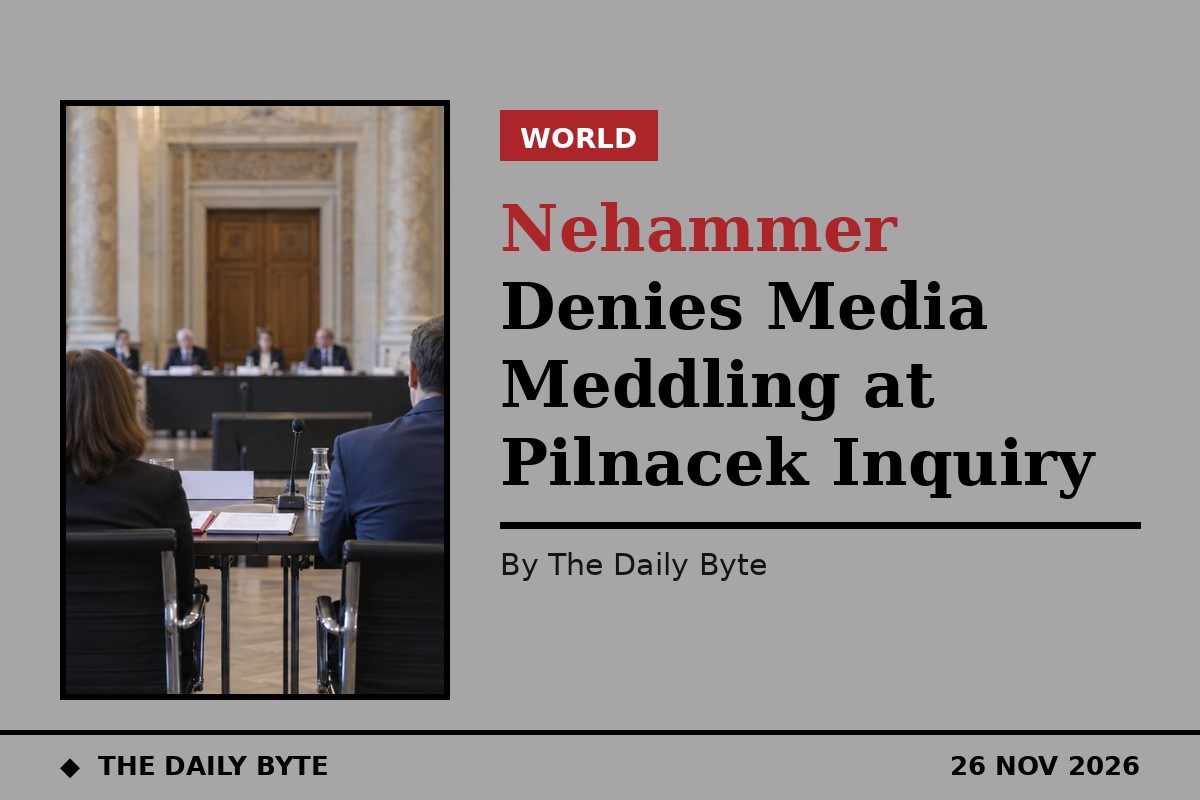
Former Austrian Chancellor Karl Nehammer has denied trying to interfere with media outlets, telling a parliamentary inquiry committee on Thursday that he never sought to influence either the public broadcaster ORF or the newspaper Kronen Zeitung.
Nehammer, of the conservative People's Party (OVP), appeared before the committee investigating the Pilnacek affair, which centres on the late former head of a section in the Justice Ministry, Christian Pilnacek.
The allegations relate to the publication of the so-called Pilnacek tape, an audio recording in which Pilnacek complains about OVP interventions. NEOS parliamentary group leader Sophie Wotschke confronted the former chancellor with the testimony of a former Kronen Zeitung employee, who said he had heard about an alleged intervention by Nehammer.
Nehammer's account
Nehammer said he had not intervened with either outlet, and that he only spoke with the newspaper's editor-in-chief after, and because of, that testimony. He added that he had considered taking legal action against the journalist for making a false statement, but backed down because the testimony was based on hearsay alone.
He said he knew nothing specific about the tape before the media reports, even if there had been rumours, and criticised the fact that a secret recording had led to the spread of conspiracy theories. Nehammer also told the committee, according to the newspaper Der Standard, that as leader of the OVP he had not commissioned Pilnacek to provide any advisory services.
Filming row and other witnesses
The session also produced a clash over filming. The Parliamentary Editors Association criticised Nehammer's refusal to allow filming of him inside the committee room. Its chairwoman, Claudia Dannhauser from the ORF, said the option to refuse filming was created to protect individuals unknown to the public and does not apply to prominent politicians.
This week the committee also questioned former Parliament President Wolfgang Sobotka and Salzburg Governor Karoline Edtstadler. The inquiry, set up by parliament, is examining the circumstances around Pilnacek and the claims of political interference raised in the recording.
What the inquiry is examining
Pilnacek, a former senior official in the Justice Ministry, died in October 2023. The authorities concluded that his death was a suicide, but the Freedom Party (FPO) has raised concerns about possible undue influence during the investigation, and the party initiated the parliamentary inquiry.
The committee is examining the period from October 2023 to September 2025, including the circumstances before and after Pilnacek's death, and is probing the actions of the Interior Ministry, the Justice Ministry and the Federal Chancellery. It is the thirtieth such parliamentary investigation in Austria's Second Republic.
Nehammer led Austria as chancellor until early 2025, when he resigned after coalition talks between his People's Party and the Social Democrats collapsed for a second time. Christian Stocker then took over as the party's acting chairman. Nehammer's appearance before the committee comes as the inquiry works through witnesses from his time in office, testing the claims on the tape against the accounts of those who were in government at the time.


