Netanyahu Urges Opposition to Join Unity Government
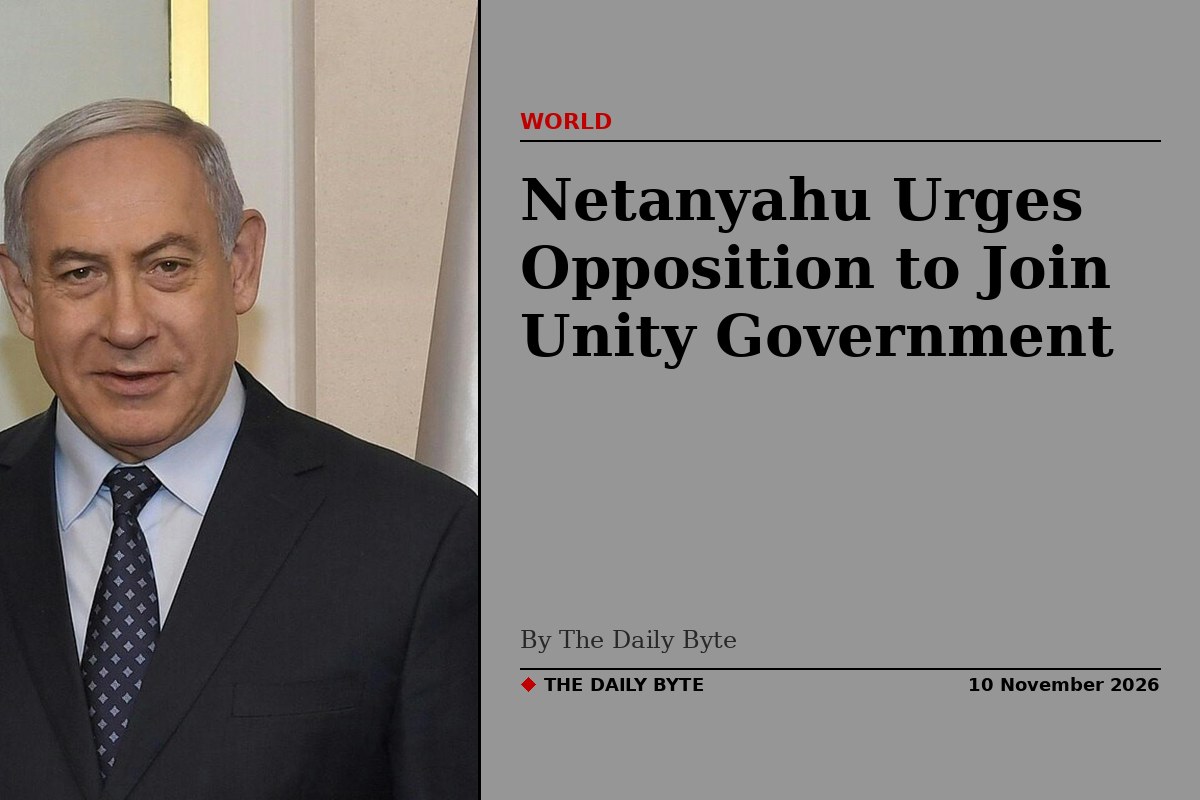
Israeli Prime Minister Benjamin Netanyahu has urged opposition leaders to join a unity government under his leadership, a day after President Isaac Herzog gave his rival Gadi Eisenkot the mandate to form the next government.
In a video statement released on Monday, Netanyahu said any Zionist party could join the proposed government and that he was ruling no one out, while insisting that his Likud party should lead the coalition as the largest party.
“This government needs to include all the parties in the national camp, which also includes the haredi (ultra-Orthodox) parties,” Netanyahu said, according to the Jerusalem Post. “We must join forces in the face of the challenges in front of us,” he added, as quoted by the Times of Israel.
Netanyahu rules out relying on Arab parties
Netanyahu argued that it was impossible to form a government that depends on supporters of Hamas, and impossible to fight Iran and its allies while depending on radical Islam in the government. He was referring to the Arab-led Ra'am and Joint List parties, which backed Eisenkot for prime minister.
He said he was ready to enter talks immediately with any party willing to discuss his proposal. It was his second such appeal in three days, after he called for a unity government on Saturday.
Eisenkot holds the mandate
Eisenkot, leader of the Yashar party, formally received the mandate on Sunday after securing recommendations from 67 of the 120 Knesset members, against 46 for Netanyahu, after the United Torah Judaism party abstained. He has 28 days to form a government, with a possible extension of up to 14 days.
The election on 27 October left neither bloc with a majority. Netanyahu's bloc won 53 seats, Eisenkot's 48, and Arab-led parties 19. A government needs the support of at least 61 of the 120 members of the Knesset.
Speaker deal agreed, differences remain
On Monday, Yisrael Beytenu leader Avigdor Liberman and Eisenkot reached an agreement on the selection of the next Knesset Speaker after a meeting, although they did not immediately announce their choice. The two leaders expressed full confidence in their ability to form a stable government for a full four-year term.
Liberman has ruled out supporting a minority government or one dependent on Arab-led parties, while signalling a willingness to negotiate with ultra-Orthodox factions. The Times of Israel reported that the two leaders' statement did not say whether they had resolved their differences on forming a government.
The new Knesset is due to be sworn in on Tuesday, with Netanyahu remaining caretaker prime minister while the negotiations continue. If Eisenkot fails to assemble a majority, the task could fall to Netanyahu, and if neither succeeds, Israel could face another election.


